


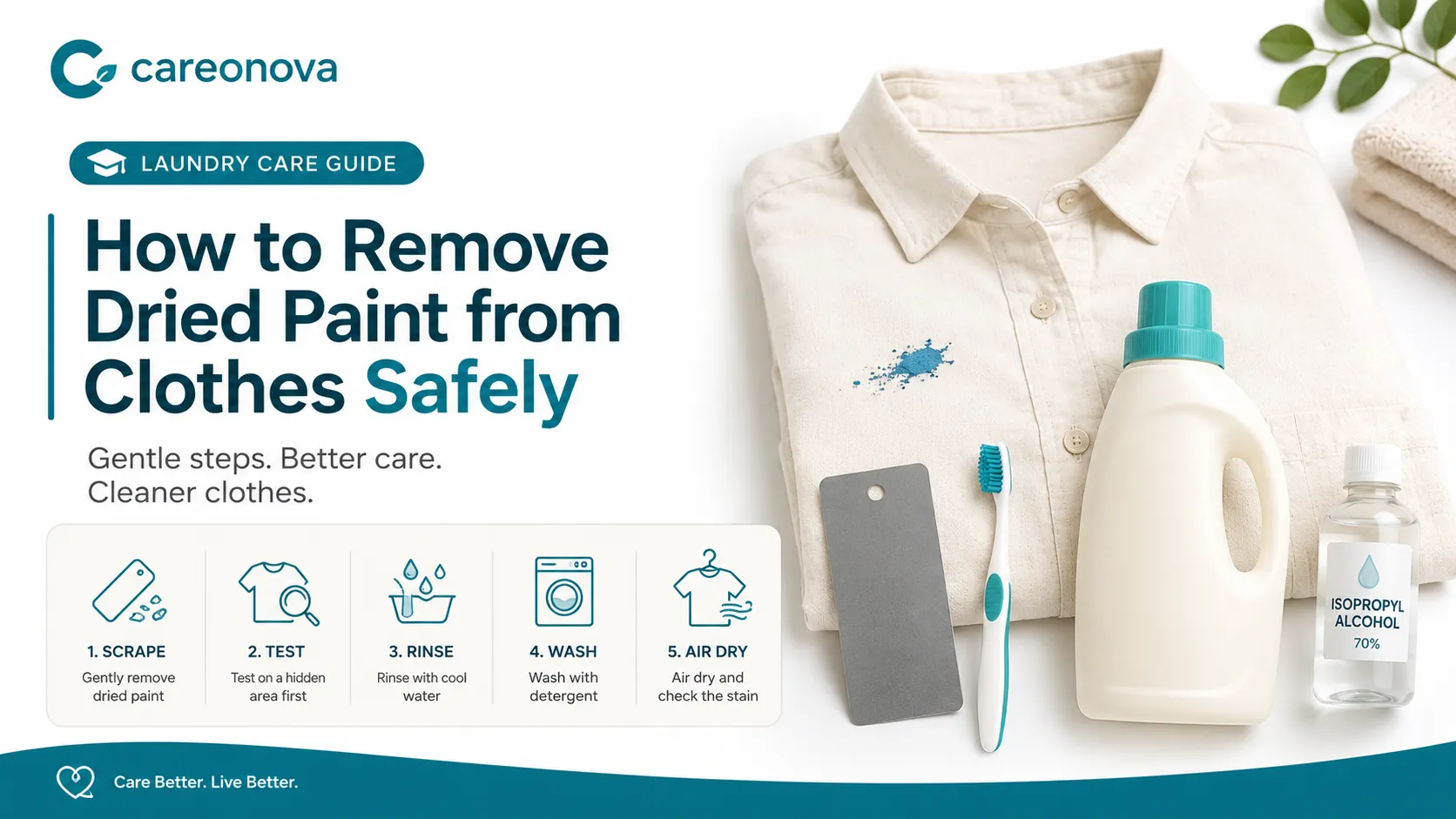
Dried paint on clothes is harder to deal with than fresh paint, but the stain is not always permanent. The right method depends on the paint type, the fabric, and whether the clothing has already gone through the dryer.
The safest way to get dried paint out of clothes is to scrape off loose paint, test the fabric, treat the stain with detergent or isopropyl alcohol, rinse well, wash, and air dry. Do not use dryer heat until the paint is fully gone.
This guide shows you how to handle acrylic paint, latex paint, oil-based paint, spray paint, fabric paint, jeans, polyester, and dryer-set stains without damaging the fabric.
Safety note: Always check the care label before treating a stain. Test any cleaner on a hidden seam first. If the garment is delicate, expensive, dry clean only, or starts losing color, stop and use a professional cleaner.
Can Dried Paint Come Out of Clothes?
Yes, dried paint can sometimes come out of clothes, especially if it is acrylic, latex, or another water-based paint. Scrape off the dry paint first, test the fabric, apply detergent or isopropyl alcohol, rinse, and wash. Oil-based paint, fabric paint, and dryer-set stains are much harder to remove.
Dried paint is easier to remove when:
- The stain is small
- The paint is water-based
- The fabric is cotton or denim
- The clothing has not gone through the dryer
- The paint layer is thin
Dried paint may be harder to remove when:
- The paint is oil-based
- The stain is thick
- The fabric is delicate
- The item has been dried with heat
- The paint is fabric paint or enamel paint
The main rule is simple. Treat the stain before using heat again.
Best First Method to Try
Start by scraping off loose paint, rinsing from the back of the stain, applying detergent, using isopropyl alcohol for acrylic or latex paint, washing according to the care label, and air drying before checking the stain again.
This simple method works best for water-based paint. If you do not know the paint type, start with this safer method before using strong solvents.
Check the Paint Type Before You Clean It
Before you start, try to identify the paint type. Different paints need different treatment. Using the wrong cleaner can make the stain worse or damage the clothing.
If you still have the paint can, check the label. If the brush was cleaned with water, the paint was likely water-based. If it needed paint thinner, mineral spirits, or turpentine, it was likely oil-based.
| Paint Type | Common Source | Removal Difficulty | Best First Method |
|---|---|---|---|
| Acrylic paint | Craft paint, art paint | Medium | Scrape, then use detergent and isopropyl alcohol |
| Latex paint | Wall paint, house paint | Medium | Use detergent first, then alcohol treatment |
| Oil-based paint | Trim paint, enamel paint | Hard | Spot test with solvent or use a dry cleaner |
| Spray paint | Aerosol paint | Medium to hard | Check the formula, then test carefully |
| Washable paint | Kids’ paint, school paint | Easier | Use detergent and warm water |
| Fabric paint | Clothing designs | Very hard | May be permanent once cured |
If you are not sure what kind of paint dried on the clothes, do not start with harsh chemicals. Begin with scraping, detergent, and a hidden spot test.
Check the Fabric Before Using Alcohol or Solvents
The cleaner must match the fabric, not just the paint. Some fabrics can handle alcohol treatment. Others can fade, weaken, shrink, or lose their shape.
Before using alcohol or solvents, check whether the fabric is colorfast. Dab the cleaner on a hidden seam with a white cloth. If color transfers to the cloth, or the fabric fades, stop.
| Fabric | Risk Level | Best Approach |
|---|---|---|
| Cotton | Lower | Use detergent, alcohol treatment, and repeat if needed |
| Denim | Lower | Scrape well, then use a soft brush |
| Polyester | Medium | Spot test first and avoid high heat |
| Nylon | Medium | Use a gentle hidden test |
| Spandex | Medium to high | Avoid heat and hard scrubbing |
| Wool | High | Use a dry cleaner if the stain is serious |
| Silk | High | Avoid strong home treatments |
| Rayon | High | Avoid heavy soaking and rubbing |
| Acetate or triacetate | Very high | Avoid acetone and strong solvents |

Cotton and denim are usually easier to treat at home. Polyester can usually handle gentle washing, but dyes and finishes may react to alcohol, acetone, or high heat. Silk, wool, rayon, acetate, and dry clean only clothing are safer with professional care.
What You Need
You do not need many tools for most dried paint stains. Start with safe items first.
Use this checklist:
- Dull knife, spoon, or old card
- Clean white cloth
- Paper towels
- Soft toothbrush
- Liquid laundry detergent
- Dish soap
- Isopropyl alcohol, also called rubbing alcohol
- Stain remover
- Warm water
- Gloves
- Towel to place under the stain
Only use stronger cleaners like acetone, nail polish remover, mineral spirits, turpentine, or paint thinner after a spot test. These products can damage fabric, remove color, and create safety risks if used the wrong way.

Step-by-Step Method to Remove the Stain Safely
This method works best for dried acrylic paint, dried latex paint, and other water-based paint stains.
1. Scrape Off Loose Dried Paint
Start with the dry paint. Use a dull knife, spoon, or old card to lift off loose paint flakes.
Do not use a sharp blade. It can cut the fabric. Also, do not pull hard on the paint. That can stretch or tear the clothing.
Remove as much dry paint as possible before adding liquid. This helps the cleaner reach the fabric fibers under the dried paint layer.
2. Rinse From the Back of the Stain
Turn the fabric inside out if you can. Rinse from the back of the stain with warm water.
This helps push the paint out of the fibers instead of deeper into them. Use warm water only if the care label allows it.
If the fabric is delicate, use cool water and a light rinse.
3. Apply Detergent or Dish Soap
Add a small amount of liquid laundry detergent or dish soap to the stain. Gently work it in with your fingers or a soft toothbrush.
Let it sit for 5 to 10 minutes. This helps soften the dried paint and loosen paint residue.
Do not scrub hard yet. Hard scrubbing can damage the fabric before the paint has softened.
4. Use Isopropyl Alcohol for Acrylic or Latex Paint
If the paint is acrylic or latex, isopropyl alcohol can help loosen it.
Place a towel under the stained area. Dab a small amount onto the paint with a clean white cloth or cotton pad. Let it sit for a few minutes. Then blot and gently brush the stain.
Do not pour too much alcohol at once. Use small amounts and repeat if needed.
Alcohol can fade some fabric dyes, so spot testing is important.
5. Rinse and Check the Stain
Rinse the treated area well. Check if the paint is lifting.
If you still see paint, repeat the detergent or alcohol step before washing. Dried paint often needs more than one treatment.
6. Wash According to the Care Label
Once the stain looks lighter or mostly removed, wash the clothing according to the care label.
Use regular laundry detergent. If paint residue is still present, wash the item separately.
Do not use hot water unless the fabric allows it.
7. Air Dry and Inspect
Air dry the clothing after washing. Do not put it in the dryer yet.
Dryer heat can set leftover paint deeper into the fibers. Once the clothing is dry, check the stain again. If paint remains, repeat the treatment.
Before You Wash: Quick Safety Checklist
Before washing the garment, make sure you have done these steps:
- Loose dried paint has been scraped off
- The cleaner was tested on a hidden area
- The fabric was checked for colorfastness
- The paint type was checked
- The fabric type was checked
- The stain was rinsed from the back
- The paint started to lift before washing
- The clothing will be air dried after washing
This checklist helps reduce fabric damage.
Why This Method Works
Scraping removes the raised paint layer first. Detergent helps loosen residue from the fabric fibers. Isopropyl alcohol can soften many dried water-based paint films, especially acrylic and latex paint.
This is why it is better to work in steps. If you go straight to harsh scrubbing or strong solvents, you may damage the clothing before the stain has a chance to lift.
How to Remove Dried Paint by Paint Type
Some dried paint stains need a different approach. Use the paint type to choose the safest method.
How to Remove Dried Acrylic Paint From Clothes
Dried acrylic paint can be stubborn because it dries into a plastic-like film. The paint binder holds pigment together, so plain water may not be enough once it has dried.
To remove dried acrylic paint from clothes:
- Scrape off loose paint.
- Rinse from the back of the fabric.
- Apply liquid detergent or dish soap.
- Dab isopropyl alcohol onto the stain.
- Blot and gently brush.
- Rinse well.
- Wash and air dry.
Repeat the process if needed. Avoid dryer heat until the acrylic paint is gone.
How to Remove Dried Latex Paint From Clothes
Latex paint is usually water-based, but it can still bond tightly after drying. This is common with wall paint and house paint.
Start with detergent and warm water. Let the detergent sit for a few minutes. Then use alcohol treatment if the stain does not lift.
For dried latex paint on clothes, patience matters. Treat, rinse, inspect, and repeat before washing.
How to Remove Dried Oil-Based Paint From Clothes
Oil-based paint is much harder to remove from clothing. It may need mineral spirits, turpentine, or paint thinner. These products can damage fabric and may be flammable.
Caution: Use Solvents Carefully
Mineral spirits, turpentine, and paint thinner can be harsh and flammable. Use them only after a hidden spot test, work in a well-ventilated area, wear gloves, and keep treated clothing away from heat, flames, washers, and dryers until it has been rinsed and aired out safely.
Use them only if the care label allows it and only after a hidden spot test. Work in a well-ventilated area. Wear gloves. Keep solvents away from heat, flames, and dryers.
Do not put solvent-soaked clothing straight into the washer or dryer. Rinse it well and let it air out safely first.
For expensive, delicate, or dry clean only clothing, a professional cleaner is the safer choice.
How to Remove Dried Spray Paint From Clothes
Spray paint can be tricky because the formula can vary. Some spray paints behave like acrylic paint. Others are closer to enamel or oil-based paint.
Check the spray paint can if you still have it. If not, start with the safest method.
Scrape off the dry layer. Then test the cleaner on a hidden area. If the fabric handles it, dab the stain and blot gently.
Acetone or nail polish remover may work on some spray paint stains, but they can damage certain fabrics and pull color from dyes. Use them only after testing.
Can You Remove Dried Fabric Paint From Clothes?
Fabric paint is designed to stay on fabric. Once it has cured, it may not fully come out.
You may be able to scrape off raised edges or reduce the stain, but full removal is not always realistic.
If the paint is thick, old, or heat-set, it may be permanent.
How to Remove Dried Paint From Different Fabrics
Fabric type matters a lot. The same cleaner may be safe on jeans but risky on silk or rayon.
How to Get Dried Paint Out of Jeans
Jeans and denim can usually handle more treatment than thin fabrics.
Scrape the dried paint first. Then apply alcohol treatment if the paint is acrylic or latex. Use a soft toothbrush to loosen the stain.
Do not use a wire brush. It can damage denim fibers and make the area look worn.
Wash the jeans inside out and air dry them.
How to Get Dried Paint Out of Cotton Clothes
Cotton is one of the easier fabrics to treat. Use detergent first. Then use alcohol treatment if needed.
Be careful with dark cotton shirts or printed fabric. Alcohol can fade some dyes.
Always test first, even on cotton.
How to Get Dried Paint Out of Polyester
Polyester needs more care than cotton or denim. It can usually handle gentle washing, but some dyes and finishes may react to strong cleaners.
Start with detergent and warm water. Then spot test before using alcohol. Avoid heavy acetone use unless the care label and spot test show it is safe.
If the stained item is polyester, check the care label first and avoid high heat. You can also read our guide on how to wash polyester properly before treating the stain.
Air dry polyester after washing. Heat can make an old paint stain on clothes harder to remove.
What to Do With Delicate Clothes
Silk, wool, rayon, acetate, and structured garments are risky to treat at home.
Do not scrub them hard. Do not soak them for a long time. Do not use strong solvents without expert help.
Acetone can dissolve acetate fibers and may remove color from some fabric dyes. Avoid it on acetate, triacetate, delicate items, and any fabric that fails a hidden spot test.
If the item is expensive, delicate, or dry clean only, take it to a professional cleaner.
What If the Paint Went Through the Dryer?
Paint that has gone through the dryer is harder to remove, but water-based paint may still lift with repeated detergent and alcohol treatment. Scrape the dry paint first, test the fabric, treat the stain, wash, and air dry. Avoid dryer heat until the stain is gone.
Dryer heat can bond paint more tightly to fabric fibers. It can also make the paint feel hard, shiny, or plastic-like.
This is common when someone finds a paint stain after washing or notices a paint stain after the dryer cycle.
To treat dryer-set paint:
- Scrape off any raised paint.
- Place a towel under the stain.
- Spot test the cleaner.
- Dab detergent or alcohol onto the stain.
- Blot and brush gently.
- Rinse well.
- Wash according to the care label.
- Air dry only.
- Repeat if needed.
If the paint is oil-based, fabric paint, or very old, it may not come out fully.
What Removes Dried Paint From Clothes?
Isopropyl alcohol, liquid laundry detergent, dish soap, and stain remover can help remove dried water-based paint from clothes. Oil-based paint may need a solvent such as mineral spirits or turpentine, but these can damage fabric and should be tested first.
| Cleaner | Best For | Should You Use It? | Warning |
|---|---|---|---|
| Isopropyl alcohol | Acrylic, latex, some spray paint | Yes, after testing | Can fade fabric dyes |
| Liquid laundry detergent | Water-based paint | Yes | Works better before paint fully cures |
| Dish soap | Light paint stains | Yes | May be weak on thick dried paint |
| Baking soda | Light residue | Sometimes | Not strong enough alone |
| Vinegar | Mild residue | Not the best | Often overhyped for dried paint |
| Acetone | Some acrylic or spray paint | Risky | Can damage acetate, triacetate, and dyes |
| Nail polish remover | Small tough stains | Test first | May remove color |
| Mineral spirits | Oil-based paint | Use with caution | Flammable and harsh |
| Turpentine | Oil-based paint | Use with caution | Strong smell and fabric risk |
| Hairspray | Some older paint stains | Maybe | Modern hairspray may not work well |
| WD-40 | Sticky paint residue | Not ideal | Can leave oily stains |
Does Isopropyl Alcohol Remove Dried Paint?
Isopropyl alcohol, often called rubbing alcohol, can help remove dried acrylic, latex, and some spray paint from clothes. It works by softening the dried paint so it can be blotted and rinsed out. Always test it first because it can fade some fabric dyes.
It is not the best choice for oil-based paint.
Does Vinegar Remove Dried Paint From Clothes?
Vinegar may help with light paint residue, but it is not the strongest option for dried paint. For acrylic or latex paint, alcohol treatment and detergent usually work better.
Do not rely on vinegar for thick, cured, or oil-based paint stains.
Does Baking Soda Remove Dried Paint?
Baking soda can help as a mild cleaner, but it usually cannot remove dried paint by itself. It may help with light residue after the main paint layer has been loosened.
Use it as a support method, not the main method.
Can You Use Acetone on Paint Stains?
Acetone can remove some paint stains, but it is risky. It can damage acetate, triacetate, delicate fabrics, and some fabric dyes.
If you use acetone, test it on a hidden area first. Do not use it on delicate or expensive clothing.
Quick Decision Guide
Use this table when you are not sure what to try first.
| Situation | Try First | Avoid |
|---|---|---|
| Dried acrylic paint | Detergent and alcohol treatment | Dryer heat |
| Dried latex paint | Detergent, then alcohol treatment | Harsh scrubbing |
| Dried paint on jeans | Scrape and use a soft brush | Wire brush |
| Dried paint on polyester | Spot test, then detergent | Strong acetone |
| Dried oil-based paint | Solvent test or dry cleaner | Direct machine washing |
| Paint went through dryer | Repeat gentle treatment | More heat |
| Delicate garment | Professional cleaner | Home solvent treatment |
| Fabric paint | Gentle scraping | Expecting full removal |
What Not to Do When Removing Dried Paint
Avoid these mistakes when treating dried paint on clothes.
Do Not Scrub Hard Before Softening the Paint
Dry paint can act like a rough layer on fabric. If you scrub too hard, you can damage the fibers before the paint starts to lift.
Soften the stain first with detergent, water, or the right cleaner.
Do Not Use the Dryer Until the Stain Is Gone
This is one of the biggest mistakes. Dryer heat can set the stain deeper.
Always air dry after washing. Check the stain again before using heat.
Do Not Mix Cleaning Chemicals
Never mix random cleaning products. Some mixtures can create unsafe fumes or damage fabric.
Do not mix bleach with ammonia. Do not mix bleach with rubbing alcohol. Do not mix vinegar with hydrogen peroxide. Keep solvents away from heat, flames, and dryers.
Do Not Use Acetone Without Testing
Acetone can remove paint, but it can also remove fabric color or damage certain fibers.
Always test first. If the fabric changes, stop.
Do Not Wash Solvent-Soaked Clothes Right Away
If you use mineral spirits, turpentine, or paint thinner, rinse and air out the item safely before washing. These products can be flammable.
Never put solvent-soaked clothing in the dryer.
When the Paint May Be Permanent
Some dried paint stains may not fully come out. This does not always mean you did something wrong.
Paint may be permanent if:
- It is cured fabric paint
- It is old oil-based paint
- The stain is thick and dry
- The clothing went through the dryer many times
- The fabric is delicate
- The cleaner is removing fabric color
- The fibers feel weak or rough
If the paint does not lift after two or three careful treatments, stop. More scrubbing may damage the clothing.
You can still use the item as workwear, cover the mark with a patch, or turn old clothing into cleaning rags.
Final Tips
The best approach is to work slowly and safely. Start by scraping off loose paint. Then check the paint type and fabric type before choosing a cleaner.
For acrylic and latex paint, detergent and isopropyl alcohol often work well. For oil-based paint, solvents may be needed, but they carry more risk. For delicate clothing, professional cleaning is safer.
Most importantly, do not use dryer heat until the stain is fully gone. Air dry, inspect, and repeat the treatment if needed. This gives you the best chance to save the clothing without damaging the fabric.
