


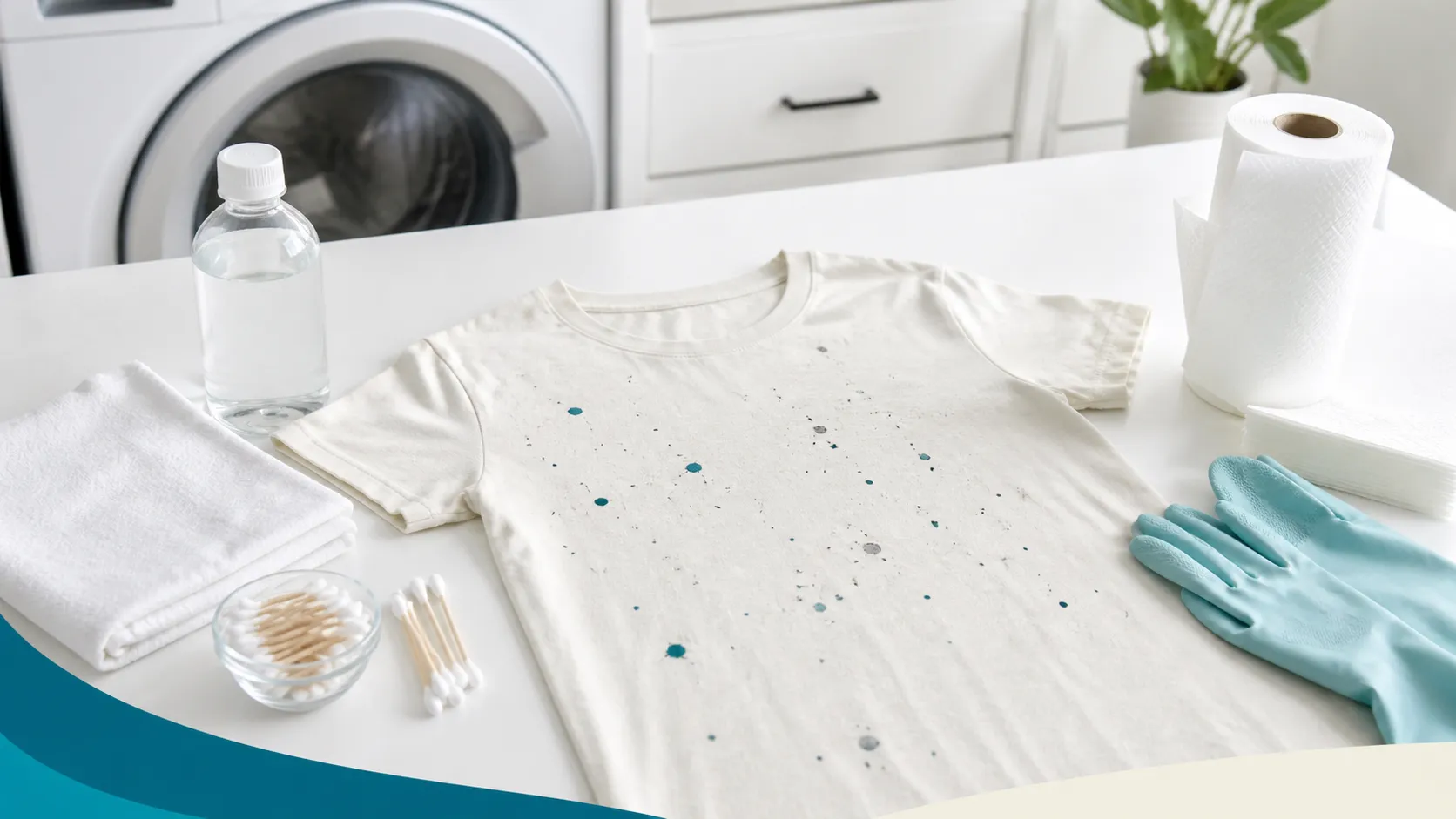
The best way to get spray paint out of clothes depends on whether the paint is fresh or dry and whether it is water-based or solvent-based. Fresh water-based paint often comes out with quick blotting, rinsing, and liquid detergent. Dried, oil-based, enamel, or fabric spray paint is harder to remove and may leave a permanent mark.
Before treating the stain, check the paint can and the garment’s care label. Start with the mildest fabric-safe method, test it on a hidden seam, and avoid rubbing wet paint or using dryer heat before the stain is gone. Strong products such as rubbing alcohol, acetone, mineral spirits, and paint thinner can fade dyes, damage certain fibers, and create fire risks.
This guide explains how to treat fresh paint, dried paint, and fine overspray, how to choose a safe stain remover, and when professional cleaning is the better option.
Quick Answer
Fresh water-based spray paint often comes out with quick blotting, back-rinsing, liquid detergent, and air-drying. Dried, oil-based, enamel, or fabric spray paint is harder to remove and may leave a mark. Check the care label, test products on a hidden seam, and avoid dryer heat until the stain is gone.
Does Spray Paint Come Out of Clothes?
Spray paint can come out of clothing in some cases, but the result depends on:
- Whether the paint is fresh or fully dried
- Whether it is water-based, oil-based, enamel, lacquer, or made for fabric
- The garment’s fiber content
- The stability of its dye
- Whether it has already been tumble-dried
- How deeply the paint has entered the fibers
Fresh water-based overspray is usually easier to treat than thick, cured enamel. The same blot-first approach applies to many fresh paint stains on clothing, although aerosol formulas may require extra care because their binders and solvents vary.
Even when raised paint can be removed, black, red, metallic, and other highly pigmented formulas may leave a visible shadow. The correct method depends on the paint formula and fabric rather than the paint color.
Fresh or Dried Spray Paint?
| Situation | First Action | Main Risk |
|---|---|---|
| Fresh and wet paint | Blot excess paint | Rubbing can spread it |
| Small wet overspray dots | Blot each dot separately | Dots may smear into a larger stain |
| Dry, raised paint | Lift loose material gently | Fibers may pull or weaken |
| Dry, flat residue | Identify the paint and fabric | A treatment may fade the dye |
| Strong chemical odor | Keep the item away from heat | Flammable vapor or residue |
| Delicate or dry-clean-only clothing | Contact a professional cleaner | Permanent fabric or finish damage |
Before You Start
Check the Garment Label
Identify the fiber content and care instructions before applying anything stronger than detergent. Because different fabrics require different washing methods, a product that is safe for cotton may damage acetate, wool, silk, or coated clothing.
Use extra caution with:
- Acetate
- Triacetate
- Acrylic and modacrylic fibers
- Wool
- Silk
- Rayon or viscose
- Elastane
- Coated or waterproof clothing
- Printed garments
- Dry-clean-only items
A treatment is not automatically safe just because the garment is synthetic.
Identify the Spray Paint
Check the exact can or product instructions when possible.
Look for terms such as:
- Water-based
- Acrylic
- Oil-based
- Enamel
- Lacquer
- Fabric paint
- Automotive paint
- Primer
A cleanup solvent printed on the can may be intended for tools, equipment, or wet paint on hard surfaces. It is not automatically suitable for clothing.
Manufacturers such as Rust-Oleum sell many aerosol formulas with different cleanup instructions. Check the exact product rather than relying only on the brand name.
Test a Hidden Area
Apply a small amount of the proposed product to an inside seam or hem.
Wait several minutes, blot the area, rinse when appropriate, and check for:
- Fading
- Dye transfer
- Texture changes
- Softening
- Surface damage
- Loss of coating or print
Stop if the test area changes.
Safety Before Using Solvents
Begin with detergent or a fabric-compatible laundry stain remover whenever possible.
Products such as rubbing alcohol, acetone, mineral spirits, paint thinner, and xylene require greater caution.
Follow these rules:
- Work in a well-ventilated area.
- Keep solvents away from flames, sparks, heaters, and cigarettes.
- Wear gloves suitable for the product.
- Never mix solvents with bleach, ammonia, or other cleaners.
- Apply only a small amount to the affected area.
- Avoid strong solvents on delicate or dry-clean-only garments.
- Follow the chemical label’s handling and disposal directions.
- Stop immediately if the fabric dye or texture changes.
Do not place clothing treated with a flammable solvent in a household washer or dryer unless the solvent manufacturer explicitly provides laundering instructions for contaminated fabric.
For stains requiring acetone, paint thinner, mineral spirits, xylene, or a similar product, professional cleaning is usually the safer choice.
How to Remove Fresh Spray Paint From Clothes
Step 1: Remove Excess Paint
Use a spoon, dull edge, or clean absorbent towel to lift wet paint sitting on the surface.
Blot rather than rub. Rubbing can enlarge the stain and force paint deeper into the fibers.
Move to a clean part of the towel as paint transfers.
Step 2: Rinse From the Back
For washable fabric and water-based paint, turn the garment inside out and rinse through the back of the stained area.
This helps push loose paint outward rather than driving it farther through the fabric.
Use cool or lukewarm water unless the care label recommends another temperature.
Skip this step for dry-clean-only garments or fabrics that cannot be safely rinsed.
Step 3: Apply Liquid Laundry Detergent
Apply a small amount of liquid laundry detergent directly to the stain.
Work it in gently with your fingers or a soft white cloth. Leave it for about 10 minutes unless the detergent label recommends a different time.
Rinse and check whether pigment continues to lift.
Step 4: Wash Safely
When no flammable solvent has been used, wash the garment at the warmest temperature allowed by its care label.
Use the normal amount of detergent. Excess detergent will not necessarily dissolve the paint and may leave residue.
Wash the item separately if loose pigment could transfer to other clothing.
Step 5: Air-Dry and Inspect
Air-dry the garment completely and check the area in bright light before using a dryer. Heat can make remaining paint harder to remove.
Repeat the detergent treatment when the stain is improving but still visible.
How to Get Dried Spray Paint Out of Clothes
Dried spray paint is harder to remove because its binders have cured around or between the fibers. The same scraping, testing, and heat precautions also apply when removing other dried paint from clothing.
Step 1: Lift Loose Paint
Place the garment on a firm surface.
Use a spoon, plastic scraper, or the edge of an old card to lift paint that comes away easily.
Work slowly. Stop if threads begin to pull or the fabric surface becomes worn.
Step 2: Identify the Paint and Fabric
Before applying a stain remover, confirm:
- The likely paint formula
- The garment’s fiber content
- Whether the dye is stable
- Whether the item has a coating or printed finish
The product that softens the paint may also remove the garment’s dye or damage its fibers.
Step 3: Test a Fabric-Compatible Stain Remover
Begin with a laundry stain remover approved for the garment.
Some people use rubbing alcohol on dried water-based paint residue, but it can fade dyes and damage acetate, triacetate, modacrylic, and acrylic fibers.
Do not confuse acrylic paint with acrylic textile fiber. A product used to loosen acrylic paint may still damage clothing made from acrylic.
Test a hidden seam first and stop if the material changes.
Step 4: Blot Loosened Residue
Place a clean white cloth or absorbent pad beneath the stain.
Dab the affected area from the outside toward the center. Move to a clean section of the cloth as paint transfers.
Avoid saturating the entire garment or spreading dissolved pigment into clean fabric.
Step 5: Pretreat With Detergent
After removing as much loosened paint as possible, apply liquid laundry detergent to the remaining mark.
Rinse when the fabric and product directions allow it.
Wash only when no flammable solvent has been used or when the product label specifically confirms that laundering is safe.
Air-dry and inspect the area. Stop after repeated careful treatment produces little improvement or begins affecting the garment.
How to Remove Spray-Paint Overspray
Overspray usually appears as many small dots rather than one thick patch.
Wiping across the entire area can merge separate dots into a larger stain.
For fresh overspray:
- Blot each wet dot separately.
- Rinse from the back when the fabric and paint formula allow it.
- Apply liquid detergent to the affected area.
- Wash according to the care label.
- Air-dry before checking the result.
For dried overspray, lift only loose raised dots and treat stubborn areas individually with a cotton swab or small white cloth.
Which Treatment Is Safe?
| Treatment | Possible Use | Main Caution |
|---|---|---|
| Liquid laundry detergent | Fresh paint and general pretreatment | Safest starting option |
| Laundry stain remover | Washable, colorfast clothing | Confirm fabric and dye compatibility |
| Rubbing alcohol | Some dried water-based residue | Can fade dyes and damage several fibers |
| Acetone | Limited, carefully controlled spot treatment | Highly flammable and destructive to some fibers |
| Mineral spirits, paint thinner, or xylene | Some oil-based paint formulas | Major fabric, vapor, fire, and laundering risks |
Liquid Laundry Detergent
Detergent is the safest starting treatment for most washable clothing and follows the mildest-first approach used in general clothing stain removal.
It works best on fresh water-based paint and on residue remaining after loose dried paint has been removed.
Use detergent before considering alcohol or a stronger chemical.
Rubbing Alcohol
Rubbing alcohol may soften some dried water-based paint residue, but it is not universally safe or proven to work on every spray-paint formula.
It can fade garment dyes and damage:
- Acetate
- Triacetate
- Modacrylic
- Acrylic fibers
Use a fabric-compatible stain remover first. When alcohol is considered, test a hidden seam and apply only a small amount in a ventilated area.
Acetone
Acetone may dissolve certain paint binders and finishes, but it can also remove dye or destroy textile fibers.
Never use acetone on acetate. Avoid it on triacetate and on garments with uncertain fiber content.
It is also unsuitable for:
- Delicate clothing
- Printed or coated materials
- Dry-clean-only garments
- Items that fail a colorfastness test
- Valuable or structured clothing
Because acetone is highly flammable, home laundering after acetone treatment should not be assumed safe.
Mineral Spirits, Paint Thinner, or Xylene
These solvents may dissolve some oil-based or enamel paints, but they can also:
- Remove garment dye
- Leave an oily mark
- Damage finishes
- Produce hazardous vapors
- Create a fire risk
- Make household laundering unsafe
A solvent named on a paint can may be intended only for equipment or hard surfaces.
Professional cleaning is safer when removing the stain would require one of these products.
Oil-Based, Enamel, and Rust-Oleum Spray Paint
Oil-based and enamel paints resist detergent and water more strongly after curing.
Check the exact paint label rather than relying on the brand name. Rust-Oleum and similar manufacturers sell water-based, oil-based, enamel, primer, marking, automotive, and specialty aerosol products.
A solvent listed for cleaning wet paint or spray equipment is not automatically safe for textiles.
For a small fresh mark:
- Blot away excess paint.
- Check the product instructions.
- Test the garment’s hidden seam.
- Avoid strong solvents when the fiber is unknown.
- Consider professional cleaning before the paint cures.
Complete removal of dried oil-based or enamel paint may not be possible without damaging the clothing.
How to Get Fabric Spray Paint Out of Clothes
Fabric spray paint is designed to bond with textile fibers.
Once cured, removing it may also remove the garment’s original color or change its surface.
Check the product instructions for:
- Whether the paint is permanent
- Its curing time
- Recommended cleanup while wet
- Whether heat was used to set it
For an accidental fresh mark, blot quickly and follow the manufacturer’s cleanup instructions.
Avoid automatically applying alcohol, acetone, or paint thinner. A strong product may damage the garment without fully removing the cured paint.
What if Clothes Still Smell Like Spray Paint?
A persistent paint or solvent smell may indicate volatile residue. Once the item is safe to handle and no flammable solvent remains, use methods intended for chemical odors in clothing.
Keep the item away from:
- Flames
- Cigarettes
- Heaters
- Sparks
- Household dryers
- Closed storage spaces
Place it in a well-ventilated location when the product instructions allow it. Do not mask the odor with perfume, scent boosters, or fabric spray.
Seek professional advice when a strong chemical odor remains or the garment was exposed to a flammable solvent.
Can You Get Spray Paint Out of Jeans?
Sometimes. Denim can tolerate gentle scraping better than many delicate fabrics, but its dye may still fade.
Blot fresh paint or lift only loose dried material, then test the product inside a hem. For more denim-specific treatment steps, use the same precautions recommended for removing paint stains from jeans.
Treat the stain before washing and air-dry the jeans afterward. Alcohol, acetone, or hard scrubbing may leave a pale patch even when the paint is removed.
Can Dry Cleaners Remove Spray Paint?
A professional cleaner may be able to improve the stain when:
- The garment is dry-clean-only
- The paint is oil-based or enamel
- The item is delicate or valuable
- The stain is large
- A strong solvent would otherwise be needed
Take the paint can or a clear photo of its label when possible. Avoid applying several household products before professional cleaning because previous treatments may affect the dye or complicate stain removal.
When Spray Paint May Be Permanent
A spray-paint mark may remain when:
- The paint has fully cured.
- The garment has been tumble-dried.
- The paint was designed to bond with fabric.
- Pigment has penetrated deeply.
- The garment cannot tolerate an effective treatment.
- The original dye has already changed.
- The fibers become rough, thin, or weak.
- Repeated careful treatment produces no improvement.
In some cases, a lighter mark is the safest achievable result.
Stop when further treatment is more likely to damage the garment than improve the stain.
What Not to Do
Avoid these mistakes:
- Rubbing fresh paint
- Using a sharp blade on dried paint
- Assuming every aerosol formula uses the same solvent
- Applying alcohol without checking the fiber label
- Using acetone on acetate or triacetate
- Soaking clothing in flammable solvent
- Mixing stain treatments or cleaning chemicals
- Using strong solvents in a closed room
- Placing solvent-treated clothing in a household washer or dryer without explicit product instructions
- Continuing when dye transfers or fibers weaken
