

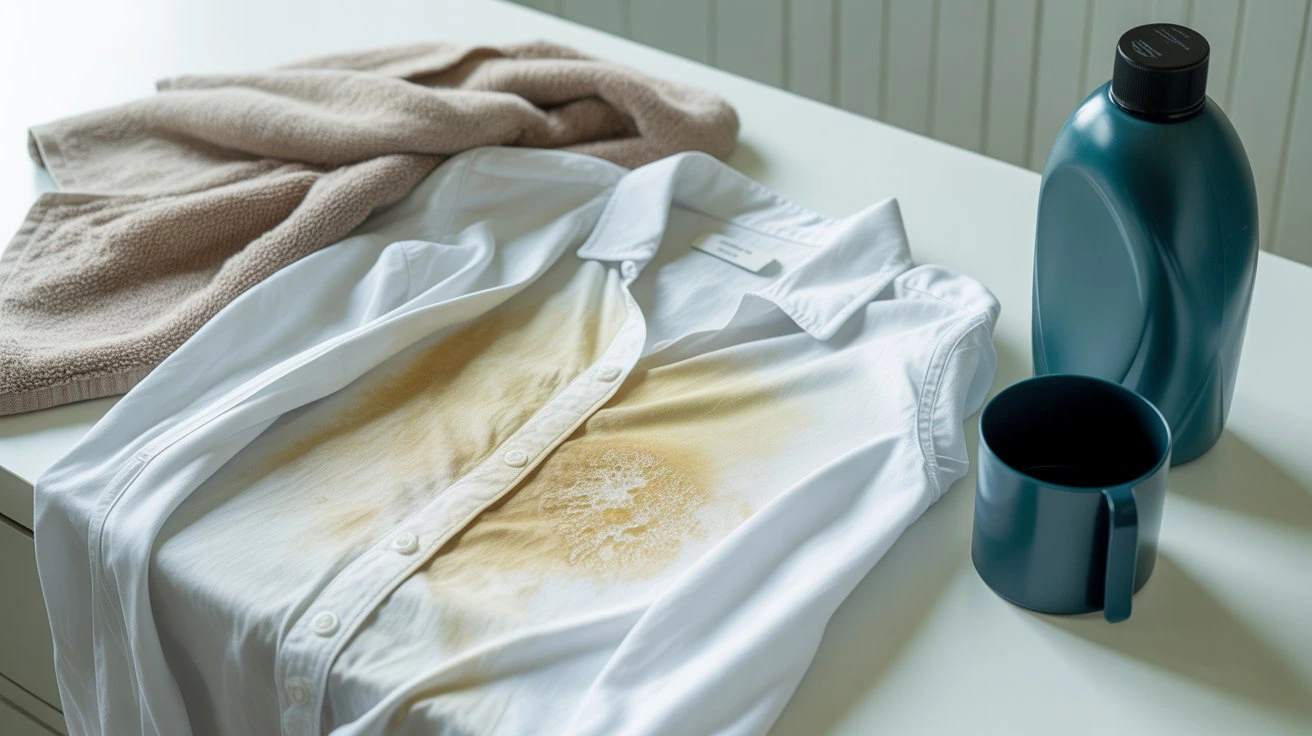
Hard water stains can leave clothes looking dull, stiff, yellow, or chalky after washing. In many homes, the real problem is not just detergent. It is mineral-heavy water. Hard water contains calcium and magnesium, and those minerals can stay behind on fabric during the wash.
The good news is that hard water stains can often be improved. However, not every yellow or white stain is caused by hard water. Some stains come from body oils, product buildup, iron in the water, or detergent residue. So before you treat the stain, it helps to confirm the cause.
Quick signs the stains may be caused by hard water
- white or chalky residue after washing
- yellowing or dingy whites
- rough towels or stiff fabric
- stains that keep coming back
- detergent that does not seem to work well
What hard water stains on clothes look like
Hard water stains do not always look the same. Sometimes they show up fast. In other cases, they build slowly over time.
Common signs include:
- yellow stains on white or light clothes
- white or chalky streaks on dark fabrics
- stiff towels after washing
- dull clothes that never look fully clean
- residue that appears after washing, not before

How to tell if hard water is really causing the stains
This step matters.
Many people treat every yellow stain the same way. That can waste time and lead to the wrong fix.
Hard water may be part of the cause if:
- the stains or residue appear after washing
- the same clothes keep coming out worse
- towels feel rough or scratchy
- detergent seems less effective
- whites keep looking dull
- you already know your home has hard water
If you also notice poor rinsing, soap scum, or washer buildup, hard water becomes more likely.
Not all yellow stains are caused by hard water
Not every yellow stain is a hard water stain.
Other common causes include:
- sweat and body oils
- deodorant buildup
- iron or rust in the water
- detergent residue
- bleach-related damage
If the stain appears mostly in the underarm area, sweat or deodorant may be involved. If it looks rusty orange, iron may be part of the problem. If clothes keep coming out with all-over dinginess or residue after washing, hard water is more likely.
| Hard Water More Likely | Something Else May Be Causing It |
|---|---|
| All-over dinginess after washing | Yellowing mainly in the underarm area |
| White or chalky residue on dark clothes | Rusty orange marks that may suggest iron |
| Stiff towels and rough fabric feel | Localized stains from sweat or body oils |
| The same problem keeps returning after wash cycles | Damage caused by bleach or product misuse |
Why hard water leaves yellow stains and white residue on clothes
Hard water contains dissolved minerals, mainly calcium and magnesium. These minerals can make detergent work less effectively. When detergent does not rinse clean and minerals stay behind, fabric can collect buildup over time.
That buildup may show up as:
- white residue
- yellowing
- rough texture
- dull-looking clothes
The problem often gets worse when:
- the water is very hard
- too much detergent is used
- the washer has buildup inside
- items are not rinsed well
- clothes are repeatedly washed in the same hard water
Hard water does not only leave marks. It can also lower wash performance over time.
Step-by-step: how to remove hard water stains from clothes
Use this simple process.
1. Check the care label
Always start with the fabric label. Delicate items need more care.
2. Sort by color and fabric
Separate whites, darks, and delicates. This helps prevent damage and color transfer.
3. Test first on delicate or bright fabrics
If the item is delicate or brightly colored, test any soak or cleaner on a hidden area first.
4. Pre-soak the stained item
A mild acidic soak is often used to loosen mineral deposits. Vinegar is one common option.
5. Rinse well
Rinse the item well after soaking so loosened residue does not stay in the fabric.
6. Rewash with the right detergent
Use a detergent that performs better in hard water or one designed for mineral-heavy laundry.
7. Check the stain before drying
Do not machine-dry the item until you check whether the stain is improving. Heat can make some stains harder to remove.
8. Repeat only if the stain is improving
If the stain is getting lighter, a second round may help. If nothing changes, stop and reassess.
| Step | What to Do | Why It Matters |
|---|---|---|
| 1 | Check the care label | Different fabrics need different levels of care. |
| 2 | Sort by color and fabric | This helps prevent damage and keeps treatment safer. |
| 3 | Use a safe pre-soak | This may help loosen mineral buildup before rewashing. |
| 4 | Rinse well | You want loosened residue out of the fabric before rewashing. |
| 5 | Rewash with the right detergent | Hard-water-friendly laundry products may work better. |
| 6 | Check before drying | Heat can make some stains harder to remove later. |
How to clean hard water yellow stains from your clothes
If the yellowing looks like mineral buildup rather than sweat or rust, use the same basic process:
- sort the item
- pre-soak safely
- rinse well
- rewash with the right detergent
- inspect before drying
This works best when:
- the stain is fresh or moderate
- the fabric can handle the treatment
- the yellowing is truly linked to hard water buildup
If the stain stays the same after treatment, the cause may be something else.
Can you use vinegar to remove hard water stains from clothes?
Yes, vinegar is one of the most common home treatments for hard water stains on clothes.
It may help when:
- the stain is caused by mineral buildup
- the residue is still moderate
- the fabric can handle the treatment safely
It may not be enough when:
- iron or rust is involved
- the stain has been there a long time
- the real issue is sweat, deodorant, or detergent residue
- minerals keep redepositing every time you wash
So vinegar can help, but it is not a cure-all.
What to do if hard water stains do not come out
Do not panic. Also, do not keep adding random products to the stain.
If the stain does not improve:
- do not machine-dry the item yet
- look again at the stain type
- consider whether iron or rust may be involved
- check whether the washer has buildup inside
- think about whether detergent residue is part of the problem
- ask whether the same issue keeps happening after every wash
If the same problem keeps returning on many loads, the water or washer may be part of the issue, not just the garment.
If the stain is not changing at all, the problem may be something other than simple hard-water residue.
Mistakes that can make hard water stains worse
Some laundry habits can make the problem worse.
Using too much detergent
More detergent does not always mean cleaner clothes. In hard water, too much detergent can leave more residue behind.
Drying the item too soon
If you dry stained fabric before checking it, the stain may become harder to remove.
Using chlorine bleach on mystery yellow stains
If you do not know what caused the yellowing, chlorine bleach can be risky.
Skipping washer cleaning
If the washer already has scale, soap scum, or residue inside, clothes may keep picking up buildup.
Treating all stains the same way
The wrong treatment wastes time and makes the problem harder to identify.
How to prevent hard water stains from coming back
Prevention matters just as much as removal.
If hard water is the real cause, the stains may return unless you improve the wash system.
Here are some of the best ways to reduce the problem:
- use a detergent that works better in hard water
- avoid using too much detergent and too many laundry additives
- rinse clothes well
- clean the washer regularly
- use a booster or conditioner if needed
- consider water testing or long-term treatment if the problem is constant
A better prevention plan looks at the full system: water minerals, detergent performance, washer buildup, and repeat staining.
Final takeaway
Hard water stains on clothes can often be improved, but good results depend on treating the right problem. First, make sure the stain really looks like hard water buildup and not sweat, rust, or detergent residue. Then use a safe treatment method, rewash carefully, and always check the item before drying. Most importantly, fix the cause behind the stain so the same buildup does not keep coming back.
Hard water stains on clothes often look like yellowing on whites, white or chalky residue on dark fabrics, dull fabric, or stiff towels after washing.
Yes, hard water can contribute to yellow or dingy-looking clothes over time because minerals can build up on fabric and make detergent work less effectively.
Start by checking the care label and sorting the item by color and fabric type. Then use a safe pre-soak, rinse well, and rewash with a detergent that performs better in hard water. Check the stain before drying.
To clean hard water yellow stains from your clothes, first make sure the yellowing is really caused by mineral buildup. Then use a gentle treatment method, rinse thoroughly, and rewash the item before checking it again.
Vinegar can help loosen some hard water stains because it may break down mineral deposits. However, it works best when the stain is truly caused by hard water.
No. It is better to check the fabric before machine drying because heat can make some stains harder to remove.
