


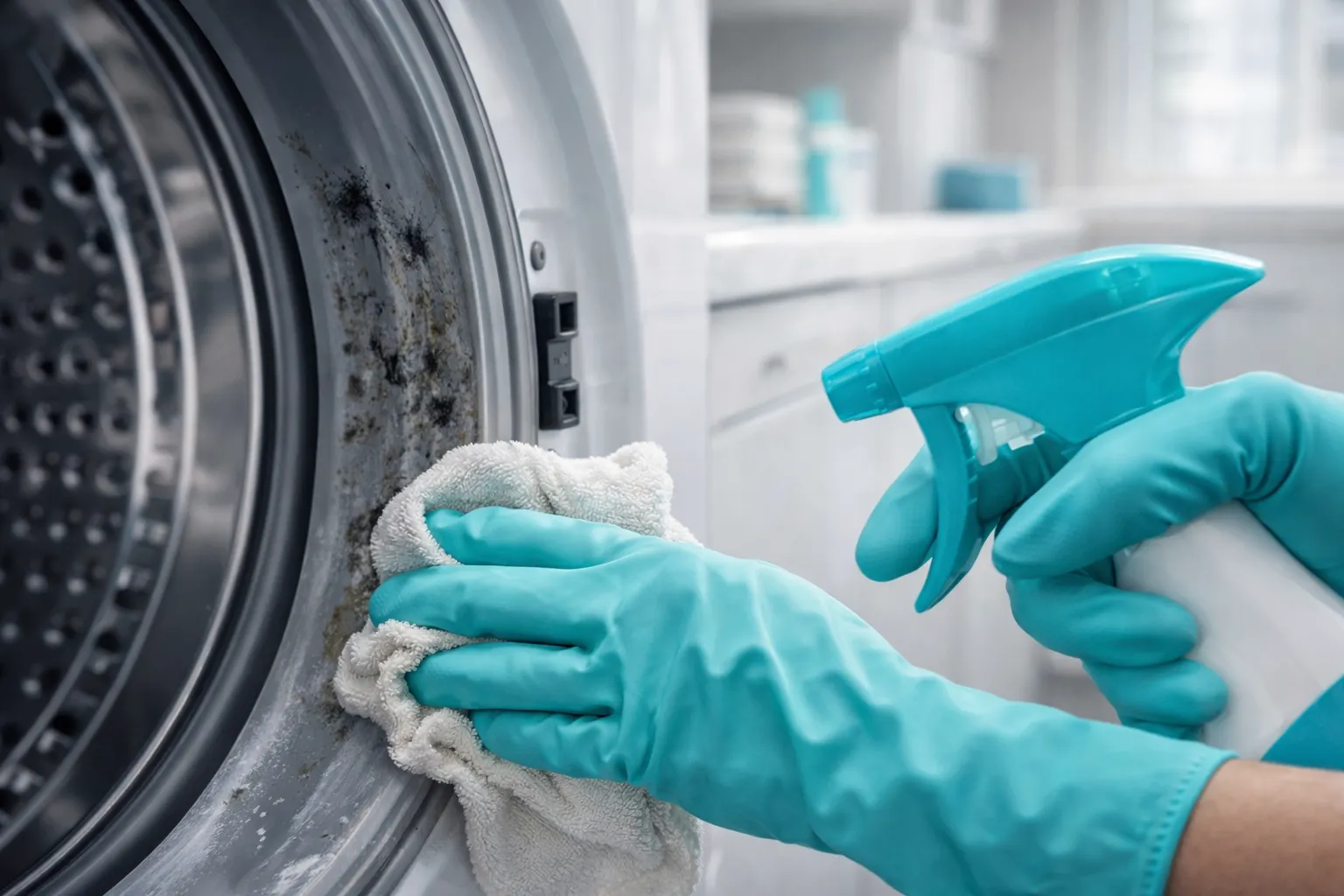
The rubber seal on a front load washer (also called the door gasket) is one of the most common sources of mold and musty odor. Because it traps moisture, detergent residue, and lint inside its folds, bacteria and mildew can grow quickly. Learning how to clean the rubber seal on a front load washer properly prevents odor transfer to clothes and reduces long-term washer contamination.
Cleaning the washer rubber seal is simple if you know the right steps. You don’t need expensive tools. Once you follow this guide and adopt good habits, your washer and clothes will stay fresh and odor-free.
Quick Answer
To clean a front-load washer rubber seal, wipe out debris and trapped grime, apply a mild solution, gently scrub mold or residue, rinse, and dry completely. Regular seal cleaning combined with machine maintenance stops musty odors and prevents mold regrowth. For full washer cleaning, see the washing machine cleaning hub.
For a full maintenance routine covering all washer components, see our complete guide on how to clean a washing machine.
Why Your Washer Rubber Seal Gets Dirty and Smelly
Most front-load washers use a rubber seal to prevent water leaks. However, this seal traps moisture after Front-load washers use a rubber door gasket to prevent leaks, but this seal traps moisture after every wash. The damp folds crFront-load washers use a rubber door gasket to prevent leaks. After each wash, moisture remains trapped inside the gasket folds. These damp, low-airflow areas create ideal conditions for buildup and microbial growth.
Over time, the seal collects:
- Trapped water
- Detergent and fabric softener residue
- Lint and organic debris
- Bacteria and mildew
In high-efficiency (HE) washers, low water levels and frequent cold cycles can leave concentrated detergent residue inside the folds. This residue may form a thin biofilm layer where odor-causing bacteria thrive, leading to musty smells that transfer to clothing.
If odor persists after cleaning the gasket, contamination may extend into the drum or drainage system. See our full guide on removing front-load washer smells for deeper troubleshooting.
Signs Your Washer Rubber Seal Needs Cleaning or Deep Cleaning
You may not notice buildup at first. Watch for these warning signs:
- Musty or sour smell from the washer
- Black spots on the rubber seal
- Slimy residue inside folds
- Clothes smelling bad after washing
- Visible debris or lint in the gasket
If any of these appear, clean the seal immediately.
Tools and Supplies Needed
You only need basic items:
- Microfiber cloth or towel
- Soft brush or toothbrush
- Gloves
- Spray bottle
- Warm water
- Mild detergent or washing machine cleaner
Optional cleaners:
- White vinegar
- Baking soda
- Hydrogen peroxide
Step-by-Step: How to Clean Washer Rubber Seal
Step 1 – Inspect the Rubber Seal
Open the washer door and gently pull back the rubber folds. Look for trapped dirt, coins, hair, or mold spots.
Step 2 – Remove Debris
Use a microfiber cloth or towel to remove lint, hair, and debris.
Expert note: Avoid frequent use of full-strength vinegar or harsh bleach directly on rubber seals, as repeated exposure can degrade elastomeric rubber over time. For tough mold, hydrogen peroxide or appliances-safe gasket cleaners are gentler and effective
Step 3 – Apply Cleaning Solution
Spray a mild detergent or vinegar solution onto the gasket and folds.
Step 4 – Scrub Mold and Residue
Use a soft brush or toothbrush to scrub mold and soap buildup carefully.
Step 5 – Rinse and Wipe Dry
Rinse the gasket with clean water and dry it completely with a towel.
Step 6 – Run a Hot Cleaning Cycle
Run an empty hot cycle with washer cleaner or vinegar to remove bacteria in the drum.
Expert Tip
Always dry the gasket folds after cleaning. Moisture left in the folds encourages mold and odors to return quickly.
Best Cleaning Solutions for Your Washer Rubber Seal
- Mild detergent: regular cleaning
- Vinegar: removes odors and light buildup
- Baking soda: neutralizes smells
- Hydrogen peroxide: for mold spots
- Washing machine cleaners: deep cleaning
Avoid frequent use of concentrated chlorine bleach, as repeated exposure can degrade elastomeric rubber over time and cause cracking or loss of flexibility.
Cleaning Mistakes That Damage Rubber Seals
Avoid these mistakes:
- Frequent vinegar cycles directly on rubber
- Mixing bleach + vinegar (toxic fumes)
- Hard/scratch brushes that tear rubber
- Skipping drying after cleaning
- Skipping monthly maintenance
Gentle cleaning keeps the seal safe.
How Often Should You Clean the Washer Seal?
| Usage Level | Cleaning Frequency |
|---|---|
| Heavy use | Every 2 weeks |
| Normal use | Monthly |
| Occasional use | Every 2–3 months |
When Cleaning Isn’t Enough — Replace the Seal
Replace the seal if: stiff, cracked, torn, leaking, or odor persists after repeated proper cleaning cycles. In these cases, consult a technician for safe replacement.
How to Prevent Mold in Washer Rubber Seal
- Leave washer door open after use
- Remove wet clothes immediately
- Use proper detergent amounts
- Run hot wash cycles occasionally
- Dry the seal after every wash
Safety Tip
Always unplug the washer before deep cleaning. Ventilate the area and wear gloves to protect your skin from mold and cleaning solutions.
When Cleaning Isn’t Enough — Replace the Seal
Sometimes mold stains remain. Consider replacement if:
- Mold stains persist after cleaning
- Rubber becomes cracked or torn
- Smell returns quickly
A technician can replace the gasket safely.
Causes vs Solutions Table
| Problem | Cause | Solution |
|---|---|---|
| Musty smell | Mold buildup | Clean gasket and run hot cycle |
| Black spots | Moisture trapped | Wipe and dry gasket folds |
| Smelly clothes | Bacteria | Run hot wash cycle and clean drum |
| Sour smell | Detergent residue | Use less detergent and clean seal |
if odors continue despite gasket cleaning, drainage buildup may also be involved. Review our guide on how to clean a washing machine drain hose for further inspection.
Common User Mistakes
- Not pulling back gasket folds
- Leaving wet clothes overnight
- Using too much detergent
- Skipping monthly cleaning
Avoid these to prevent mold and odor.
Key Takeaways
Drying the seal after each wash reduces recurrence.
Washer seals trap moisture and residue.
Mold develops when gasket folds stay damp.
Monthly cleaning prevents odor buildup.
Frequently Asked Questions
Yes. Odors transfer from the gasket to clean clothes.
The best cleaners for a washing machine rubber gasket are white vinegar, diluted bleach, or a baking soda and water mixture. Vinegar is effective for removing odors and mild mold, while bleach works best for stubborn mold and mildew. Always wipe the gasket dry afterward to prevent new mold growth.
Mold grows on the rubber seal of front load washers because moisture, detergent residue, and dirt collect inside the folds of the gasket. The dark and damp environment creates the perfect conditions for mold and mildew to develop. Regular cleaning and leaving the washer door open after use can help prevent mold growth
Not necessary, but wiping regularly helps prevent buildup.
Mold grows on front-load washer rubber seals because moisture, detergent residue, and dirt collect in the folds of the gasket. The dark, damp environment allows mold and mildew to grow quickly if the seal is not cleaned and dried regularly.
Conclusion
Most front load washer odors originate in the rubber seal where moisture and detergent residue accumulate. Regular cleaning, proper detergent dosing, and drying the gasket folds after each wash significantly reduce mold growth and odor recurrence. Consistent maintenance protects both the washer and laundry quality.
