


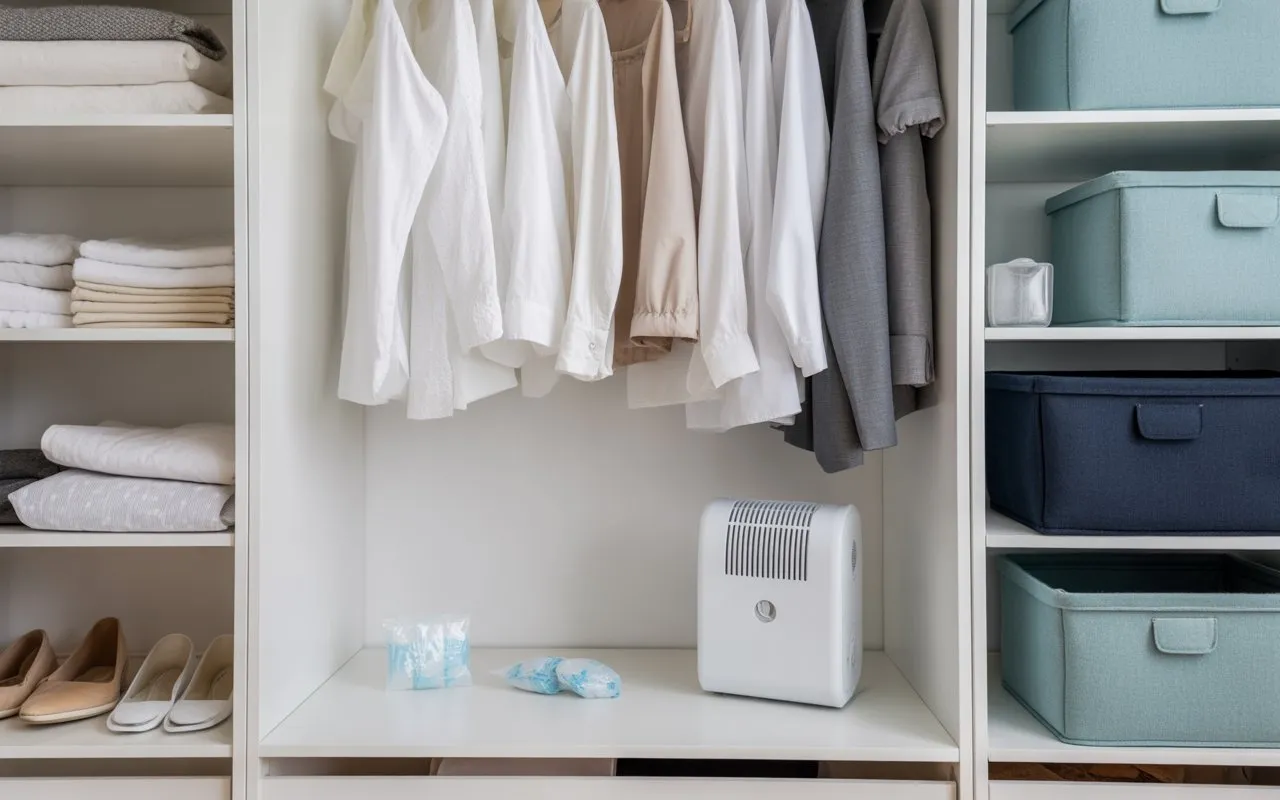
Mold in a closet usually develops when moisture remains trapped around clothes, shoes, walls, or storage containers. A closed and crowded closet may dry more slowly than the rest of the room, especially when it sits beside a bathroom, basement, water pipe, or cold exterior wall.
To prevent mold in a closet, control the moisture source first. Store only clean and completely dry items, keep the relative humidity around 30% to 50%, leave space for air to move, and fix leaks or condensation quickly. Moisture absorbers may help, but they cannot solve an active water problem.
Why Is Mold Growing in My Closet?
Mold needs moisture to grow. In a closet, that moisture may come from wet clothing, damp shoes, humid air, condensation, plumbing leaks, or water entering through a wall or floor.
Closets often receive less airflow than bedrooms and hallways. Clothes packed tightly together can also trap moisture between fabrics. As a result, a closet may become more humid than the surrounding room.
Use the location of the problem to find the most likely cause.
Swipe horizontally to view the full table.
| Where You Notice the Problem | Likely Cause | First Action |
|---|---|---|
| Clothes or shoes | Items were stored while damp. | Remove them and let them dry completely. |
| Exterior wall or corner | Condensation may be forming on a cold surface. | Move stored items away and inspect the wall. |
| Closet floor | Wet shoes, damp carpet, or a leak may be adding moisture. | Find and correct the moisture source. |
| Several stored items | The room or closet humidity may be too high. | Measure the humidity and lower it. |
| Musty smell without visible growth | Damp storage, trapped odor, or poor airflow may be present. | Inspect clothes, shoes, walls, and containers. |
| Growth returns after cleaning | Moisture may still be present. | Check for leaks, condensation, and high humidity. |
Odor alone does not prove that visible mold is growing. Inspect the closet, stored items, walls, floor, and containers before choosing the next step.
How to Prevent Mold in a Closet: 6 Practical Steps
1. Fix Leaks and Condensation
Check the closet for water stains, damp carpet, peeling paint, soft wall material, wet flooring, and signs of plumbing or roof leaks.
Pay special attention to closets beside bathrooms, under roofs, near water pipes, in basements, against exterior walls, or close to poorly sealed windows.
A moisture absorber cannot repair a leaking pipe or stop water entering through a wall. Fix the source before returning clothing to the closet.
Condensation can also form when warm indoor air touches a cold wall. This is common in closets built against exterior walls. Keep clothes and boxes away from these surfaces so air can move behind them.
A moisture absorber cannot repair a leaking pipe, stop water entering through a wall, or correct persistent condensation. Repair the source before returning clothes or storage containers to the closet.
2. Control Closet Humidity

Use a small hygrometer to measure relative humidity inside the closet. Relative humidity describes how much moisture is present in the air.
Aim to keep closet humidity between 30% and 50%. When readings stay above 50%, improve moisture control. Do not allow humidity to remain above 60%, because long periods of high humidity increase the risk of condensation and mold growth.
A closed closet can be more humid than the surrounding room, especially when it is crowded or located against a cold wall. Place the hygrometer inside the closet and check it at different times of day.
Humidity may rise during damp weather, after nearby showers, while laundry dries indoors, or when the closet remains closed for long periods.
Use air conditioning or a dehumidifier when the whole room is humid. A small closet absorber may help in a limited enclosed space, but it may not control moisture in a large room.
3. Improve Airflow Around Stored Items
Crowded clothing blocks air movement and can trap moisture between garments.
Leave space between hanging clothes instead of pushing them tightly together. Keep boxes, shoes, and folded items slightly away from the back wall. Do not fill every shelf to the edge.
For closets against exterior walls, leave a gap between the wall and stored items. This helps air move and prevents clothing from touching a cold or damp surface.
Opening the closet door may help when the surrounding room is dry and well ventilated. However, an open door will not solve the problem when the room itself is humid. In that case, use air conditioning, ventilation, or a dehumidifier.
4. Store Clothes Clean and Completely Dry
Never place damp clothing in a closed closet.
Before storage, check pockets, seams, cuffs, waistbands, hoods, linings, collars, and padded areas. These parts may remain damp even when the outer fabric feels dry.
Wash garments before long-term or seasonal storage; the same clean-and-dry rule is especially important when storing wool clothes. Sweat, body oils, food residue, and dirt can create odor and make stored clothing harder to maintain.
Do not place damp towels, sweaty workout clothes, rain-wet coats, or laundry removed too early from the dryer into a closet. Clothing left wet in a washing machine should be washed again and dried fully before storage.
When clothing already smells musty, remove the mildew odor from the fabric and correct its cause before returning the item to the closet.
- Pockets and seams
- Cuffs and waistbands
- Hoods and linings
- Collars and padded sections
5. Dry Shoes, Bags, and Accessories
Shoes can carry moisture into a closet through wet soles, damp linings, sweat, and rain.

Allow shoes to dry completely before placing them on a rack or inside a container. When suitable, remove the insoles so air can reach the inside of the shoe.
Do not leave wet shoes directly on carpet or against a closet wall. A raised and ventilated rack is a better choice.
The same rule applies to handbags, backpacks, hats, umbrellas, fabric baskets, and sports equipment. Do not seal a damp item inside plastic because the trapped moisture can create a musty smell and support fungal growth.
6. Choose Storage for the Closet Conditions
The best storage option depends on the humidity level, the condition of the clothes, and how long the items will remain stored.
Swipe horizontally to view the full table.
| Storage Situation | Better Choice |
|---|---|
| Dry, climate-controlled closet | Use a breathable garment bag, clean shelf, or open hanging space. |
| Humid room with completely dry clothes | Use a clean, dry sealed bin and monitor the humidity. |
| Damp wall, floor, or active leak | Do not store clothing until the problem is corrected. |
| Short-term compression | Use a vacuum bag only for completely dry and suitable garments. |
| Humid or leak-prone space | Avoid cardboard boxes that can absorb moisture. |
| Frequently worn clothing | Use open storage with enough space for airflow. |
A clean, dry sealed bin may protect fully dry clothing from humid air. The main risk is sealing damp clothes or moisture inside the container.
What Can You Put in a Closet to Prevent Mold?
A hygrometer, dehumidifier, moisture absorber, or silica gel may support moisture control. However, each product has a different purpose.
Swipe horizontally to view the full table.
| Option | What It Can Do | What It Cannot Do |
|---|---|---|
| Hygrometer | Measures the humidity inside the closet. | Does not lower humidity. |
| Dehumidifier | Lowers humidity in the room or closet area. | Cannot repair a leak. |
| Closet moisture absorber | May reduce moisture in a small enclosed space. | Cannot control serious room humidity. |
| Silica gel | May help protect small sealed containers. | Cannot dry an entire closet. |
A dehumidifier or moisture absorber works best after leaks, condensation, and damp stored items have been addressed.
Replace or empty moisture absorbers according to their instructions. A saturated or used-up absorber will no longer work effectively.
Odor-control products may make a closet smell fresher, but they do not correct high humidity or water damage.
How to Prevent Mold in Different Types of Closets
Some closets need more attention because of their location or construction.
Swipe horizontally to view the full table.
| Closet Type | Main Risk | Best Prevention Step |
|---|---|---|
| Exterior-wall closet | Cold surfaces and condensation | Keep items away from the wall and monitor closet humidity. |
| Bathroom-adjacent closet | Steam and humid air | Use the bathroom exhaust fan and allow the room to dry. |
| Basement closet | High humidity and damp floors | Use a hygrometer, dehumidify the room, and raise stored items. |
| Carpeted or floor-level closet | Moisture held near the floor | Inspect after leaks and keep items on shelves or raised racks. |
A closet near a bathroom may collect moisture even when no leak is visible. Use the bathroom exhaust fan during and after showers, and avoid placing damp towels or robes directly into storage.
Basement closets often have cooler walls and higher humidity. Avoid storing cardboard boxes or clothing directly on the floor.
What If Mold Is Already Visible?
Prevention steps will not clean mold that is already visible.
Remove the affected garment or item from the closet and keep it separate from clean clothing. When the mark is uncertain, compare it with common signs of mold on clothes before choosing a treatment.
Return a cleaned garment to the closet only after it is completely dry, no visible growth remains, and the storage problem has been corrected. When growth returns, fibers feel weak, or a strong odor remains, use the save-or-discard decision process before repeating treatment.
For washable garments, use a fabric-safe process for removing mold from clothes. Delicate, structured, valuable, or dry-clean-only items may need professional care.
When growth affects a large area of wall, ceiling, carpet, insulation, or ventilation equipment, professional assessment may be more appropriate than household cleaning.
Quick Closet Prevention Checklist
Use this checklist during humid weather, after a leak, or whenever a musty odor appears:
- Check walls, floors, ceilings, and corners for moisture.
- Measure humidity inside the closet.
- Store clothes, shoes, and accessories only when fully dry.
- Leave space for air to move around stored items.
- Keep clothing and containers away from damp walls and floors.
Closets with a history of leaks, condensation, or mold should be checked more often than dry, climate-controlled closets.
Final Takeaway
Preventing mold in a closet depends more on moisture control than on scented or absorbent products. Keep humidity around 30% to 50%, repair leaks and condensation, store clothes and shoes completely dry, and leave enough space for airflow.
When mold returns, moisture may still be entering or remaining in the closet. Find and correct that source before adding more storage products.
Reviewed Sources
- U.S. Environmental Protection Agency — guidance on mold, moisture, humidity, leaks, ventilation, and dehumidification.
- Centers for Disease Control and Prevention — guidance on indoor mold and moisture control.
- North Dakota State University Extension — recommendations for closets, exterior walls, airflow, and storing clothing clean and dry.
- Federal Trade Commission — garment care-label requirements and safe clothing-care instructions.
Research Method
This guide was reviewed using public moisture-control guidance, closet-storage recommendations, garment care-label principles, and clothing-storage practices. It focuses on prevention through drying, humidity control, airflow, suitable storage, and correction of leaks or condensation. It does not identify mold species from color, odor, or appearance alone.
