


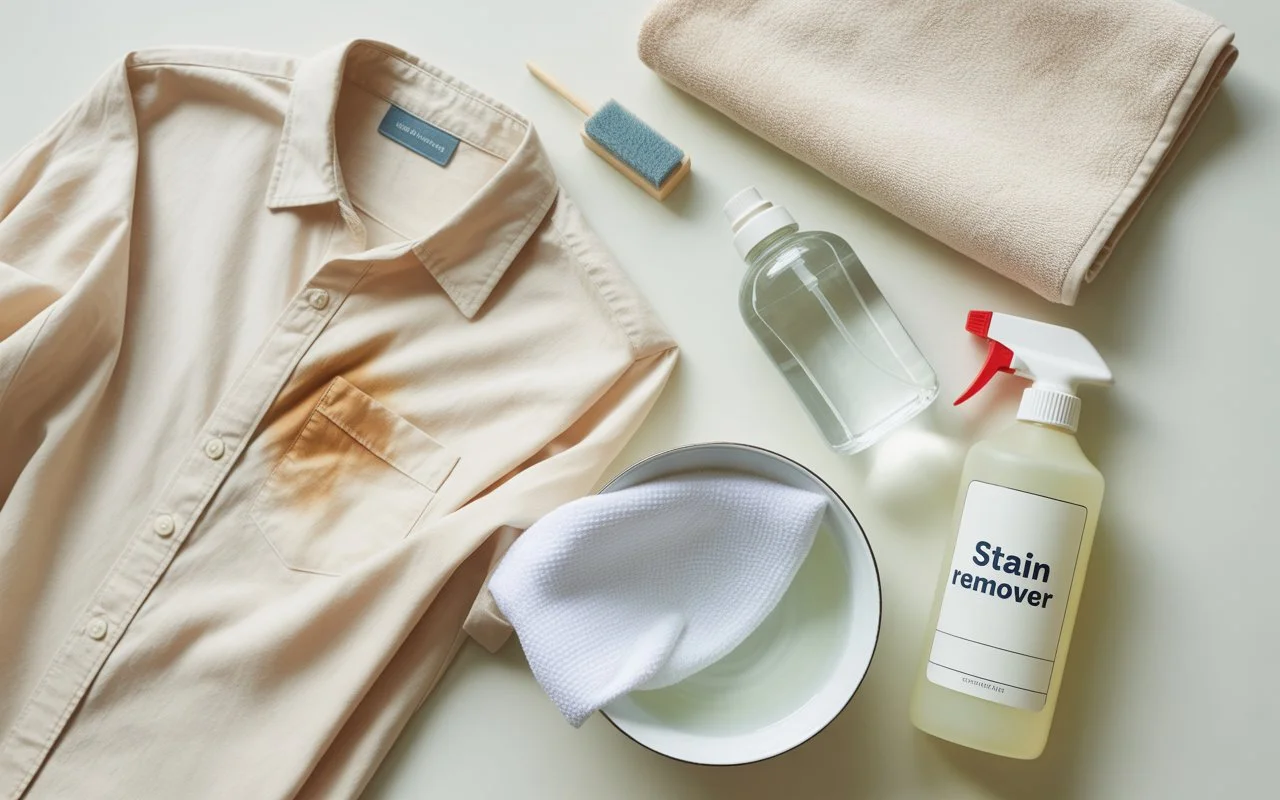
Old blood stains can often be removed from clothes if you treat them the right way. To remove old blood stains from clothes, start by rehydrating the dried mark with cold water, then use an enzyme detergent or fabric-safe stain remover before washing.
If you need to get dried blood out of clothes after washing, drying, or sitting for days, the method depends on the fabric, stain age, and color. This guide walks you through the safest steps for colored clothes, white clothes, delicate fabrics, and set-in blood stains so you can lift the mark without damaging the material.
Quick Takeaways
- Use cold water for old, dried, and set-in blood stains.
- Do not use hot water or dryer heat before the stain is gone.
- Enzyme detergent is often the best first choice for washable clothes.
- Hydrogen peroxide may help on white or light washable fabrics, but patch-test first.
- Use dye-safe methods on colored clothes to avoid fading.
- Wool, silk, and dry-clean-only items need extra caution.
- Old period blood stains on underwear, sheets, or sleepwear should be treated with a cold soak first.
Can Old or Dried Blood Stains Still Come Out?
Yes, old or dried blood stains can still come out of clothes if the fabric is washable and the stain has not fully bonded with heat. Older stains are harder because blood dries into the fibers and may turn brown or rusty-looking over time.
Blood is a protein-based stain. Heat can make protein stains harder to remove, which is why cold water is the safer choice. Start by softening the dried blood with a cold soak. Then use a fabric-safe treatment before washing.
If the item has already gone through the dryer, the stain may be more stubborn. That does not always mean it is permanent. If the stain lightens after each treatment, keep going carefully.
How to Remove Old Blood Stains From Clothes
The best way to remove old blood stains from clothes is to soften the stain first, treat it gently, wash cold, and avoid heat until the mark is gone.
Step 1: Soak the stain in cold water
Soak the stained area in cold water for 15 to 30 minutes. If the blood is thick, brown, or heavily dried, soak it longer.
This helps rehydrate dried blood so the treatment can reach the stain. Do not use hot water because heat can make the mark harder to remove.
Step 2: Rinse from the back of the fabric
Hold the back of the stained area under cool running water. This helps push loosened blood out of the fibers instead of deeper into the fabric.
If the fabric is delicate, blot with a damp cloth instead of rubbing.
Step 3: Apply enzyme detergent or a fabric-safe treatment
Apply a small amount of enzyme detergent, stain remover, or another fabric-safe treatment to the damp stain. Gently work it in with your fingers or a soft cloth.
For many washable clothes, enzyme detergent is the best starting point because it helps break down protein-based stains. A dedicated laundry detergent for blood stains can help when regular detergent is not enough.
Step 4: Rinse and repeat if needed
Rinse the treated area with cool water and check the stain. If it is still visible, repeat the cold soak and treatment before washing.
Old blood stains often fade in stages. If the mark is getting lighter and the fabric still looks stable, another round may help.
Step 5: Wash in cold water
Wash the item according to the care label using cold water. Do not wash it in hot water, and do not use the dryer after washing.
Check the stained area while the fabric is still damp.
Step 6: Air-dry and inspect
Air-dry the item completely before deciding whether the stain is gone. A faint mark can become harder to treat if dryer heat sets it deeper.
If the stain remains, repeat the treatment before using any heat.
How to Get Dried Blood Out of Clothes
To get dried blood out of clothes, start by rehydrating the stain. Do not scrub a dry blood stain hard because that can rough up the fabric and spread the mark.
Soak the stained area in cold water until the dried blood softens. Then rinse from the back of the fabric and apply enzyme detergent or a fabric-safe stain remover. Let it sit briefly, rinse again, and wash in cold water.
If dried blood remains after washing, treat it again before drying. If the item already went through the dryer, use a longer cold soak and repeat the treatment patiently. Dryer-set stains may not disappear in one round, but they can still improve.
Old dried blood may look brown instead of red. Treat it like a dried protein stain: cold soak, enzyme treatment, cold wash, and air-dry.
Best Treatments for Old and Dried Blood Stains
The best treatment depends on the fabric color, stain age, and care label. Start with the safest option that fits the item.
Enzyme detergent
Enzyme detergent is often the best first choice for old and dried blood stains on washable clothes. It helps break down protein-based residue without jumping straight to bleach.
Use it on damp fabric, let it sit as directed, then rinse with cold water. Avoid enzyme products on wool or silk unless the label says they are safe for those fibers.
Hydrogen peroxide
Hydrogen peroxide can help lift old blood stains on some white or light washable fabrics. Apply a small amount, let it bubble briefly, blot gently, and rinse with cool water.
Always patch-test first. Peroxide can lighten dyes and may not be safe for delicate fabrics.
Color-safe oxygen bleach
Color-safe oxygen bleach may help with stubborn stains on washable clothes if the care label allows it. It can be useful when enzyme detergent improves the stain but does not fully remove it.
Use it exactly as directed and rinse well before trying another treatment.
Mild soap or baking soda
Mild dish soap can help with lighter residue or when you want a gentle first step. Baking soda paste may also help with mild remaining marks, but it is usually not strong enough for deep set-in blood stains.
Use these as supporting methods, not the main fix for heavy old blood stains.
How to Remove Old Blood Stains From Colored Clothes
To remove old blood stains from colored clothes, use cold water and dye-safe treatments. Start with enzyme detergent, mild soap, or color-safe oxygen bleach if the care label allows it.
Patch-test every treatment on an inside seam first. This matters because removing the stain is not helpful if the fabric fades around it.
Be careful with hydrogen peroxide on colored clothes. It may work on some fabrics, but it can also lighten dye. If the hidden test area changes color, skip peroxide and use a gentler method.
After treating the stain, wash in cold water and air-dry before checking. Do not use the dryer until you are sure the stain is gone.
How to Remove Old Blood Stains From White Clothes
White clothes can sometimes handle stronger stain treatment than dark or bright fabrics, but the care label still matters.
For washable white cotton, start with a cold soak and enzyme detergent. If the stain remains, hydrogen peroxide may help. Apply it only after patch testing, let it bubble briefly, then rinse with cool water.
Color-safe oxygen bleach can also help on many washable white clothes, especially when the stain has faded but not fully disappeared. Avoid hot water until the stain is fully gone because heat can set the blood deeper.
For delicate white fabrics, lace, wool, silk, or structured clothing, use gentler treatment or professional cleaning.
Fabric Safety: Cotton, Denim, Wool, Silk, and Dry-Clean-Only Clothes
Cotton and polyester are usually easier to treat at home. Start with a cold soak and enzyme detergent, then repeat if the stain fades.
Denim can handle more movement, but dark denim may fade. Use cool water, patch-test stronger treatments, and avoid rough scrubbing on visible areas.
Wool and silk need caution. They are delicate protein fibers, and some enzyme products may damage them. Use cool-water blotting and a cleaner labeled safe for that fabric.
Dry-clean-only clothes should not get full home treatment. Blot lightly with cold water if needed, then take the item to a professional cleaner.
If you are unsure how a material should be handled, check the fabric before choosing a treatment. Different fabrics respond differently to soaking, rubbing, peroxide, and oxygen bleach, so washing different fabrics safely matters before stain treatment.
What Not to Do
Do not use hot water on old or dried blood stains. Hot water can make the stain harder to remove.
Do not put the clothing in the dryer before the stain is gone. Dryer heat can set even a faint mark.
Do not scrub delicate fabrics aggressively. Rubbing can damage the fibers and spread the stain.
Do not use chlorine bleach on colored clothes. It can remove dye and leave a faded patch.
Do not mix multiple stain products at once. Rinse between methods and use one treatment at a time.
When to Stop Home Treatment
Stop home treatment if the fabric starts to weaken, the color begins to fade, or the stain no longer improves after careful repeat treatment.
You should also stop if the item is silk, wool, structured, expensive, sentimental, or dry-clean-only. In those cases, professional cleaning is usually safer.
For washable everyday clothes, a second or third treatment may be worth trying if the stain keeps getting lighter.
Final Takeaway
To remove old blood stains from clothes, use cold water first, rehydrate the stain, apply enzyme detergent or a fabric-safe remover, wash cold, and air-dry before checking. To get dried blood out of clothes, follow the same process but allow more soaking time and repeat gently if the stain is fading. If you are dealing with a fresh stain or need a broader stain process, the same cold-water rule also applies when you get blood out of clothes.
