


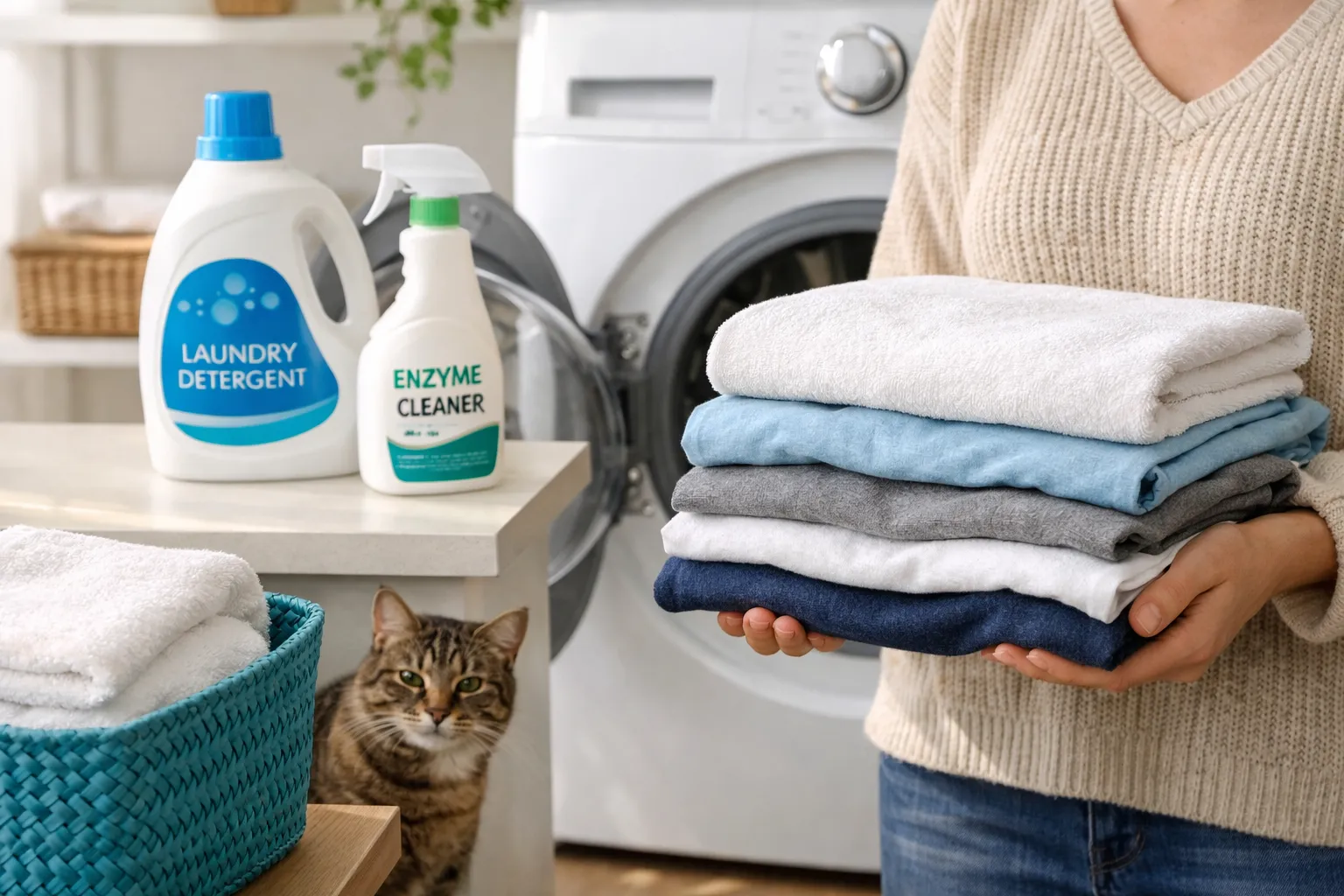
If you are trying to get cat pee smell out of clothes, a normal wash may not be enough. Cat urine odor can stay in the fabric even after the stain looks gone, especially if the clothes were left wet, washed once already, or dried with heat.
The right fix depends on how bad the problem is. Fresh cat pee needs a cold rinse and quick pretreatment, while dried cat pee, old urine smell, yellow stains, or clothes that still smell after washing usually need a laundry-safe enzyme cleaner, separate washing, and air-drying before the dryer.
This guide shows you how to remove cat pee smell from clothes safely, when vinegar can help, when enzyme cleaner works better, and what to avoid so the odor does not come back.
Quick Takeaways
- Rinse fresh cat pee with cold water before washing.
- Use a laundry-safe enzyme cleaner for strong, old, or dried cat urine smell.
- Vinegar can help light odor, but it may not fully remove old cat pee.
- Do not use dryer heat until the smell is fully gone.
- Avoid ammonia cleaners because they can smell similar to urine.
- Wash urine-soaked clothes separately from clean laundry.
Why Cat Pee Smell Stays in Clothes
Cat pee smell is harder to remove than many normal laundry odors. The urine can dry into the fabric and leave odor behind. Regular detergent may clean the surface, but it may not break down the source of the smell.
This is why cat pee odor can seem gone after washing, then return later. Warmth, humidity, or body heat can make the smell noticeable again. Dryer heat can also make the odor harder to remove if the urine was not fully treated first.
An enzyme cleaner is often the best choice for cat urine odor. It helps break down organic urine residue instead of only covering the smell. Enzyme cleaner works best when it stays damp on the affected area for the time listed on the product label.
Fast Method for Fresh Cat Pee Smell
If the cat pee is fresh, act quickly. Blot the wet area with a clean towel, rinse with cold water, and pretreat the spot with a laundry-safe enzyme cleaner.
Then wash the item separately and run an extra rinse if the fabric can handle it. Air-dry the clothing and smell-check it before using the dryer.
This fast method works best for fresh urine. Old cat pee smell or dried cat pee smell may need a longer enzyme treatment and more than one wash.
What To Do Before Washing
Before washing, check whether the cat pee is fresh, dried, or already washed once. Each situation needs a slightly different start.
For fresh cat pee, blot the wet area with a clean towel. Do not rub hard because that can push urine deeper into the fabric. Rinse the area with cold water from the back of the fabric if possible.
For dried cat pee, do not start with hot water. The smell may already be set into the fibers, so the item usually needs a longer pretreatment with an enzyme cleaner before washing.
For clothes already washed but still smelling, do not dry them with heat. Treat them again while they are still damp, or rewet the problem area with cold water. Then use an enzyme cleaner before rewashing.
Best Method by Situation
| Situation | Best First Step | Best Cleaner |
|---|---|---|
| Fresh cat pee | Blot and rinse with cold water | Enzyme cleaner or vinegar support |
| Dried cat pee | Rewet and pretreat longer | Enzyme cleaner |
| Already washed | Do not dry; treat again | Enzyme cleaner |
| Smell after drying | Re-soak and repeat | Enzyme cleaner |
| Yellow stain | Treat before heat | Oxygen bleach if fabric-safe |
| White clothes | Check bleach safety first | Oxygen bleach or chlorine bleach if label-safe |
| Baby clothes | Use a gentle product | Fragrance-free enzyme cleaner if label-safe |
| Delicates | Check care label | Professional care or gentle handwashing |
Step-by-Step: How To Get Cat Pee Smell Out of Clothes
Start with this method for washable clothes. Always check the care label first, especially for wool, silk, rayon, leather, suede, or dry-clean-only items.
Step 1: Blot or Rinse With Cold Water
If the urine is fresh, blot the area with a clean towel. Then rinse with cold water. Cold water helps move urine out before it dries deeper into the fabric.
Avoid hot water at this stage. Heat can make urine odor and stains harder to remove.
Step 2: Pretreat With Enzyme Cleaner
Apply a laundry-safe enzyme cleaner to the affected area. Make sure the fabric is fully damp where the urine touched it. Let the cleaner sit for the time listed on the product label.
Do not rush this step. Old cat pee smell may need a longer enzyme treatment than fresh urine.
Step 3: Wash Separately
Wash the affected clothes separately from clean laundry. After pretreating, wash using the care-label setting that is safe for the fabric.
Avoid hot water if the urine smell is still strong or the fabric is delicate. Use normal detergent, but do not use too much. Extra detergent will not remove cat pee faster. It can leave residue and make rinsing harder.
Step 4: Use an Extra Rinse
An extra rinse helps remove leftover cleaner, detergent, and urine residue. This is useful for towels, thick cotton, hoodies, sweatpants, and baby clothes.
If the item still smells after rinsing, repeat the enzyme treatment before drying.
Step 5: Air-Dry First
Air-dry the clothing before using dryer heat. When the item is dry, smell-check it closely. If the cat pee odor is still there, repeat the treatment.
Do not put the item in the dryer until the smell is gone. Dryer heat can set odor and stains, making them harder to remove later.
How To Get Cat Pee Smell Out of Clothes With Vinegar
White vinegar can help with light cat pee odor, especially when the urine is fresh or the smell is mild.It can also help reduce the ammonia-like smell in washable fabric.
Use vinegar as a support step, not always as the main fix. Add it to a soak or wash only when the fabric care label allows it. Do not mix vinegar with bleach because that can create dangerous fumes.
Vinegar may not fully remove old cat pee smell from clothes. If the odor keeps returning, use an enzyme cleaner instead of repeating vinegar again and again.
How To Remove Cat Pee Smell Without Vinegar
You can remove cat pee smell without vinegar by using a laundry-safe enzyme cleaner. This is often the better choice for old urine, dried urine, or clothes that still smell after washing.
For stain support, oxygen bleach may help on washable, colorfast fabrics if the care label allows it. Baking soda can help with light odor, but it should not replace enzyme cleaner for strong cat urine smell.
For sensitive clothing or baby clothes, choose a fragrance-free laundry product when possible. Avoid heavy perfume products because they may cover the smell for a short time without removing the source.
What If the Clothes Already Went Through the Washer?
If clothes still smell like cat pee after washing, do not put them in the dryer. The odor may still be in the fabric.
Rewet the affected area with cold water. Apply enzyme cleaner again and let it sit based on the label. Then wash the item separately and use an extra rinse.
If cat pee got into the washer with the clothes, remove the load quickly and do not wash clean laundry right away. If the washer smells, wipe the drum, gasket, or detergent drawer, then run a washer cleaning cycle before using it again.
If the clothes already went through the dryer, the odor may be harder to remove. It is still worth trying an enzyme soak and repeat wash, but heat-set odor may take more than one treatment.
Cat Pee Stain vs Cat Pee Smell
Cat pee smell and cat pee stains are related, but they are not the same problem. The smell comes from urine residue. The stain is visible discoloration on the fabric.
| Problem | What It Means | What To Do |
|---|---|---|
| Smell only | Odor residue remains | Use enzyme treatment |
| Yellow stain | Urine mark on fabric | Treat stain before drying |
| Old dried spot | Set-in urine | Use longer enzyme pretreatment |
| Smell returns when damp | Residue is still active | Repeat treatment |
| White clothes with stain | Fabric may allow stronger treatment | Check bleach safety first |
If you need to get cat pee stains out of clothes, treat the visible mark before dryer heat. If the stain is gone but odor remains, treat it as an odor problem.
Can You Use Bleach on Cat Pee Clothes?
Bleach is not the first choice for cat pee smell. It may help some white, bleach-safe fabrics, but it can damage colors, elastic, wool, silk, and many delicate fabrics.
Never mix bleach with vinegar, ammonia, or other cleaners. This can create unsafe fumes.
For many clothes, oxygen bleach is a safer option than chlorine bleach, but it still needs a care-label check. Test colored fabrics first if you are not sure.
Fabric-Safe Notes
Cotton clothes can usually handle normal washing, but always check the label before using warm water, oxygen bleach, or chlorine bleach.
Polyester and gym clothes can hold odor, especially if the fabric traps body oils and urine smell together. Use enzyme cleaner and avoid fabric softener because it can leave a coating.
For baby clothes, use a fragrance-free product when possible and rinse well. Avoid strong perfumes because they can hide the odor instead of removing it.
Wool, silk, leather, suede, and dry-clean-only items need more care. Do not soak them in random cleaners. A professional cleaner is safer for expensive or delicate items.
White clothes may allow stronger stain treatment, but only if the label says bleach is safe. If the care label says no bleach, do not use chlorine bleach.
What Not To Do
Avoid these mistakes when trying to get cat pee out of clothes:
- Do not use hot water first.
- Do not use dryer heat before the smell is gone.
- Do not use ammonia cleaners.
- Do not mix bleach with vinegar.
- Do not mix bleach with ammonia.
- Do not wash urine-soaked clothes with clean laundry.
- Do not use fabric softener to cover the smell.
- Do not use too much detergent.
- Do not ignore the same spot if the cat keeps peeing there.
These mistakes can make the odor harder to remove or unsafe to treat.
Why Fabric Softener Is Not a Fix
Fabric softener can make clothes smell better for a short time, but it does not remove cat urine. It can also leave a coating on fabric. That coating may trap odor and make washing less effective.
If clothes smell like cat pee, remove the urine first. Add scent only after the odor is fully gone.
How To Stop Cats Peeing on Clothes Again
Laundry cleaning helps the clothes, but it does not always fix the reason your cat peed there. If the smell stays in a laundry pile, basket, or floor area, the cat may return to that spot.
Keep dirty clothes off the floor. Use a closed laundry hamper if needed. Wash urine-soaked items as soon as possible.
Also check the litter box. Cats may avoid a dirty box, a box in a stressful area, or litter they do not like. Sudden peeing outside the litter box can also be linked to stress, territory changes, or health problems. If this is new behavior, a vet check may be needed.
Male cat pee can smell stronger, especially if the cat is not neutered, but the cleaning process for clothes is the same.
Clean nearby surfaces too. If a cat peed on clothes sitting on carpet, bedding, or a chair, the smell may be in more than the clothing.
When Clothes May Not Be Worth Saving
Most washable clothes can be treated, but not every item is worth saving. Consider replacing the item if the smell remains after repeated enzyme treatments, the fabric is damaged, or the urine sat for a long time.
Be extra careful with dry-clean-only clothes, leather, suede, wool, silk, and expensive items. Home soaking can damage them. For those fabrics, professional cleaning is usually safer.
Final Verdict
The best way to get cat pee smell out of clothes is to treat the urine before heat sets it. Rinse fresh urine with cold water, use a laundry-safe enzyme cleaner, wash the item separately, run an extra rinse, and air-dry before using the dryer.
Vinegar can help with light odor, but strong, old, or dried cat pee smell usually needs enzyme treatment. If the smell comes back after washing, do not keep adding perfume or fabric softener. Treat the urine residue again, rinse well, and dry only when the odor is fully gone.
