

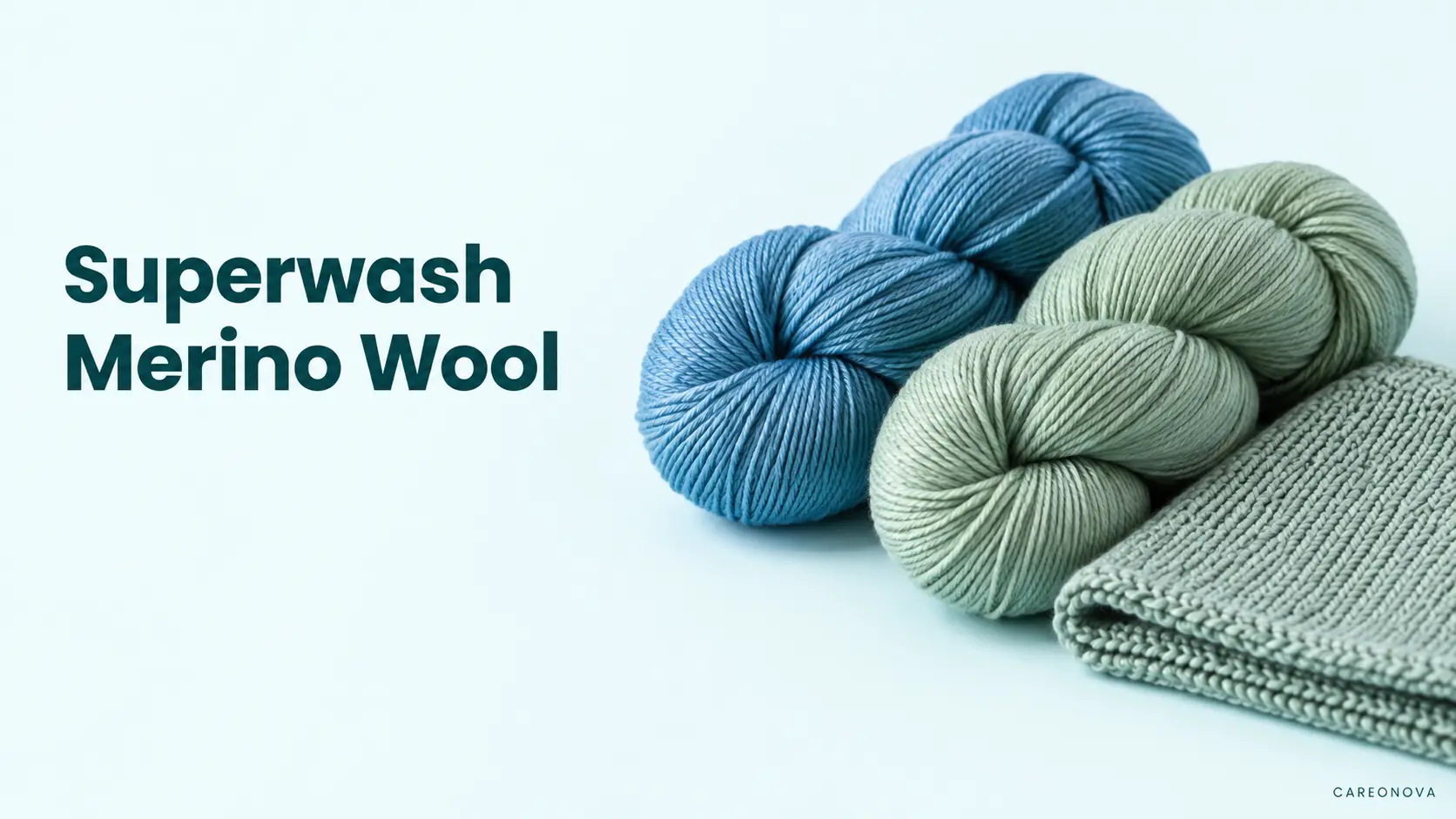
You want the luxurious, soft feel of merino wool for your next knitting project, but you are terrified of ruining it in the wash. This is the exact dilemma that makes superwash merino wool yarn so popular. It promises the warmth of natural wool without the fear of accidental shrinking.
However, in my experience diagnosing ruined knitwear, machine washable does not mean invincible. Understanding how this yarn is chemically made is the only way to keep your finished sweaters from stretching out of shape, pilling heavily, or breaking down in the laundry.
If you are ready to buy, but want to make sure your handmade work actually lasts, here is everything you need to know about choosing, using, and washing superwash merino.
Key Takeaways
- The Science: Superwash yarn is treated with an acid bath and coated in a microscopic plastic resin so the fibers cannot lock together and shrink.
- The Wet Stretch Flaw: Because the grabby scales are removed, superwash garments grow and sag heavily when wet. They must be blocked and dried flat.
- The Wash Rules: Never use enzymatic laundry detergents (they eat the protein fibers) or liquid fabric softeners (they strip away the protective resin).
- The Sock Rule: 100% superwash wool is too weak for socks; always buy a yarn blended with at least 25% nylon for durability.
What is Superwash Merino Wool Yarn?
Superwash merino wool yarn is natural merino wool that has been chemically treated to prevent it from felting and shrinking in the washing machine.
Normal wool fibers look like overlapping roof shingles under a microscope. These rough edges are called cuticle scales. When regular wool gets hot and wet, these scales open up. If you add friction (like the tumbling of a washing machine), the scales lock together tightly. The fabric shrinks, becomes dense, and turns into felt.
To stop this from happening, factories put superwash yarn through a two-step chemical process:
- The Acid Bath (Chlorination): The wool is treated with chlorine gas or acid to burn off the grabby scales entirely.
- The Polymer Resin: The newly smoothed fiber is coated in a microscopic layer of plastic resin.

Because the scales are gone and the fiber is coated in smooth resin, the threads can safely glide past each other in the washing machine without locking together.
Top Superwash Merino Wool Yarns of 2026
When deciding which yarn to buy, you must match the yarn’s structure to how often the final item will be washed. Here is a breakdown of the best options based on durability and project type.
| Top Pick Category | Brand & Yarn Line | Yarn Weight | Careonova Verdict |
|---|---|---|---|
| Best for Sweaters | Cascade 220 Superwash | Worsted | Excellent structure; plied twist resists heavy pilling in the wash. |
| Best for Socks | Malabrigo Sock (or similar) | Fingering | Requires a 25% Nylon blend to survive walking friction. |
| Best for Baby Clothes | Lion Brand Superwash Merino | DK / Light | Ultra-soft and withstands the high heat needed for biological stains. |
Best Worsted Weight for Sweaters: Cascade 220 Superwash
When knitting a large garment like a sweater, you want a yarn that will not pill heavily after its first trip through the laundry. Cascade 220 Superwash is my top worsted-weight recommendation for large projects. It is a firmly plied yarn, meaning several smaller threads are twisted tightly together. This tight twist protects the inner fibers from the friction of your washing machine drum, reducing the chances of heavy fabric pilling over time. It is a highly reliable workhorse yarn for everyday winter wear.
Best for Socks & Friction Wear: Superwash / Nylon Blends
If there is one thing worth remembering, it is this: 100% superwash wool is too weak for socks. The chemical acid bath that makes the wool washable also makes the fiber slightly weaker. If you knit socks out of pure superwash merino, your heels and toes will wear through very quickly.
Instead, look for a sock yarn that is blended for strength. A blend of 75% Superwash Merino and 25% Nylon (like Malabrigo Sock or similar fingering-weight blends) gives you the softness of merino with the extreme abrasion resistance of synthetic nylon.
Best for Baby Blankets: Lion Brand Superwash Merino
Baby blankets and clothes require frequent washing to remove tough biological stains like milk and spit-up. Regular wool would shrink instantly under that much cleaning. A dedicated baby yarn like Lion Brand Superwash Merino (DK or Sport weight) is non-negotiable for nursery projects. It is incredibly soft against sensitive skin because the itchy wool scales have been removed, and the strong resin coating protects the blanket through dozens of wash cycles.
Structural Comparison: Superwash vs. Regular Untreated Merino
Before you buy, it helps to understand exactly what you are trading away when you choose a treated yarn over a natural one.
| Feature | Superwash Merino | Regular Untreated Merino |
|---|---|---|
| Machine Washability | High (Will not felt or shrink) | Zero (Hand-wash only) |
| Texture & Itch Factor | Ultra-soft; silky and smooth | Can feel slightly prickly |
| Dye Colors | Extremely vibrant and bright | Softer, more muted tones |
| Warmth & Breathability | Slightly less warm and breathable | Maximum natural temperature control |
| Shape Memory | Poor; stretches and sags when wet | Excellent; snaps back into shape |
| Environmental Impact | Sheds microplastics; uses chemicals | 100% biodegradable and natural |
Superwash takes dye beautifully and feels like silk. However, because it is coated in a microscopic plastic resin, it loses a little bit of the natural breathability that makes wool so famous among all types of fabric. Furthermore, that resin coating will shed trace amounts of microplastics into your washing machine water over time.
The “Wet Stretch”: Why Superwash Yarn Grows (And How to Fix It)
The biggest complaint I see on knitting forums is the dreaded “wet stretch.” A knitter finishes a beautiful sweater, puts it in the wash, and pulls out a soggy garment that has grown three sizes.
This happens because of physics. As we covered earlier, superwash wool has no grabby scales, and the fibers are coated in a slick resin. When the sweater gets heavy with water, there is nothing holding the stitches in place. The heavy, slick yarns simply slide past each other, causing the fabric to stretch and sag dramatically.

How to fix it:
You can never hang a wet superwash sweater on a hanger. You must use a process called aggressive blocking.
- Lay the wet sweater flat on a dry towel.
- Gently push and pat the stitches back together into their proper shape. Do not pull or stretch.
- Once the sweater is mostly dry, always check the yarn’s ball band first, but generally, you can place it in the dryer on Medium Heat for just 10 to 15 minutes. The brief heat helps snap the polymer resin back into its original shape, tightening the stitches back up.
The “Wash Swatch” Rule for Superwash Patterns
In knitting, you always knit a small test square (a gauge swatch) to measure your stitches per inch before starting a sweater.
If you measure a dry gauge swatch with superwash yarn, your final sweater will not fit. Because superwash behaves so differently when wet, measuring dry stitches is useless. You must knit a 6×6 inch square, wash it in the machine exactly how you plan to wash the finished garment, block it flat, let it dry completely, and then measure it. This prevents the wet-stretch from ruining hours of hard work.
How to Wash Superwash Merino (Without Ruining the Coating)
The label says “machine washable,” but that does not mean you can toss it in with your gym clothes and heavy towels. To keep the polymer coating intact, you must follow strict laundry chemistry.
The Danger of Enzymatic Detergents
Standard laundry detergents use active ingredients called protease enzymes. These enzymes are designed to seek out and digest protein-based stains like blood, sweat, and food.
However, wool is a natural protein fiber (made from sheep’s hair). If you use a normal enzymatic laundry detergent, those enzymes will literally eat your yarn. Over time, the yarn will become brittle, snap, and develop holes. You must always use a gentle, enzyme-free detergent.
The Danger of Fabric Softeners
Never use liquid fabric softeners on superwash yarn. The chemicals in standard softeners interact poorly with the polymer resin on the yarn. Over time, the softener will strip the resin coating away. Once that coating is gone, the raw wool underneath is exposed, and your sweater will shrink the next time you wash it.
The Careonova Wash Protocol
To wash wool safely, follow these exact steps to protect the yarn’s structure:
- Turn it inside out: This protects the outside (the visible face) of the sweater from rubbing against other clothes.
- Use a mesh laundry bag: Placing the item in a mesh bag prevents the washing machine drum from stretching the heavy, wet yarn.
- Use a pH-neutral, enzyme-free wash: Products like Soak or Eucalan are specifically designed to clean wool without stripping its natural oils or eating the protein fibers.
- Use the Cold / Delicate Cycle: Heat breaks down the resin coating over time. Always wash on cold with the lowest spin cycle setting to prevent aggressive agitation.
