

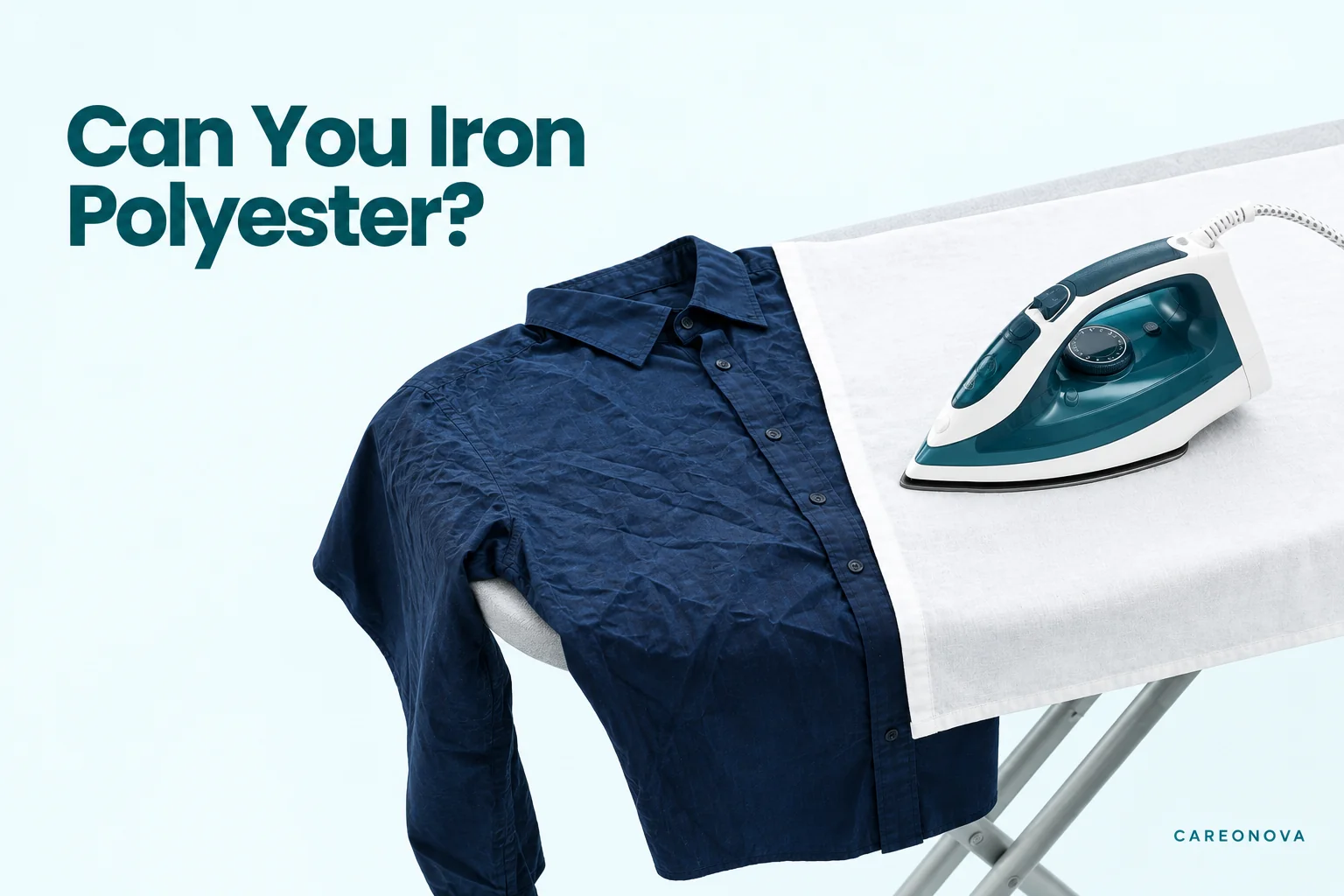
When people ask, can you iron polyester, the answer is yes. Because polyester is a synthetic plastic, it melts under direct high heat. You can safely remove wrinkles if you use a strict low heat setting and place a physical barrier between the metal soleplate and the fabric.
Treating polyester like natural cotton will permanently damage the garment. Here is exactly how to press synthetic fabrics safely.
Key Takeaways
- Keep heat low: Set the iron to the synthetic or silk setting (230°F to 300°F).
- Use a pressing cloth: Place a thin cotton towel over the polyester. Never let bare metal touch the fabric.
- Turn inside out: Iron on the reverse side to protect the visible finish of the garment.
- Avoid iron steam: Irons require high heat to generate steam. If the soleplate touches the fabric at that temperature, the polyester will melt.
- Check blends: For mixed fabrics, always match the iron temperature to the most heat-sensitive fiber on the care label.
The Exact Iron Setting for Polyester
You must keep the heat strictly controlled when working with synthetics. Finding the correct polyester iron temp is critical to avoid destroying the garment.
Most modern irons use fabric names rather than exact degree markings. Turn your dial to the Synthetic, Silk, or Low setting.
If your iron uses a numbered dial, choose setting 1 or 2. These settings keep the soleplate temperature between 230°F and 300°F (110°C to 150°C). This is hot enough to relax the wrinkles but cool enough to prevent the plastic fibers from melting.
Why Polyester Glazes (The Science of Melting and Shine Marks)
Polyester behaves completely differently than natural fibers under heat and pressure.
Thermoplastic Behavior
Polyester is manufactured from Polyethylene Terephthalate (PET). The American Chemical Society categorizes PET as a thermoplastic. Thermoplastics soften when heated and harden again when they cool. At 350°F, polyester fibers lose their structural integrity. At 482°F (250°C), they liquefy entirely.
The Cause of Shine Marks
Many people accidentally create shiny patches on their polyester clothes while ironing. This happens when the heat softens the microscopic, cylindrical fibers. The physical weight of the heavy iron then flattens those soft cylinders into flat ribbons.
A flat, smooth surface reflects light directly back at the eye like a mirror. This uniform light reflection causes the glossy shine mark.
⚠️ Warning: Shine marks are permanent.
A shine mark is structural plastic damage, not a stain. Once the synthetic fibers melt and flatten, no amount of washing, vinegar, or fabric softener can restore their original round shape.

The 4-Step Ironing Method
Follow this process whenever you need to iron polyester without glazing the fabric.
- Prep the garment: Turn the shirt, dress, or pants inside out. This places any potential friction or heat stress on the hidden interior seams.
- Place the pressing cloth: Lay the garment flat on the ironing board. Cover the wrinkled area with a clean, dry white cotton towel or pillowcase. This cloth acts as a thermal buffer.
- Apply low heat: Turn the iron to the synthetic setting and ensure the steam setting is turned off. Wait 2 full minutes for the temperature to stabilize.
- Press and keep moving: Apply very light pressure to the iron. Keep the iron gliding constantly over the pressing cloth. Do not let the iron rest in one spot for more than 3 seconds.
Ironing Polyester Blends (Cotton, Spandex, Rayon)
Clothing manufacturers frequently blend polyester with other fibers to improve stretch or breathability. Always match your iron setting to the most heat-sensitive fiber in the garment, regardless of the blend ratio.
| Fabric Blend | Safe Ironing Directive |
|---|---|
| Poly-Cotton (e.g., 65% Poly / 35% Cotton) | Use Low Heat. Cotton tolerates high heat, but the polyester portion will still melt. Keep the iron below 300°F and use a pressing cloth. |
| Poly-Spandex (e.g., 95% Poly / 5% Spandex) | Use Extra-Low Heat. Spandex (elastane) degrades and loses its elasticity rapidly under heat. Iron quickly on the lowest possible setting. |
| Poly-Viscose (Rayon) | Use Silk Setting. Viscose scorches easily. Turn the garment inside out and press dry. Do not use steam, as water drops can leave permanent rings on rayon. |
Can You Iron Patches on Polyester? (HTV and Decals)
Applying heat transfer vinyl (HTV) or adhesive patches to polyester creates a temperature conflict.
Patch adhesives and vinyl backings require temperatures over 300°F (150°C) to activate and bond properly. That temperature is hot enough to glaze or melt the polyester base fabric underneath.

To fix this conflict, use a thick cotton towel to buffer the heat. Place the patch on the polyester, cover it entirely with the cotton towel, and set the iron to a medium setting. Press down firmly for 10 to 15 seconds without sliding the iron. The towel slows the heat transfer, allowing the glue to melt before the polyester fibers sustain damage. Let the area cool completely before checking the bond.
Safer Alternatives: Removing Wrinkles Without an Iron
If you want to avoid the risk of melting entirely, use moisture and ambient heat instead of a metal soleplate.
Using a Garment Steamer
If you are wondering if can you steam iron polyester, the answer is no—the metal soleplate gets too hot to safely touch the fabric when steam is active. A dedicated handheld garment steamer is the safest tool for synthetic fabrics. Steamer vapor hits the fabric at roughly 212°F (100°C). This temperature easily relaxes the plastic fibers without coming close to their melting point. Hang the garment and pull the bottom hem taut while running the steamer head down the fabric.
The Damp Towel Dryer Trick
Place the wrinkled polyester item into your tumble dryer along with a clean, slightly damp microfiber cloth. Run the dryer on a low heat cycle for 10 minutes. The moisture from the cloth creates a gentle steam bath inside the drum, pulling the wrinkles out of the fabric safely.
This trick is highly effective for getting fold lines out of large items like new polyester shower curtains or window drapes. Remove the garment immediately when the cycle ends and hang it up to air dry
Conclusion: What to Do Next
So, can you iron polyester safely? Yes, but you must treat it exactly like plastic. Always default to the lowest possible heat setting on your iron. Always insert a dry cotton cloth between the hot metal and your clothing.
Before applying any heat, read the manufacturer’s tags inside the collar or side seam. If you need help translating the specific temperature dots or crossed-out icons on your tags, check our complete guide to laundry symbols
to verify your exact garment is safe for ironing.
