


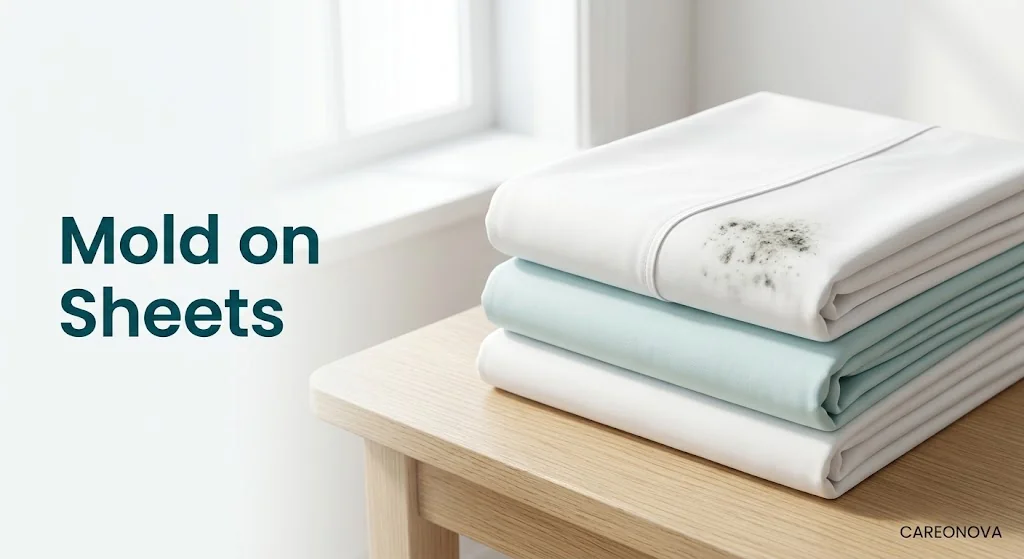
Finding black spots or a musty smell on your bedding can be frustrating, especially when they look completely clean after washing. Yes, mold can grow on sheets when moisture remains trapped in the fabric for too long. Common signs include a sour odor, discoloration, and dark spots that do not disappear during a normal laundry cycle. Your next steps depend on the fabric type, the severity of the problem, and how long the mold has been present.
In this guide, we will help you identify whether those strange spots are actually mold, decide if your sheets can be saved, and walk you through the exact fabric-safe cleaning steps to remove the fungus and stop it from returning.
Key Takeaways
- Yes, it is likely mold if you see black, green, or gray spots accompanied by a stubborn, musty odor that survives a normal wash.
- Pink stains are usually not mold; they are typically caused by Serratia marcescens, a common bathroom bacteria.
- Do not throw them away immediately. You can often save sturdy fabrics (like cotton) with a targeted oxygen or chlorine bleach soak.
- Fabric matters. Dense cotton absorbs more moisture and dries slower, making it more susceptible to mold than fast-drying microfiber or breathable linen.
- Moisture is the enemy. Prevent mold from returning by drying your sheets 100%, transferring them from the washer instantly, and keeping your bedroom properly ventilated.
What Does Mold on Sheets Look Like?
Appearance is the first clue, but visual signs alone are not always enough to confirm fungal growth. Mold on sheets often appears as dark spots, greenish-gray patches, or fuzzy growth. However, many people first notice a damp, musty smell that lingers even after a fresh wash.
Some users confuse small dark specks with other bedding issues—like stains from bed bugs—but those require a completely different inspection and pest control approach.
| Appearance | Possible Cause | What to Check |
|---|---|---|
| Black or green spots | Possible mold | Musty smell and moisture history |
| Yellow or brown marks | Sweat, body oils, or moisture damage | Whether it fades after regular washing |
| Pink or orange residue | Bacterial buildup rather than true mold | Damp areas or high-humidity storage |
| Small dark specks | Could have several causes | Inspect for other bedding issues before treating |

Why Do Sheets Get Mold?
Cleaning your bedding will not solve the problem if you do not understand why the moisture is staying trapped. Sheets get moldy when warmth, limited airflow, and dampness combine to create a perfect environment for fungal spores.
The most common causes include storing sheets in a linen closet while they are still slightly damp, or leaving wet laundry sitting in the washing machine for too long. High bedroom humidity, excessive night sweats, and pushing your bed tightly against a cold wall can also trap condensation. Thicker bedding and dense fabrics are especially vulnerable because they absorb more moisture and take much longer to dry completely.
Can You Save Sheets With Mold or Should You Replace Them?
Not every moldy sheet needs to be thrown away in the trash. The decision to save or replace your bedding depends on how widespread the growth is, whether the fibers are physically damaged, and if the fabric can tolerate heavy-duty cleaning.
| Situation | Recommendation |
|---|---|
| Small area and recent odor | Try cleaning with a fabric-safe method |
| Light spots on washable fabric | Attempt stain treatment and hot water wash |
| Strong odor after repeated washing | Consider replacing the sheets |
| Damaged, weakened, or tearing fabric | Replace immediately |
How to Remove Mold From Sheets Safely
If you decide to save your bedding, you need a targeted cleaning approach. Generic washing will not remove established mildew.
Step 1: Check the Sheet Material and Care Label
Before applying any treatment, check the care label to prevent accidental damage. Standard cotton sheets usually tolerate stronger washing methods and hotter water. Conversely, polyester and microfiber sheets require different care considerations, as high heat can warp the synthetic fibers. Delicate fabrics like silk or bamboo blends need much gentler methods to avoid ruining the weave.
Step 2: Wash Moldy Sheets Using the Right Method
Choose your cleaning option based on what your fabric can safely handle:
- Option 1: Oxygen Bleach: This is the best choice for colored sheets and many washable fabrics, as it removes biological stains without lifting the dye. To use this method, fill a basin or bathtub with hot water (check the care label for your fabric’s maximum safe temperature) and dissolve one standard scoop of oxygen bleach powder. Submerge the sheets completely and let them soak for 2 to 4 hours before washing normally.
- Option 2: Chlorine Bleach: This is the strongest option, but it is highly corrosive to certain materials.
- Option 3: Vinegar and Baking Soda: These household items may help reduce musty odors or clear out leftover detergent buildup. To try this, wash the sheets with one cup of white vinegar (no detergent) on a hot cycle, followed immediately by a second hot wash using half a cup of baking soda. Keep in mind that this is an odor-control method and should not be considered a guaranteed mold removal technique for heavy infestations.
Step 3: Dry Sheets Completely
Cleaning is incomplete without proper drying. Transfer your sheets to the dryer immediately after the wash cycle finishes. Complete moisture removal is essential to stop any remaining spores from multiplying. If the care label allows, drying sheets outside in direct sunlight provides excellent airflow and natural drying support.
How to Remove Black Spots From Bedsheets
Black spots on bedsheets can come from mold, but they can also come from makeup, ink, or heavy dirt residue. To treat them effectively, inspect the sheet’s smell and moisture history.
If the spots are accompanied by a sour odor, treat them as mold using the oxygen or chlorine bleach methods outlined above. If the black spots remain after a heavy wash but the smell is completely gone, the mold is likely dead, leaving behind a permanent stain on the fabric.
Does Sheet Material Affect Mold Growth?
Different fabrics behave differently based on their absorbency, thickness, and drying speed. Understanding your sheet material helps you manage its specific moisture risks.
If you are dealing with a humid environment, learning how to wash different fabrics correctly based on their material is the best way to prevent long-term damage.
| Sheet Material | Mold Risk Considerations |
|---|---|
| Cotton | Absorbs heavy moisture and may dry much slower |
| Linen | Usually dries faster because of its breathable, open weave structure |
| Polyester | Less absorbent, but highly prone to trapping body oils and odors |
| Microfiber | Dries quickly, but can trap detergent residue if poorly maintained |
Why Do Sheets Smell Musty After Washing?
If your bedding smells sour immediately after laundry day, the problem is usually leftover residue. Washing machines can harbor hidden detergent buildup, fabric softener residue, or trapped moisture inside the drum. When you wash your sheets, that residue transfers directly onto the fabric.
Musty odors can also happen if you overload the dryer, leaving the sheets slightly damp in the center. Similar moisture problems can also affect clothing, towels, and other washable fabrics, which is why treating mold on your wardrobe often requires you to clean your washing machine first.
How to Prevent Mold on Sheets
The easiest way to stop mold is to control moisture before fungal spores have a chance to grow. Use this practical prevention checklist:
- Dry sheets fully: Never fold or store bedding that feels even slightly damp.
- Improve room ventilation: Do not push your mattress flush against a cold exterior wall, as this traps condensation.
- Wash bedding regularly: Remove the sweat and body oils that mold feeds on.
- Reduce excess humidity: Use a dehumidifier or air conditioner in your bedroom during humid months.
- Remove laundry quickly: Transfer wet sheets to the dryer the exact moment the washing machine stops. The same moisture issues can easily cause wet clothes to smell if left sitting too long.
The Bottom Line
Discovering mold on your sheets is unsettling, but it is rarely a reason to panic or instantly throw them away. By accurately diagnosing the stains, choosing the right heavy-duty cleaning treatment for your specific fabric, and adopting better moisture-control habits, you can successfully rescue your bedding. Ultimately, the secret to keeping your sheets permanently fresh and mold-free comes down to one simple rule: never let moisture stay trapped.
