

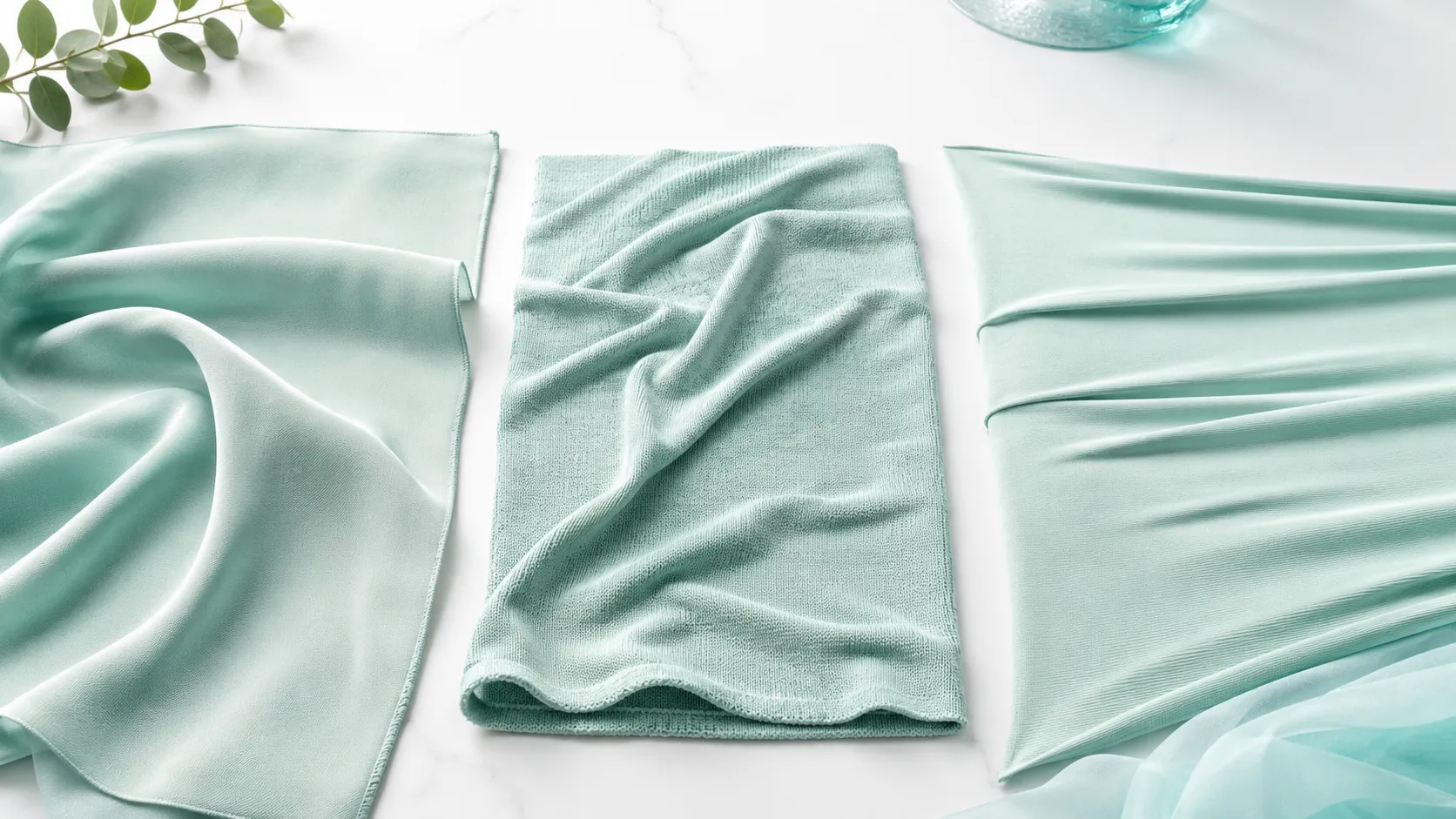
Is viscose stretchy? The honest answer is: sometimes but not because viscose itself behaves like spandex. Woven viscose usually has very little useful stretch, while viscose jersey can flex because of its knitted loops. Blends containing elastane generally stretch more and return to shape better. Water may also make viscose lengthen or lose its shape, but that is distortion rather than true elasticity. Read on, and you will know exactly what the label, construction, and fabric feel can tell you about the fit.
Is 100% Viscose Stretchy?
100% viscose is not naturally elastic like spandex or elastane. It feels soft, flexible, and fluid, but softness and drape do not mean the fabric will stretch and return to its original shape.
Its behavior depends largely on how the material is constructed. A woven viscose blouse usually has little give across the straight grain because the yarns cross in a stable structure. A bias-cut garment may move more because the fabric is positioned diagonally rather than directly along the woven yarns.
Knitted viscose can extend more because its interlocking loops open under tension. Even then, pure viscose may not recover fully after being stretched.
There is no universal stretch percentage for every viscose fabric. Fabric weight, yarn structure, knit or weave, finishing, and direction of pull all influence the result.
Viscose is a common form of rayon, so garments labeled rayon generally follow the same basic stretch principles.
What Determines How Stretchy Viscose Fabric Is?
The word “viscose” on a clothing label does not tell you everything about stretch. Fabric construction and added elastic fibers are often more important than the main fiber alone.
A knit usually has more mechanical give than a woven fabric. Mechanical give comes from the loops or yarns moving under tension, rather than from the viscose fiber behaving like elastic.
Elastane, also called spandex in the United States, adds both extension and recovery. LYCRA® is a branded type of spandex rather than a separate fiber category.
Stretch direction also matters. Some garments extend mainly from side to side, while others move across both their width and length. Fabric density, seams, lining, finishing, and garment design can limit or increase that movement.
Is Viscose Jersey Stretchy?
Viscose jersey is usually stretchier than woven viscose because jersey is knitted. Its looped construction creates natural give, often more across the width than along the length.

However, 100% viscose jersey may not recover as well as jersey containing elastane. It can feel flexible while you wear it but gradually relax at the neckline, elbows, knees, seat, or other areas placed under repeated tension.
Pure viscose jersey works well for relaxed or moderately fitted clothing. For close-fitting garments that need to hold their shape, a blend containing elastane is usually more suitable.
Is 95% Viscose and 5% Elastane Stretchy?
A fabric labeled 95% viscose and 5% elastane is usually noticeably stretchier than pure viscose. Elastane helps the material extend and improves its ability to return toward its original dimensions after the tension is released.
This blend is common in fitted tops, dresses, underwear, leggings, and loungewear. It provides a closer fit without the stiffness of woven viscose.
Five percent elastane does not automatically guarantee four-way stretch. Some fabrics stretch mainly across the width, while others also extend lengthwise. The knit structure and placement of the elastic yarn still control the direction and performance.
Does Viscose Stretch and Return to Shape?
Viscose may extend without returning completely to its original size. Stretch, recovery, and fabric growth are different properties.
Stretch is how far the material moves while being pulled. Recovery is how well it returns after the force is removed. Fabric growth is the added length or width that remains afterward.
This distinction matters because a garment can feel stretchy during wear but become baggy later. Extension alone does not show whether the fabric will recover properly.
| What Happens | What It Usually Means |
|---|---|
| The fabric extends and returns immediately | Good stretch recovery |
| The fabric remains wider or longer | Fabric growth or permanent deformation |
| The fabric gives mainly across the width | Mechanical stretch from knitted construction |
| The fabric stretches in several directions and returns | Elastane combined with suitable fabric construction |
| A wet garment becomes longer while hanging | Water-weight distortion rather than useful stretch |

Pure viscose generally has weaker recovery than a viscose-elastane blend. When the material remains longer, wider, rippled, or baggy after release, it has not provided useful elasticity.
Does Viscose Stretch Out With Wear?
Viscose can relax during wear, particularly when it is knitted or repeatedly placed under tension. However, it should not be expected to stretch enough to correct a poor fit.
A woven viscose blouse, skirt, or pair of pants will usually have limited give unless the garment includes elastane, elastic panels, or a bias-cut design. A soft knit may loosen slightly, but areas such as knees, elbows, waistbands, seats, and necklines can become baggy when recovery is weak.
Moisture, body movement, pressure, and time under tension can all affect the fit. A blend containing elastane usually recovers better than pure viscose, although the garment’s construction remains important.
Will a Tight Viscose Garment Loosen?
Do not buy tight woven viscose expecting it to stretch comfortably with wear. The fabric may feel restrictive and place stress on the seams instead of loosening evenly.
A viscose knit may relax slightly, but it will not reliably increase by a full clothing size. Poor recovery can leave the garment misshapen rather than better fitted.
Before buying, check the label for elastane and gently test whether the material returns after being stretched. When the fabric has little movement or slow recovery, choose a size that already fits correctly.
Does Viscose Stretch When Wet or After Washing?
Wet viscose may become easier to distort, but this is not useful elasticity. Standard viscose rayon loses strength when saturated, so pulling, twisting, wringing, or hanging a heavy wet garment can alter its dimensions.
Viscose may shrink or stretch after washing, and it can sometimes change differently in each direction. A wet item may become shorter, longer, narrower, or misshapen depending on its construction, finishing, fiber blend, and care method. Changes may appear around seams, hems, shoulders, or other areas carrying the weight of the water.
Can You Stretch Viscose Safely?
Viscose cannot be reliably stretched by a full clothing size without risking permanent distortion. If the care label permits and the garment has only become slightly misshapen, you may be able to arrange it gently back toward its original measurements while it is damp.
Do not hang heavy wet viscose, wear it while saturated, or use strong dryer, iron, or steam heat to force it larger. These methods may lengthen the fabric unevenly, weaken seams, or leave the garment baggy without improving its fit.
Support the entire garment on a flat surface and use light, even pressure. Do not pull one area more than another, hang heavy wet viscose, wear it while saturated, or use strong dryer, iron, or steam heat to force it larger. These methods may stretch the fabric unevenly, weaken seams, or leave the garment longer and baggier without improving the fit.
Follow the care label because it accounts for the complete garment, including trims, lining, elastic, and finishes. When flat drying is recommended, place the item on a clean surface and gently arrange it into its normal shape without applying strong tension.

How to Check Whether a Viscose Garment Will Stretch
The fiber label gives useful clues, but construction and recovery provide the clearest answer.
- Check for elastane, spandex, or LYCRA® fiber.
- Look for terms such as jersey, rib knit, or stretch knit.
- Gently pull the material across its width.
- Test the length separately.
- Release the fabric and watch how quickly it returns.
- Check whether seams, lining, or trims restrict movement.
Do not assume that adding polyester fiber or nylon fiber automatically makes viscose stretchy. Without elastane or a flexible knitted construction, these blends still have little useful give.
| Label or Construction | Expected Behavior | Buying Guidance |
|---|---|---|
| 100% woven viscose | Little useful stretch | Buy the correct size instead of expecting it to loosen. |
| 100% viscose jersey | Some mechanical give from the knit | Suitable for relaxed or moderately fitted clothing. |
| 95% viscose, 5% elastane | Noticeable stretch with better recovery | Often suitable for fitted tops, dresses, leggings, and loungewear. |
| Viscose-polyester without elastane | Not automatically stretchy | Check whether the fabric is knitted and test its recovery. |
| Viscose-nylon without elastane | Stretch varies with construction | Test the width and length separately before choosing the size. |
| Bamboo viscose | Similar basic behavior to other viscose rayon | Look for knitted construction or added elastane when stretch matters. |
A quick recovery test is more useful than judging the material by softness alone. Stretch it gently, release it, and check whether the original width and shape return without rippling or bagging.
Editorial note: There is no reliable universal stretch percentage for viscose clothing. Fabric construction, direction of pull, applied force, elastic-fiber placement, finishing, and recovery all affect the result.
Final Takeaway
Viscose can feel soft and flexible, but that does not always mean it will stretch and return to shape. Woven viscose usually has little useful give, so the garment should fit comfortably from the start. Viscose jersey may move more because of its knitted structure, while blends with elastane are usually better for fitted clothing that needs stretch and shape retention. Before buying, check the fiber label, test the fabric gently across both its width and length, and notice whether it returns quickly after release. Do not rely on a tight garment loosening with wear, and do not mistake wet lengthening or bagging for true elasticity. Choose the size that fits now, and let the fabric’s recovery guide your decision.
