


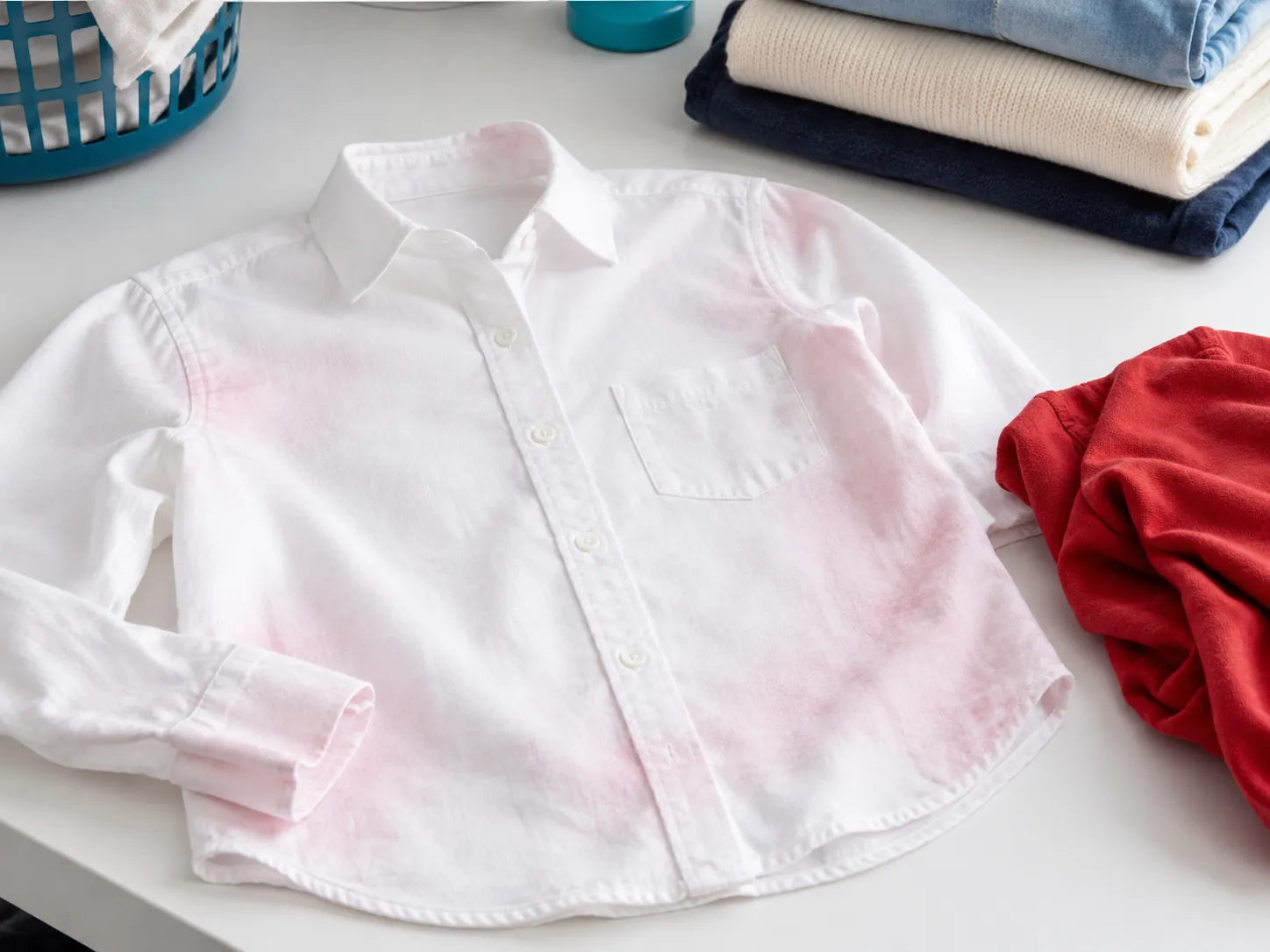
You can often get color bleed out of clothes, especially when you act before the items go into the dryer. Remove the garment that released the dye, separate the affected laundry, and rewash each item according to its care label. Fresh dye transfer may come out with detergent alone, while stubborn marks may need compatible oxygen bleach. Use chlorine bleach only on fully bleach-safe whites.
This guide explains how to tell dye transfer from fading, bleach damage, and crocking. It also covers safe methods for white, colored, delicate, printed, and multicolored clothes, including stains found after washing or drying. You will also learn how to use a color-run remover, handle the garment that caused the bleed, and prevent the problem in future loads.
Can Color Bleed Be Removed From Clothes?
Color bleed can often be removed when it is treated soon after washing. Fresh dye transfer may come out during a prompt rewash, while older or machine-dried transfer may need oxygen bleach or a commercial color-run remover.
The result depends on:
- Whether the clothes are still wet
- Whether dryer heat has been used
- The amount of transferred dye
- The affected fabric
- The stability of the garment’s original color
- Which products the item can tolerate
Dryer heat can make color transfer harder to remove, but it does not always make the mark permanent.
Is It Dye Transfer, Fading, or Bleach Damage?
Before using bleach or another strong product, confirm what caused the discoloration.

Dye Transfer
Dye transfer occurs when loose color from one item settles onto another garment. It often appears after bright, dark, or new clothing is washed with pale laundry. Because the unwanted dye was added to the fabric, treat it like a stain and begin with the least aggressive method used for removing stains from clothes
Fading
Fading happens when a garment loses some of its own dye. The item may look lighter overall or have worn-looking patches.
Cleaning cannot replace color that has left the fibers.
Bleach Damage
Bleach damage may appear as a white, pale, yellow, or orange patch. It happens when a chemical removes the garment’s original dye.
This is color loss, not a removable stain.
Crocking
Crocking happens when surface dye rubs from one fabric onto another. Dark denim is a common cause.
| What You Notice | Likely Problem | Can Cleaning Help? |
|---|---|---|
| A new color appeared after washing | Dye transfer | Often |
| The item looks lighter overall | Fading | No |
| A pale, yellow, or orange patch appeared | Bleach damage | No |
| Denim dye rubbed onto another surface | Crocking | Sometimes |
What to Do Immediately When Clothes Bleed Color
1. Remove the Item That Released the Dye
Find the source garment and take it out of the load.
Common causes include:
- New red clothing
- Dark denim
- Black towels
- Bright sweatshirts
- Deeply dyed bedding
Keep the item separate until you know whether it will continue bleeding.
2. Keep the Affected Clothes Out of the Dryer
Do not machine-dry the stained laundry. Heat can make transferred dye more difficult to lift, so air-dry the items safely after treatment until you are satisfied with the result.
3. Inspect the Entire Load
Check every item under good lighting. Look at collars, seams, cuffs, pockets, and folded areas where wet garments touched.
4. Separate the Affected Items
Divide the laundry by color, fiber type, care instructions, bleach compatibility, and whether an item needs delicate or dry-clean-only care. Do not treat a white cotton towel and a printed rayon blouse with the same strong product; different fabrics require different washing methods.
5. Decide Whether It Is a Whole-Load or Spot Problem
When several garments are evenly tinted, group only items with matching colors and care requirements.
When one item has a small patch or streak, treat it separately instead of exposing the entire load to bleach or a dye remover.
6. Rewash Promptly
A normal rewash may remove very fresh, loose dye. Use the right amount of laundry detergent and a water temperature suitable for the fabric. Check the result after washing and air-drying.
Choose the Right Treatment
| Garment Type | Best Starting Option | Main Caution |
|---|---|---|
| Colored, colorfast washable clothes | Detergent, then compatible oxygen bleach | Test the original color first |
| White, bleach-safe clothes | Detergent or oxygen bleach; chlorine bleach only if approved | Check every fiber and trim |
| White fabric containing spandex | Compatible oxygen or color-safe bleach | Avoid chlorine bleach |
| Multicolored or printed item | Mild treatment after hidden-area testing | Original colors may run |
| Wool or silk | Fiber-safe product or professional care | Avoid standard bleach |
| Dry-clean-only garment | Professional cleaner | Do not soak at home |
| One localized mark | Treat the item separately | Avoid treating the whole load |
Follow the current directions on the chosen product. Amounts, soaking times, and safe water temperatures can vary.
How to Remove Color Bleeding From Colored Clothes
The safest way to remove color bleeding from colored clothes is to begin with detergent and move to oxygen bleach only when needed.
The goal is to remove the transferred dye without stripping the garment’s intended color.
Rewash the Clothes
Remove the source garment. Then wash the affected colored items separately using a normal amount of detergent and the cycle shown on the care label. For deep or dark colors, choose a safe washing temperature for dark clothes to reduce further dye release.
Test for Colorfastness
Before using oxygen bleach or a color-run remover, test a hidden seam or inside hem.
Prepare the product as directed. Apply a small amount, wait for the stated time, and rinse if required.
Do not continue if:
- Dye transfers onto a white cloth
- The test area becomes lighter
- A print changes
- Trim starts bleeding
- The fabric texture changes
Test each major color on a multicolored garment.
Use Oxygen Bleach if Needed
Many oxygen-bleach products are sold as non-chlorine or color-safe bleach. However, formulas and fabric restrictions differ.
Check the label for:
- Fabric compatibility
- Product amount
- Water temperature
- Soaking time
- Rinsing instructions
Do not make a stronger solution or soak the item longer than directed.
Wash and air-dry the garment after treatment. Repeat only when the unwanted color is clearly becoming lighter.
Stop if the intended dye begins to fade.
How to Remove Color Bleed From White Clothes
The correct method for white laundry depends on the full fiber content. White does not automatically mean chlorine-bleach-safe.
A white item may contain spandex, colored stitching, embroidery, prints, wool, silk, or a bleach-sensitive finish.
Start With Detergent or Oxygen Bleach
Rewash the affected whites with detergent first, using a washing temperature suitable for white clothes and the garment’s fiber blend.
When the unwanted tint remains, use a compatible oxygen-bleach product according to its directions.
Use Chlorine Bleach Only on Bleach-Safe Items
Check the care label and fiber content before using chlorine bleach.
Avoid it on:
- Wool
- Silk
- Spandex or elastane
- Mohair
- Leather
- Colored embroidery
- Printed designs
- Contrast trim
- Bleach-sensitive finishes
Use only the amount listed on the product label.
Never mix chlorine bleach with vinegar, ammonia, alcohol, or another household cleaner.
Treat the Fabric, Not the Transferred Color
A red sock may turn white shirts pink. New denim may leave a blue tint. Dark garments may create a gray cast.
The transferred color does not determine the method. Choose the product according to the affected fabric and its care instructions.
How to Get Color Bleed Out of Clothes After Washing
To get color bleed out of clothes after washing, act while the items are still wet.
- Remove the garment that released the dye.
- Keep the affected laundry out of the dryer.
- Separate white, colored, and delicate clothes.
- Rewash compatible items with detergent.
- Use oxygen bleach if the fabric allows it.
- Air-dry and inspect.
Another normal wash may help with fresh, loose color. A tint that remains may need a labeled soaking treatment or a commercial color-run remover.
What if the Clothes Have Already Been Dried?
Dried color transfer may still improve, but complete removal is less certain.
Begin with a compatible oxygen-bleach treatment. Follow the product’s amount, water-temperature, and timing instructions.
For stubborn set-in transfer, a commercial color-run remover may help. Test it carefully because it may also change the garment’s intended dye.
Air-dry between attempts. Do not keep placing the item back in the dryer.
Treating Delicate and Multicolored Clothes
The safest way to get color transfer out of clothes becomes more limited when an item contains delicate fibers, several colors, prints, or special finishes. When the care label permits hand washing, use a gentle hand-washing method instead of a normal machine cycle.
Multicolored and Printed Items
Test every major color before treating the whole garment.
Watch for:
- Color movement between sections
- Fading
- Print damage
- Changes in texture
- Bleeding from embroidery or trim
Stop when any intended color begins changing.
Wool and Silk
Check the care label before washing or soaking wool or silk. For washable wool, follow a wool-safe washing method and use only products clearly approved for the fiber. Valuable, structured, or heavily stained items are safer with a professional cleaner.
Rayon and Viscose
Some rayon and viscose garments are washable, while others require dry cleaning. These fibers may lose shape or strength when handled roughly while wet, so consider the garment’s viscose care and shrinkage risks before soaking or treating it.
Dry-Clean-Only Clothes
Do not soak or machine-wash a dry-clean-only item.
Take it to a cleaner and explain:
- Which item released the dye
- Whether the garment was washed
- Whether it entered the dryer
- Which products were already applied
Using several household remedies first may make professional treatment harder.
How to Use a Color-Run Remover Safely
A commercial color-run remover is designed to strip unwanted dye. It is different from normal detergent and may also affect the garment’s original colors.
Before using one:
- Confirm that the fabric is compatible.
- Test each original color.
- Treat only the affected items.
- Follow the listed water temperature.
- Use the correct amount.
- Watch the garment during treatment.
- Rinse and wash as directed.
Do not add detergent, bleach, vinegar, or another laundry product unless the color-remover label specifically tells you to do so.
Stop when the intended color begins changing.
What to Do With the Garment That Bled
Treating the damaged laundry will not prevent another accident if the source item continues releasing dye.
Wash It Separately
Wash the source garment alone or with very similar dark colors.
New denim, red clothing, dark towels, and strongly dyed items may release more loose color during early washes.
Test for Colorfastness
Dampen a hidden section using water allowed by the care label.
Press a clean white cloth against it. If color transfers, continue washing the garment separately.
This simple test cannot guarantee that the item will never bleed, but it may show that the dye is still unstable.
Watch for Heavy Bleeding
Some color release from a new dark item can happen during early washes.
Contact the retailer or manufacturer when heavy bleeding continues after several washes.
Methods That Are Often Overrated
| Method | Realistic Role |
|---|---|
| Vinegar | Results vary; it should not replace a labeled laundry treatment |
| Baking soda | Useful for some general laundry needs, but not dependable for dye transfer |
| Table salt | Do not rely on it to remove dye already deposited on fabric |
| Color-catcher sheet | Helps collect loose dye during washing, but is not a full treatment for an existing mark |
| Another normal wash | May help very fresh dye transfer |
| More dryer heat | Will not remove color bleed and may make later treatment harder |
Color-catcher sheets can provide extra protection during washing, but proper sorting is still important.
When Color Bleed May Be Permanent
Complete removal becomes less likely when:
- The item has been machine-dried several times.
- The dye remained untreated for a long period.
- The transferred color penetrated deeply into the fibers.
- The fabric cannot tolerate oxygen bleach or a color remover.
- The intended color begins changing during treatment.
- The mark is actually fading or bleach damage.
- Several careful attempts produce no improvement.
Stop before the cleaning method causes more damage than the unwanted tint.
Professional cleaning may improve some valuable or delicate items. However, no washing method can restore original dye that has already faded or been chemically removed.
How to Prevent Clothes From Bleeding Color
Sort Whites, Lights, and Darks
Separate white clothes, pale colors, bright shades, dark garments, new denim, and red or black items.
Wash New Dark Clothes Separately
New red, navy, black, and denim garments may release extra dye during their first washes.
Keep them away from pale laundry until noticeable bleeding stops.
Follow the Care Label
Use the recommended water temperature and cycle.
Cooler water may reduce dye release from some clothes, but the correct setting still depends on the fabric and care instructions.
Test Questionable Garments
Use the damp white-cloth test before washing a new bright item with light clothing.
Avoid Overloading
Leave enough space for water and detergent to move through the load and rinse away loose dye.
Remove Laundry Promptly
Do not leave wet dark and pale clothes pressed together for a long time.
Use Color-Catcher Sheets as Extra Protection
A color-catcher sheet may collect some loose dye, but it should support proper sorting rather than replace it.
Final Answer
Act quickly, keep the affected clothes out of the dryer, and choose the mildest method that suits the fabric and care label. Detergent may remove fresh dye transfer, while compatible oxygen bleach or a carefully tested color-run remover can help with stubborn marks. Stop if the garment’s original color begins to change, and use professional care for delicate or dry-clean-only items.
Editorial Note
Laundry-product formulas and directions can change. Always follow the garment care label, washer instructions, and the current label on the detergent, bleach, or color remover you use.
