


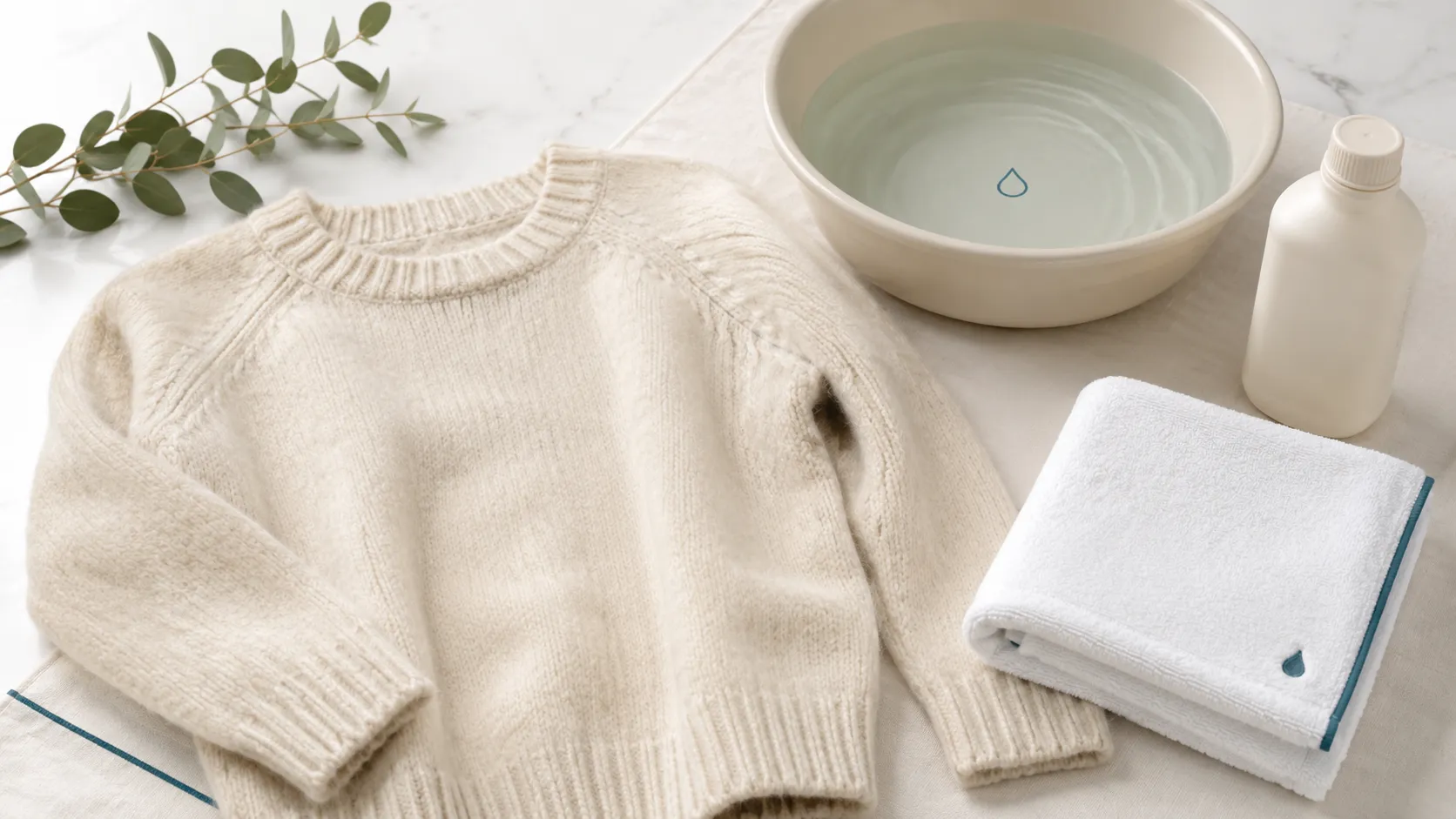
A wool sweater can usually be washed at home, but it needs gentler care than cotton, polyester, or everyday laundry. Water alone is usually not what damages wool. Problems are more likely when wool is exposed to heat, rough movement, twisting, or poor drying.
The safest method is to hand wash the sweater in cool water with wool-safe detergent, press it gently instead of scrubbing, remove water with a towel roll, reshape it while damp, and lay it flat to dry. Here’s how to wash a wool sweater safely without shrinking, stretching, or felting it.
Wool damage usually comes from a mix of heat, friction, tension, and poor drying. That is why slow pressing, steady water temperature, towel rolling, and flat drying matter more than using a strong cleaner.
Can You Wash a Wool Sweater at Home?
Yes, many wool sweaters can be washed at home, especially if the care label allows hand washing. Hand washing is usually the safest method because you control the water temperature, movement, and pressure on the knit.
Some wool sweaters can be machine washed, but only when the care label clearly says they are machine washable. If the label does not allow machine washing, or if you are unsure, hand washing is safer.
Be more careful with:
- 100% wool sweaters
- lambswool jumpers
- vintage wool
- thrifted wool sweaters
- hand-knit sweaters
- loose knits
- dry-clean-only garments
- expensive or sentimental sweaters
If the sweater is old, fragile, structured, heavily decorated, or labeled dry clean only, dry cleaning may be safer than washing it at home.
When a Wool Sweater Does Not Need Washing Yet
Wool does not need to be washed after every wear. In many cases, airing it out is enough.
Wool often resists light odor better than many synthetic fabrics, but it can still hold sweat, smoke, perfume, storage smell, and body oils. If the sweater only smells slightly stale after one wear, lay it flat or place it over a chair in a well-ventilated room for a few hours. Keep it away from direct heat.
Wash the sweater when it has:
- sweat odor
- body oil buildup
- food marks
- visible dirt
- storage smell
- thrift-store odor
- smoke or perfume smell
- stains that need gentle cleaning
Overwashing wool can make the fibers look tired faster. The goal is not to wash it as often as a cotton T-shirt. The goal is to clean it when it actually needs it.
Check These Before You Put Wool in Water
Before you wash a wool sweater, slow down and check what you are working with. This step can save the sweater from shrinking, stretching, or losing shape.
Read the Care Label First
The care label tells you the safest cleaning method for that specific garment. Look for instructions such as:
- hand wash
- machine washable wool
- wash cold
- dry flat
- do not tumble dry
- dry clean only
If the label says dry clean only, do not ignore it unless you are willing to take the risk. Some wool garments have linings, structure, trims, or finishes that may not react well to water.
Know the Type of Wool
Not all wool sweaters behave the same way.
A 100% wool sweater may need more care than a wool blend. Lambswool can feel soft and delicate, so hand washing is usually safer. Merino wool is often easier to care for, but the label still matters. A wool blend may be more stable, depending on the other fibers used.
Vintage wool needs extra caution because you may not know how it was washed before. Older fibers may also be weaker than they look.
Be Careful With Thrifted or Vintage Wool
A thrifted wool sweater can be a great find, but it often comes with unknowns. It may have storage odor, perfume, smoke, dust, body oils, or past shrinkage. You also may not know whether it was already washed badly before.
Before washing thrifted wool:
- check the seams and cuffs for weakness
- test a hidden area for color bleeding
- remove pills or bobbles gently with a wool comb if needed
- avoid machine washing if you are unsure
- use cool water
- use gentle detergent
- dry it flat, never hanging
If the sweater feels fragile, has a dry-clean-only label, or looks like a high-value vintage piece, dry cleaning is the safer route.
What to Use to Wash a Wool Sweater
You do not need complicated equipment. You need control, clean water, and gentle handling.
Use:
- a clean sink, basin, dishpan, or bathtub
- cool or lukewarm water
- wool wash or delicate detergent
- two clean towels
- a mesh laundry bag if machine washing
- a flat drying rack, if available
A wool-safe detergent is the best choice. These detergents are made for wool, cashmere, merino, lambswool, and delicate knitwear. A mild delicate detergent can also work if it is suitable for wool.
Use only a small amount. Too much detergent is harder to rinse out and can leave residue in the fibers.
Avoid:
- bleach
- oxygen bleach unless both the care label and product label say it is safe for wool
- enzyme-heavy detergent
- strong stain removers
- heavy fragrance products
- fabric softener
- undiluted vinegar or long vinegar soaks without testing first
- hot water
Wool does not need aggressive cleaning. A little detergent and careful handling are usually enough.
How to Spot Clean a Wool Sweater First
If the sweater only has a small mark, spot cleaning may be safer than washing the whole garment. This is useful for food marks, light dirt, or a small stain on one area.

Blot the area with cool water and a tiny amount of wool-safe detergent. Work from the outside of the stain toward the center so the mark does not spread. Use a clean damp cloth to lift detergent from the spot, then press the area with a towel.
Do not scrub wool stains aggressively. Friction can roughen the fibers, cause pilling, or create a felted patch.
Let the sweater dry flat before deciding if it needs a full wash.
How to Hand Wash a Wool Sweater Safely

Hand washing is the safest method for most wool sweaters, especially when the sweater is 100% wool, lambswool, vintage, thrifted, hand-knit, or valuable.
Fill a Basin With Cool or Lukewarm Water
Start with a clean sink, basin, dishpan, or bathtub. Fill it with cool water. Lukewarm water may be fine if the care label allows it, but cool water is safer when you are unsure.
Avoid hot water. Try to keep the water temperature steady from wash to rinse. Sudden temperature changes can stress wool fibers.
Add Wool-Safe Detergent Before the Sweater
Add a small amount of wool wash or delicate detergent to the water. Mix it into the water before adding the sweater.
Do not pour detergent directly onto the wool. Concentrated detergent can sit in one area and become harder to rinse.
Submerge and Press, Do Not Scrub
Place the sweater into the water and let it absorb the water slowly. Press it down gently with your hands.
This is where many people make mistakes. Gentle does not mean scrubbing lightly. It means using less movement.
Press, don’t scrub.
Squeeze, don’t twist.
Move the sweater slowly, don’t agitate it.
You can lightly swish the sweater in the water, but do not rub the fabric against itself. Rough movement can cause wool fibers to grab onto each other, which may lead to felting, pilling, or shrinkage.
Soak Briefly, Then Rinse Carefully
Let the sweater soak for about 10 minutes for normal cleaning. A short soak is usually enough unless the sweater is very dirty.
If your wool wash is no-rinse, follow the product instructions. If it needs rinsing, drain the soapy water and refill the basin with clean water at a similar temperature.
Press the sweater gently in the clean water. Repeat if needed until the water looks clear and the detergent is removed.
Do not hold the sweater under a strong running tap. The force of the water can stretch parts of the knit.
Press Out Water Without Wringing
When the sweater is clean, support it with both hands and lift it carefully. Wet wool is heavy, so do not lift it by the shoulders or sleeves.
Press water out with your hands. Do not wring or twist.
Twisting can pull the sweater out of shape. It can stretch the sleeves, distort the body, and make the knit dry unevenly.
How to Dry a Wool Sweater Without Stretching It
Drying matters as much as washing. A wool sweater can come out of the water safely and still lose shape if it is dried badly.
Wet wool is heavy. If you hang it while wet, gravity can stretch the shoulders, sleeves, and body. If you put it in a dryer, heat can shrink or felt it.
Use the Towel Roll Method
Lay a clean dry towel on a flat surface. Place the sweater on top of the towel and smooth it into its natural shape.
Roll the towel with the sweater inside. Press down gently along the roll to absorb water. Do not knead it or twist it.
Unroll the towel carefully. If the sweater is still very wet, repeat with a second dry towel.
Reshape While Damp
Before the sweater dries, reshape it. This helps it return to its normal fit.
Check:
- shoulders
- sleeves
- cuffs
- neckline
- hem
- body width
- side seams
Smooth the sweater gently with your hands. Do not pull hard. The goal is to guide it back into shape, not stretch it larger.
Lay Flat Until Fully Dry
Place the sweater on a dry towel or a mesh drying rack. Keep it flat in a room with good airflow.
Avoid:
- tumble dryer
- radiator heat
- direct strong sunlight
- hair dryer heat
- hanging while wet
If the towel becomes damp, replace it with a dry one. Turn the sweater over only when it feels stable enough to move without stretching.
Depending on the sweater’s thickness and room airflow, it may take several hours to a full day to dry. Let it dry fully before folding or wearing it. Wool can hold moisture longer than it appears to.
Can You Wash a Wool Sweater in the Washing Machine?
You can machine wash some wool sweaters, but only when the care label says machine washing is allowed.
A wool cycle is the safest machine option because it is designed to reduce movement and protect wool fibers. If your washer only has a delicate cycle, hand washing is safer unless the care label clearly allows machine washing.
Use a washing machine only if:
- the label says machine washable
- your washer has a wool cycle
- you can use cold water or 30°C water
- you can use the lowest practical spin setting
- you have a mesh laundry bag
- you will dry the sweater flat afterward
For delicate vintage wool, skip the spin cycle if needed and press the water out by hand with towels instead.
| Sweater type | Safest method |
|---|---|
| 100% wool with no machine-wash label | Hand wash |
| Lambswool sweater | Hand wash |
| Merino wool sweater | Check the label; hand wash if unsure. |
| Machine-washable wool | Wool cycle |
| Vintage or thrifted wool | Hand wash or dry clean. |
| Dry-clean-only wool | Dry clean |
Never use a hot wash, heavy spin, regular cycle, or tumble dryer on a wool sweater.

How to Remove Thrift Store Smell From a Wool Sweater
Thrifted wool often has a storage smell. It may smell musty, dusty, perfumed, smoky, or just old. A gentle wash can help, but wool odor needs patience.
Start by airing the sweater out. Lay it flat in a ventilated room or shaded outdoor area. Avoid direct sun and heat.
Then check for stains, weak seams, or color bleeding. If the sweater looks safe to wash, hand wash it with cool water and wool-safe detergent.
Let it dry fully before judging the smell. Wool can smell stronger when it is wet, especially older wool or lambswool. A damp animal-like smell does not always mean the sweater is still dirty.
If the odor remains after drying, repeat a gentle wash. Do not attack the smell with harsh products.
Avoid using:
- bleach
- hot water
- undiluted vinegar or long vinegar soaks
- heavy perfume sprays
- dryer sheets
- strong stain removers
- too much detergent
For serious smoke, mildew, or unknown vintage odor, a professional cleaner may be safer.
Mistakes That Shrink, Stretch, or Felt Wool Sweaters
Most wool damage comes from a few common mistakes. Avoid these and your sweater has a much better chance of keeping its shape.
Using Hot Water
Hot water can increase the risk of shrinkage and felting. Use cool water when you are unsure.
Rubbing or Scrubbing
Rough friction can cause wool fibers to lock together. This can make the sweater feel tighter, rougher, smaller, or felted.
Wringing the Sweater
Wringing twists the knit. It can stretch sleeves, distort the body, and leave the sweater misshapen.
Hanging It While Wet
A wet wool sweater is heavy. Hanging it can stretch the shoulders and lengthen the body. Always dry wool flat.
Using the Dryer
Dryer heat is one of the fastest ways to shrink or felt wool. Even low heat can be risky if the sweater is not labeled for tumble drying.
Using Too Much Detergent
Too much detergent can leave residue and make rinsing harder. Wool only needs a small amount of gentle detergent.
Changing Water Temperature Suddenly
Moving wool from warm water to cold water, or cold water to hot water, can stress the fibers. Keep the wash and rinse water similar in temperature.
Washing Wool With Rough Clothes
Do not wash wool sweaters with jeans, towels, zippers, hooks, or heavy garments. These can rub, pull, or damage the knit.
What If Your Wool Sweater Already Shrunk?
A slightly shrunken wool sweater may relax a little with careful soaking and reshaping, but serious shrinkage or felting is hard to reverse.
Some people try a short cool-water soak with a small amount of wool-safe conditioner or mild hair conditioner, but results are limited and residue can be an issue. If you try it, use very little, rinse carefully, press out the water, and reshape the sweater while damp.
Do not pull aggressively. Pulling too hard can distort the knit or damage the seams.
If the sweater has become dense, stiff, and much smaller, it may be felted. Felted wool usually cannot return fully to its original size. Prevention is much easier than fixing the damage later.
When Dry Cleaning Is the Safer Choice
Hand washing is useful for many wool sweaters, but it is not always the best choice.
Dry cleaning is safer when:
- the label says dry clean only
- the sweater is expensive
- the sweater is vintage and fragile
- the knit is loose or delicate
- it has embroidery, beads, leather, lining, or decoration
- there are serious stains
- the dye may bleed
- you cannot risk damage
This does not mean every wool sweater needs dry cleaning. It means some sweaters are not worth experimenting with at home.
The Safe Wool Rule
Press, don’t scrub. Squeeze, don’t twist. Roll, don’t wring. Lay flat, don’t hang.
The Safe Rule for Washing Wool Sweaters
Keep wool cool, calm, supported, and flat. Use cool water, gentle detergent, slow pressing, towel rolling, and flat air drying. Avoid hot water, rough scrubbing, twisting, hanging while wet, and dryer heat. Once the sweater is fully dry, fold it instead of hanging it, because long-term hanging can stretch the shoulders. That simple rule is enough for most wool sweaters: press, don’t scrub; squeeze, don’t twist; roll, don’t wring; lay flat, don’t hang.
