


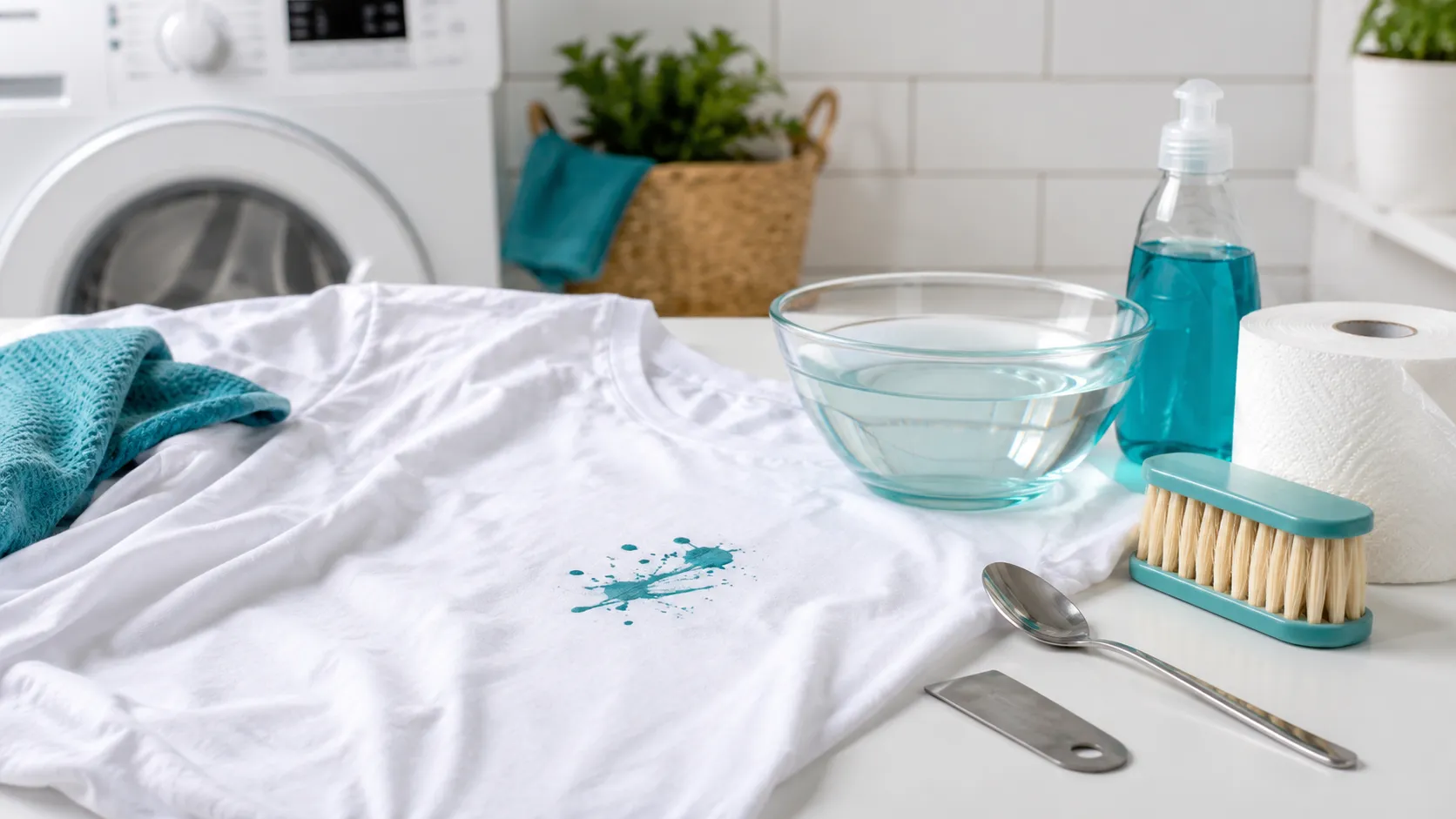
Paint on clothes can feel stressful, but the garment is not always ruined.
The safest method depends on the paint type, the fabric, and whether the stain is fresh or dry. Fresh water-based paint is usually easier to remove. Dried paint takes more patience. Oil-based paint may need stronger treatment and extra care.
This guide explains how to get paint out of clothes without damaging the fabric. It covers fresh paint, dried paint, latex paint, acrylic paint, oil-based paint, fabric safety, and common mistakes to avoid.
The safest way to remove paint stains from fabric is to start gently and avoid heat until the mark is gone. For a wider stain approach, you can also read this full guide on how to remove stains from clothes
Before You Start: Check the Paint Type and Fabric
DDo not treat every paint stain the same way.
Some paint can come out with soap and water. Some paint needs rubbing alcohol. Oil-based paint may need a solvent listed on the paint label. Delicate fabrics may need a professional cleaner.
Start by checking two things:
What type of paint is it?
What does the fabric care label say?
Water-based paint, latex paint, and many acrylic paints are often easier to treat. Oil-based paint is harder because it does not break down well with water alone.
Next, check the garment label. If the clothing is dry-clean-only, silk, wool, leather, acetate, triacetate, or another delicate material, do not rush into home treatment. You can also use this fabric care guide on how to wash different fabrics if you are unsure how sensitive the material is.
Before using rubbing alcohol, stain remover, acetone, or paint thinner, test a hidden seam first. Apply a small amount. Wait a few minutes. Then blot with a clean white cloth.
If color transfers to the cloth or the fabric looks lighter, stop using that product.
Paint Type Decision Guide
Use this table to choose the safest first step.
| Paint Type or Fabric Situation | Best First Method | What to Avoid |
|---|---|---|
| Fresh water-based paint | Rinse from the back, then use dish soap | Hard rubbing |
| Dried water-based paint | Scrape gently, then test rubbing alcohol | Digging into fabric |
| Latex paint | Treat like water-based paint | Dryer heat |
| Acrylic paint | Scrape dried film, then test alcohol | Aggressive scrubbing |
| Oil-based paint | Check the paint label for solvent advice | Using solvent without testing |
| Delicate fabric | Test first or call a cleaner | Strong chemicals |
| Dry-clean-only clothing | Take it to a professional cleaner | Home soaking or scrubbing |
This table is only a starting point. The care label should always guide your final decision.

What You Need
Most paint stains should start with gentle tools.
You may need:
- Spoon or dull knife
- Paper towels
- Clean white cloth
- Bowl of water
- Dish soap
- Liquid laundry detergent
- Rubbing alcohol
- Soft brush or old toothbrush
- Stain remover
- Gloves
For oil-based paint, you may also need the solvent listed on the paint can. This could be mineral spirits or paint thinner. Use those only after testing the fabric.
Paint thinner, mineral spirits, and many solvents are flammable. Use them away from heat, sparks, and open flames. Work in a well-ventilated area.
Remove Extra Paint Before Washing
Remove as much paint as possible before putting the garment in the washer.
Washing too early can spread loosened paint or leave residue on other areas of the fabric. This is especially true when the paint is still thick, wet, or sitting on the surface.
Lift, blot, rinse, and pre-treat first. Then wash only after the stain has been reduced as much as possible.
Also, do not use the dryer until the stain is gone. Heat can set paint into fabric and make it much harder to remove.
Fresh Paint Removal Steps
Fresh paint is easier to remove than dried paint. Treat it as soon as you can.
Step 1: Lift off extra paint
Use a spoon, dull knife, or the edge of a card to lift extra paint from the clothing.
Work gently. Try not to spread the paint into clean areas.
Do not press the paint deeper into the fabric fibers.
Step 2: Blot the stain
Use a clean paper towel or white cloth to blot the stain.
Do not rub hard. Rubbing can spread wet paint and push it deeper into the fabric.
If the towel picks up paint, switch to a clean area of the towel.
Step 3: Rinse from the back
Turn the clothing inside out. Rinse the back of the stain with running water.
This helps push paint out of the fabric instead of deeper into it.
Use warm water only if the care label allows it. If you are unsure, start with cool water.
Step 4: Apply dish soap
Mix a small amount of dish soap with water. Apply it to the stained area.
Gently work the soap into the fabric with your fingers or a soft brush. Avoid hard scrubbing, especially on thin or delicate fabric.
Rinse and check the stain.
Step 5: Repeat before washing
Paint stains often need more than one round.
Repeat the dish soap step until the stain looks lighter. Then apply a small amount of liquid laundry detergent to the area.
Let it sit for a few minutes before washing.
Step 6: Wash and air dry
Wash the clothing according to the care label.
After washing, check the stain before drying. If any paint remains, do not use the dryer.
Air dry the garment and treat the stain again if needed.
Dried Paint Removal Steps
Dried paint is harder to remove, but it may still come out or fade.
Dried paint is harder to remove, but it may still come out or fade.
The goal is to loosen the paint without damaging the fabric. For stubborn marks that already hardened, a more focused dried paint removal method can help you avoid scraping too hard.
Step 1: Scrape off loose paint
Use a dull knife, spoon edge, or old card to gently scrape dried paint.
Remove only the paint that comes off easily.
Do not dig into the fabric. This can tear fibers or leave a worn spot.
Step 2: Brush away flakes
Use a soft brush or old toothbrush to remove loose paint flakes.
Shake the clothing outside or over a trash can. This keeps flakes away from other laundry.
Step 3: Test rubbing alcohol
Rubbing alcohol can help loosen dried water-based paint. But it is not safe for every fabric or dye.
Apply a small amount to a hidden seam. Wait a few minutes. Blot with a white cloth.
If the fabric color changes, do not use alcohol on the stain.
Step 4: Apply rubbing alcohol if safe
If the test area looks safe, apply rubbing alcohol to the dried paint.
Let it sit for a few minutes. Then gently work the area with a soft brush or cloth.
Do not scrub aggressively.
Step 5: Rinse and pre-treat
Rinse the area well if the care label allows water.
Then apply liquid laundry detergent or stain remover. Let it sit for a few minutes before washing.
Step 6: Wash and check again
Wash according to the care label.
Check the stain after washing. If paint remains, repeat the treatment before drying.
If the mark gets lighter after each round, keep repeating gently. If the fabric starts to fade, weaken, or feel rough, stop.
Dried paint may not come out in one wash. Some dried or heat-set stains may not fully disappear.
Water-Based, Latex, and Acrylic Paint
Water-based paint is usually the easiest type to remove from clothing.
This includes many wall paints, house paints, latex paints, and some acrylic craft paints. These paints respond best when treated before they dry.
For fresh water-based paint, start with rinsing from the back. Then use dish soap and water.
For dried water-based paint, gently scrape away loose paint first. Then test rubbing alcohol on a hidden seam. If the fabric is safe, use alcohol to help loosen the remaining paint.
Latex paint often follows the same method because it is usually water-based.
Acrylic paint can be more stubborn. Once acrylic dries, it can form a plastic-like film on fabric. You may need to repeat the scraping and alcohol steps several times.
Use patience. Gentle repeated treatment is safer than one harsh scrub.
Oil-Based Paint
Oil-based paint is harder to remove from clothes.
It does not break down well with water and soap alone. It may need the solvent recommended on the paint label.
If the oil-based paint is still wet, act quickly. Place a paper towel behind the stain. Blot from the front with a clean cloth.
Do not rub.
Check the paint can for cleanup instructions. Some oil-based paints recommend mineral spirits, paint thinner, or another solvent.
Before using any solvent, test it on a hidden seam. Work in a well-ventilated area. Wear gloves. Keep solvents away from heat, sparks, and open flames.
After using a solvent, rinse the area if the care label allows it. Then wash with dish soap or liquid laundry detergent.
Be realistic. Dried oil-based paint may not fully come out, especially from delicate fabric.
Shirts, Hoodies, Dresses, Jackets, and Pants
Different clothing items need slightly different care.
A cotton shirt can usually handle gentle rinsing, dish soap, and light brushing. Still, test rubbing alcohol before using it.
A hoodie may hold paint deeper in its thicker fibers. Focus on lifting and rinsing first. Then repeat treatment instead of scrubbing hard.
A dress may be more delicate. Check the care label before using warm water or rubbing alcohol. If the dress is lined, avoid soaking layers that may shrink or wrinkle.
A jacket may have a coating, lining, or special fabric finish. Avoid strong solvents unless the label allows them.
Pants vary by fabric. Cotton pants can often handle normal treatment. Dress pants may need more care.
If the stain is on denim, use a denim-safe paint removal method to protect the color and fabric texture.
If the stain came from aerosol paint, follow a spray-paint-specific method because some formulas need stronger pretreatment.
What Not to Do
Paint stains can get worse when they are treated the wrong way.
Avoid these mistakes:
- Do not rub wet paint hard.
- Do not put stained clothes in the dryer.
- Do not use bleach on colored clothes unless the care label allows it.
- Do not mix cleaning chemicals.
- Do not use paint thinner near heat, sparks, or flames.
- Do not scrub delicate fabric aggressively.
- Do not treat dry-clean-only clothing at home with harsh products.
- Do not use acetone on acetate or triacetate fabrics.
Acetone can damage or melt acetate and triacetate fibers. For other fabrics, test acetone on a hidden seam first.
The dryer warning is also important. Heat can set the stain. Once paint is heat-set, it may become much harder to remove.
Start with the safest method. Move to stronger treatment only if the fabric can handle it.
Does Paint Come Out After It Dries?
Sometimes, dried paint can come out of clothes.
It depends on the paint type and fabric.
Dried water-based paint may come out with gentle scraping, rubbing alcohol, and repeated washing. Dried latex paint may also respond to this method.
Dried acrylic paint can be harder because it forms a stronger film. It may fade with treatment but not disappear fully.
Dried oil-based paint is the hardest. Once it bonds to fabric, it may not come out completely.
Heat also matters. If the clothing has already gone through the dryer, the stain may be set. You can still try to treat it, but results may be limited.
When to Call a Professional Cleaner
Some paint stains are not worth risking at home.
Take the garment to a professional cleaner if it is:
- Silk
- Wool
- Leather
- Acetate
- Triacetate
- Dry-clean-only
- Expensive
- Vintage
- Heavily stained with oil-based paint
You should also get help if the stain is large or if the fabric color starts to bleed during testing.
A cleaner may not be able to remove every paint stain. But they can choose safer methods and reduce the risk of fabric damage.
Quick Paint Removal Guide by Situation
| Situation | Best First Step | What to Avoid |
|---|---|---|
| Fresh water-based paint | Rinse from the back, then use dish soap | Hard rubbing |
| Dried water-based paint | Scrape gently, then test rubbing alcohol | Digging into fabric |
| Latex paint | Treat like water-based paint | Dryer heat |
| Acrylic paint | Scrape dried film, then test alcohol | Aggressive scrubbing |
| Oil-based paint | Check the paint label for solvent | Using solvent without testing |
| Delicate fabric | Check care label and test first | Strong chemicals |
| Dry-clean-only clothing | Call a professional cleaner | Home soaking or scrubbing |
FAQs
Does paint come out of clothes?
Yes, paint can often come out of clothes. Fresh water-based paint has the best chance. Dried paint and oil-based paint are harder to remove.
What gets paint out of clothes?
Dish soap, liquid laundry detergent, stain remover, and rubbing alcohol can help with many paint stains. The best product depends on the paint type and fabric.
Can dried paint be removed from clothes?
Sometimes. Gently scrape off loose dried paint first. Then test rubbing alcohol on a hidden seam. If safe, use it to loosen dried water-based paint before washing.
Does rubbing alcohol remove paint from fabric?
Rubbing alcohol can help loosen some dried water-based paints. However, it can affect some dyes and fabrics. Always test it on a hidden seam first.
Can I put paint-stained clothes in the dryer?
No. Do not put paint-stained clothes in the dryer until the stain is gone. Dryer heat can set the paint and make it much harder to remove.
How do you remove latex paint from clothes?
For fresh latex paint, rinse from the back and use dish soap with water. For dried latex paint, scrape off loose paint first. Then test rubbing alcohol and treat before washing.
How do you remove acrylic paint from clothes?
For fresh acrylic paint, rinse and use dish soap quickly. For dried acrylic paint, scrape the paint film gently. Then use rubbing alcohol only if the hidden seam test is safe.
Should I use bleach on paint stains?
Do not use bleach unless the clothing care label says it is safe. Bleach can damage colored fabric and may not remove paint effectively.
Final Answer
The safest way to remove paint from clothes is to act quickly, identify the paint type, and protect the fabric.
For fresh water-based paint, lift extra paint, rinse from the back, and use dish soap. For dried paint, scrape first and test rubbing alcohol before applying it to the stain. For oil-based paint, check the paint label and use solvents only with care.
Do not use the dryer until the stain is gone.
Paint stains are easier to treat when you stay patient. Start gently, repeat if needed, and avoid any product that damages the fabric during testing.
