


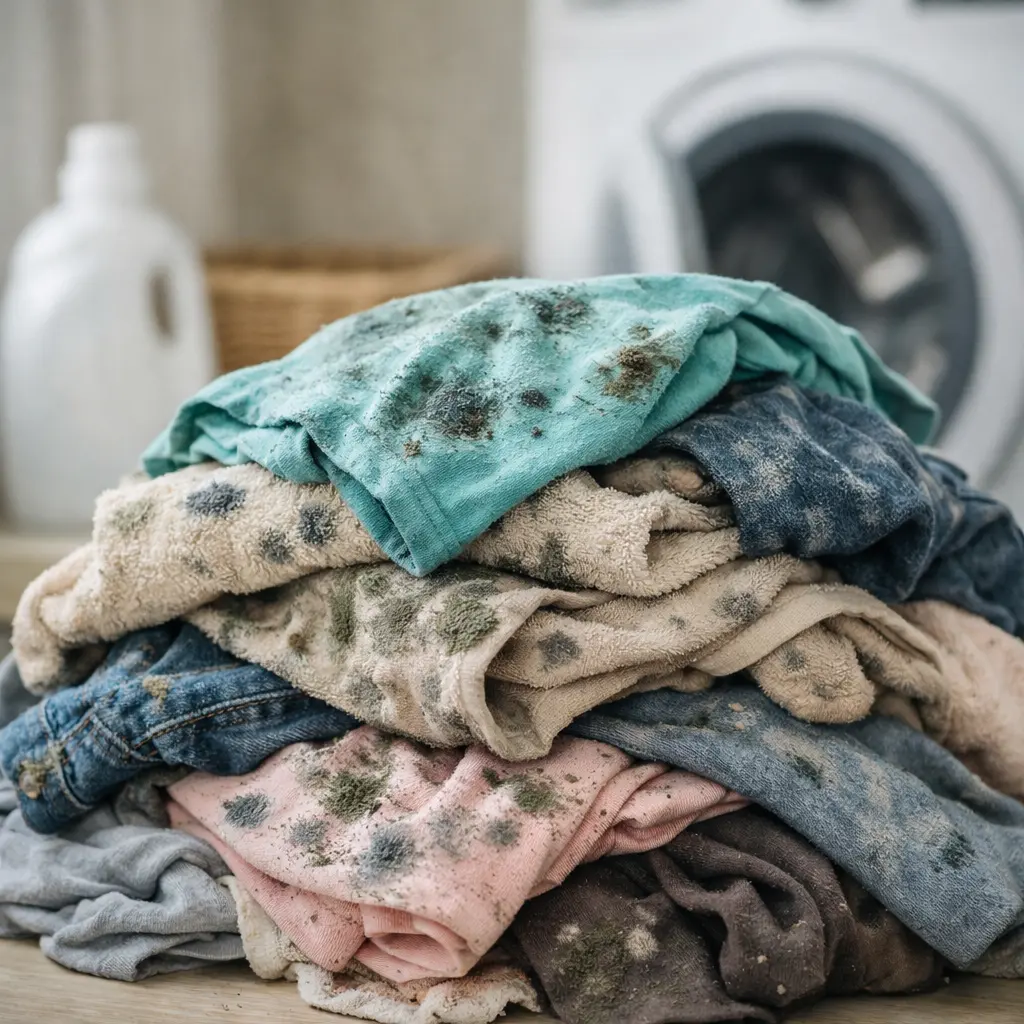
Found fuzzy or powdery growth on a garment and wondering how to remove mold from clothes without damaging the fabric? Many washable items can be cleaned when the affected area is limited, the fibers remain strong, and the clothing is treated before moisture causes serious damage.
The right method depends on the complete garment, not only its main fabric. Water temperature, detergent, bleach, drying, elastic, dyes, prints, linings, and decorative parts all matter. This guide explains how to assess the item, clean washable clothing safely, and decide what to do when stains, odor, or fabric damage remain.
Keep the affected garment away from clean laundry and check its care label before treatment. For most washable clothes, pretreat the affected area with suitable laundry detergent, wash at the warmest approved temperature, and dry completely. Delicate, dry-clean-only, heavily affected, or weakened garments need professional care or careful disposal.
Before You Start: Can the Garment Be Cleaned at Home?
A small patch on strong washable fabric is different from widespread growth on silk, leather, or a structured coat. Check the garment’s condition before using any cleaner.
| Garment Condition | Best Next Step |
|---|---|
| Small affected area on sturdy washable clothing | Clean promptly at home |
| Washable item with weak, rough, or thinning fibers | Stop and consider whether further treatment is worthwhile |
| Wool, silk, leather, coated, or structured clothing | Use professional or fiber-specific care |
| Dry-clean-only garment | Contact the cleaner before transporting it |
| Widespread growth or several affected garments | Address the moisture or storage problem as well |
When the marks are difficult to identify, compare the common signs of mold on clothing before treating them. Lint, detergent residue, fabric wear, and old discoloration require different care.
What You Need
- Protective gloves
- A separate washable container or laundry bag
- Laundry detergent suitable for the garment
- Optional care-label-approved oxygen bleach
- An approved machine-washing or hand-washing method
Do not combine several household cleaners. Use one treatment at a time and follow both the garment label and the product directions.
How to Remove Mold From Washable Clothes
Use this process for lightly or moderately affected washable clothing. Stop if the fabric begins to weaken, fade badly, lose shape, or break apart.
Do not shake or aggressively brush the garment indoors. Wear gloves, and use suitable eye and particulate protection when handling could release visible growth. People with asthma, serious mold allergies, chronic lung disease, or weakened immunity should ask someone else to handle the item when possible.
1. Separate and inspect the item
Keep the garment away from clean clothes, towels, bedding, and baby laundry. Check other items stored in the same damp closet, hamper, suitcase, or box.
Do not shake the garment indoors. People with asthma, serious mold allergies, chronic lung disease, or weakened immunity should ask someone else to handle visibly affected clothing when possible.
2. Avoid disturbing the affected area
Wear gloves and avoid aggressively brushing or rubbing the patch. Disturbing dry growth can release particles into the air.
When loose, dry surface material can be removed safely from sturdy fabric, handle it outdoors with minimal agitation. Skip this on damp, delicate, heavily affected, or weakened clothing. Use suitable eye and particulate protection when handling could release visible growth.
3. Read the complete care label
Check whether the garment can be machine washed, hand washed, bleached, tumble dried, or exposed to heat.
The instructions apply to the complete item, including elastic, linings, colored trim, prints, coatings, fasteners, and decorative details. A cotton garment, for example, may still contain parts that cannot tolerate chlorine bleach or high heat.
4. Pretreat the affected area
Apply a laundry detergent suitable for the garment and washing method. Liquid detergent is convenient for direct application, but follow the product directions rather than using an excessive amount.
Work the detergent into the affected area gently. When the care label permits soaking, allow the treatment time to loosen the surface patch before washing.
A care-label-approved oxygen bleach may help when flat discoloration remains on washable, colorfast fabric. Do not assume that white clothing is chlorine-bleach-safe. White garments can contain spandex, colored stitching, prints, coatings, or finishes that bleach can damage.
5. Wash using approved settings
Wash the item separately when practical. Use the warmest water allowed by the garment label and cleaning-product instructions.
Do not overload the washer. The clothing needs room to move so water and detergent can reach the fabric and rinse away loosened material.
When only cold water is permitted, careful pretreatment, a complete wash and rinse, and thorough drying become especially important.
6. Dry completely and inspect it
Dry the garment according to its care label. Use a dryer only when permitted. Otherwise, air-dry it in a clean place with strong airflow.
Do not return the item to a closet, drawer, suitcase, or storage box until it is completely dry.
Once dry, check separately for:
- Raised, fuzzy, or powdery growth
- Flat staining or discoloration
- A musty smell
- Weak, rough, or damaged fibers
- Patches that return during storage
A flat mark does not always mean mold is still growing. It can be discoloration left after the visible patch has been removed.
Washing alone does not always solve visible growth, staining, odor, or fabric damage. The explanation of what laundering can and cannot remove covers that question in more detail.
Which Treatment Is Safe for the Garment?
Choose the treatment according to the care label and fabric condition, not by how strong the cleaner sounds.
| Garment or Result | Recommended Starting Route |
|---|---|
| Most washable white or colored clothing | Suitable laundry detergent |
| Flat discoloration on suitable colorfast fabric | Care-label-approved oxygen bleach |
| White chlorine-bleach-safe cotton | Chlorine bleach only when both labels permit it |
| Wool, silk, leather, coated, or structured clothing | Professional or fiber-specific treatment |
| Dry-clean-only garment | Contact a professional cleaner |
Detergent is the main starting treatment for most washable garments. Chlorine bleach is not necessary for every mold problem, and killing mold is not enough when visible material remains.
Before using chlorine bleach, check whether bleach is suitable for moldy clothing. Never mix chlorine bleach with vinegar, ammonia, acids, laundry sanitizer, or another cleaner.
What If a Stain or Smell Remains?
Do not repeat the full cleaning process automatically. First identify what remains.
| What Remains | What It Can Mean | Best Next Step |
|---|---|---|
| Raised or fuzzy material | Growth or another surface deposit remains | Keep the item separate and reassess it |
| Flat black, gray, brown, or yellow marks | Discoloration remains after cleaning | Treat the marks as stains |
| Musty smell without visible growth | Odor or trapped moisture remains | Use an odor-focused method |
| Weak, rough, or thinning fibers | The fabric has been damaged | Stop further treatment |
| Patches return during storage | The moisture source remains | Inspect the storage area |
When only flat marks remain, follow a method designed for removing mold discoloration from clothing. When the garment looks clean but still smells musty, treat the remaining mildew odor as a separate problem.
Do not wear clothing that still has fuzzy or powdery growth. A lightly affected washable item can be reused after it has been cleaned according to its care label, dried completely, and checked for strong odor or fiber damage.
After Cleaning: When Is the Item Not Worth Saving?
Repeated washing and stronger cleaners can fade dyes, weaken elastic, roughen fibers, and change the garment’s shape. Stop when further treatment is more likely to damage the item than improve it.
Stop treating the item when:
- Growth is widespread or returns after careful cleaning
- The fabric feels thin, brittle, rough, or weak
- A strong musty odor remains after suitable treatment
- The garment cannot be treated without causing damage
- Several careful attempts produce little improvement
Valuable, sentimental, delicate, or structured garments deserve professional assessment before disposal. Use the fuller decision guide when deciding whether to keep or discard moldy clothing.
How to Keep Mold From Returning
Mold can return when either the clothing or its storage space remains damp. Store garments only when completely dry, fix leaks and condensation, avoid tightly packed storage, and improve airflow around hanging and folded items.
When several garments are affected or patches return in the same closet, correct the storage conditions before putting cleaned clothing back. The steps for preventing mold on clothes in a closet cover humidity, airflow, damp walls, and storage containers in more detail.
Common Mistakes
- Shaking or brushing the garment indoors: This can release loose particles into the room.
- Mixing cleaning products: Never combine chlorine bleach with vinegar, ammonia, acids, sanitizer, or other cleaners.
- Ignoring the care label: Excessive heat or the wrong product can shrink, fade, or weaken the garment.
- Returning clothing to damp storage: The problem can return even after successful cleaning.
Final Takeaway
Many washable garments with limited mold growth can be saved when they are handled carefully, cleaned according to the care label, and dried completely. Start with suitable laundry detergent, choose any additional treatment according to the garment, and stop when recurring growth, persistent odor, or fiber damage makes further home cleaning impractical.
Reviewed Source
Author Research Method
This article was reviewed against CDC mold-cleanup guidance, EPA moisture and bleach guidance, FTC garment care-label requirements, and established garment-care practices. It provides general fabric-care guidance and does not identify mold species by appearance.
