


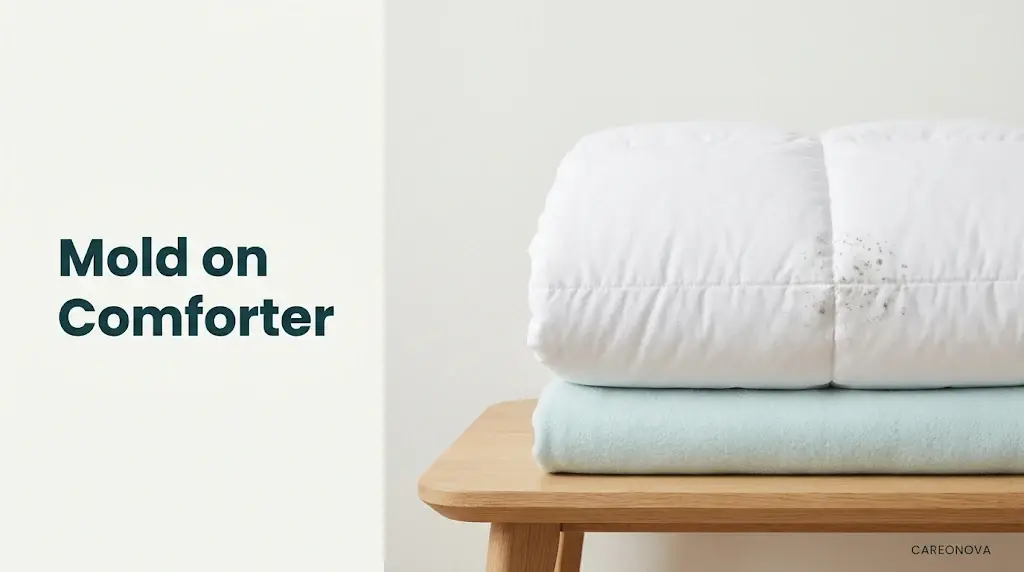
Yes, you can often remove light surface mold on comforter fabric if the outer shell is washable and the inner fill stays clean. However, you should replace the comforter if mold grows deep inside the batting or down fill. Unlike flat sheets, a comforter traps moisture between three thick layers. Therefore, this guide shows you how to confirm real mold, protect your fill type, and dry bulky bedding safely.
- Confirm before cleaning: Spreading spots, clumped fill, and a musty odor point to mold. Isolated gray flecks inside a white down shell often come from natural dark feathers.
- Know when to replace it: Surface spots on polyester or cotton shells usually wash out. Deep core mold inside thick fill rarely rinses completely clean.
- Protect protein fills: Never put chlorine bleach on down, feather, wool, or silk comforters. Bleach breaks down natural fibers and destroys loft.
- Dry the core completely: A dry outer shell often hides damp fill inside. Trapped moisture grows fresh mold within 24 to 48 hours.
How to Tell If You Have Mold on Comforter Fabric
Mold does not always begin as dark black spots. Because comforters have thick filling, early growth often hides inside the stitched boxes first. As a result, you should check for both visual marks and physical changes before washing anything.
Common Visual and Physical Warning Signs
First, inspect the quilted seams and outer edges closely. Moisture settles there longest and feeds early mildew. Watch for these four clear signs:
- Clustered spots: Yellow, brown, gray, or black speckles that spread across the outer shell.
- Musty odor: A sour or earthy smell that lingers even after you air out the bed.
- Clumping and flat spots: Lumpy, heavy patches where the filling loses its normal loft.
- Cold patches: Sections that feel slightly cool or clammy after washing or storage.
Also, pay close attention to your symptoms. For example, if you sneeze or get itchy eyes only in bed, hidden spores may sit inside your bedding. Never press your face against a dark spot to sniff it, and never shake a suspected moldy comforter indoors. Doing so launches spores straight into your bedroom air.
Dark Down Flecks vs. Real Mold (The Baffle-Shift Test)
White goose and duck down comforters naturally contain occasional gray or brown feathers. When a dark feather rests against a white shell, it looks just like a mold spot. Fortunately, this harmless flecking does not mean your bedding is dirty.
Instead of guessing, use the Baffle-Shift Test on any isolated spot that has no musty smell. First, lay the comforter flat in bright light. Next, use clean, dry hands to gently slide the filling inside that stitched square. If the dark speck moves with the feathers, it is likely a natural dark feather. However, if the mark stays fixed on the cloth, it is a shell stain or surface mildew. Never wipe an unknown spot with bleach or alcohol as a home test, because harsh chemicals can ruin the finish.

Check the Duvet Cover Separately
Many shoppers call a duvet insert a comforter. If your bedding uses a removable cover, unzip it right away. When mold sits only on the thin outer cloth, wash it like regular single-layer bedding using our guide on mold on sheets. Afterward, inspect the inner insert carefully before you decide your next step.
Can You Save a Moldy Comforter, or Should You Replace It?
According to the U.S. Environmental Protection Agency (EPA), mold grows into the tiny empty spaces of porous materials. Once it colonizes thick batting or down, standard home washing cannot reliably flush out every spore. Moreover, even dead mold still triggers allergies if trapped spores remain inside the fill.
Therefore, use this quick decision table to make the safest call for your health and budget.
| Comforter Condition | Best Action | Why It Matters |
|---|---|---|
| Light surface spots on washable polyester or cotton (no core odor) | Clean at home or laundromat | Growth sits on the shell and has not reached the inner fill. |
| Small surface spots on a down shell (fill feels dry and odor-free) | Shell-lift spot clean or pro wet-clean | Keeping feathers dry stops spores from spreading inside. |
| Musty smell returns after washing, or core feels lumpy | Replace (or pro wet-clean luxury down) | Active spores live deep inside the porous fill. |
| Heavy black or green patches, weak fabric, or flood exposure | Replace right away | Deep porous contamination creates ongoing health risks. |
| Household has asthma, severe allergies, or infants | Replace if fill smells or shows spots | Even dead trapped spores can irritate sensitive lungs. |
If you decide to throw the comforter away, seal it inside a heavy plastic trash bag first. This simple step keeps loose spores from scattering across your bedroom floor.
Check Your Comforter Fill Type Before Cleaning
Generic cleaning blogs tell you to dump chlorine bleach or hot water on every comforter. Unfortunately, that advice ruins expensive bedding fast. Because different fills react differently to heat and chemicals, always check your care symbols and fill tag first.
| Fill Type | Safe Cleaning Approach | What to Avoid |
|---|---|---|
| Polyester / Down Alternative | Warm wash with powdered oxygen bleach, plus optional vinegar in a separate final rinse | High dryer heat (fuses cheap batting into hard lumps) |
| Cotton Batting / Quilts | Warm wash per care tag with powdered oxygen bleach pre-soak | Leaving damp; chlorine bleach on colored prints |
| Down & Feather | Shell-lift spot clean, or cool-warm (86–109°F) wash with mild enzyme-free soap | Chlorine bleach, borax, hot water (110°F+), fabric softener |
| Wool or Silk Fill | Professional wet-cleaner or full replacement | Home machine washing, hot water, agitation, borax, bleach |
First, never use chlorine bleach on down, feather, wool, or silk. Bleach dissolves protein fibers and strips natural down oils. Second, never mix chlorine bleach with white vinegar or ammonia. Vinegar can cause the release of toxic chlorine gas, while ammonia can produce toxic chloramine gases.
How to Remove Mold From a Comforter Step by Step
If your bedding passes the save test, follow these steps in exact order. Always wear gloves and a dust mask if you see active fuzzy growth.
Step 1: Brush Off Dry Surface Spores Outdoors
When treating mold on comforter shells, carry the dry bedding outside first. Next, use a soft-bristle brush to sweep visible spots away from the cloth. Doing this outdoors removes loose spores before wash water pushes them deeper into the weave.
Step 2: Wash Polyester and Cotton Comforters Properly
First, pre-soak stained spots in warm water mixed with powdered oxygen bleach (sodium percarbonate) for 30 to 60 minutes. Oxygen bleach lifts dark mildew pigment and loosens spores much better than baking soda alone, and it stays safe on most white and colored shells. Skip borax if your comforter has any wool, silk, or down blend, because its high alkalinity weakens protein fibers.
Next, check your washer capacity before loading. Standard home top-load washers with center agitators pack queen and king comforters too tightly. As a result, wash water cannot flush spores from the center, and the agitator can rip the seams. Instead, use a large front-load washer (4.5 cubic feet or larger) or visit a commercial laundromat front-loader.
Load the comforter loosely by itself. Then choose the warmest water temperature your care tag permits, and add a normal dose of mild liquid detergent. Skip fabric softener, because it coats fibers and traps moisture. Finally, run an extra rinse cycle. If a light odor remains, add one cup of plain white vinegar to that separate final rinse—never mix vinegar and oxygen bleach in the same soak or wash cycle, because combining them creates harsh fumes and cancels out their cleaning power.
Step 3: Clean Down Comforters Without Ruining the Loft
When light spots sit only on the outer shell of a down comforter, use the Shell-Lift Method. First, pinch the stained outer cloth and pull it completely away from the feathers underneath. Next, dab the lifted fabric lightly with cool water and a drop of mild liquid soap to mechanically lift surface spores off the cloth. Afterward, blot the fabric with a clean towel and dry the damp patch fast with a cool fan or a hair dryer on low.
If a machine-washable down comforter has mild overall mustiness, wash it alone in a large front-loader. Use cool-to-warm water (86°F to 109°F) and a small dose of mild, enzyme-free liquid detergent. Hot water above 110°F strips natural feather oils and shrinks cotton shells. Finally, run at least one extra plain-water rinse so zero soap residue stays inside the baffles. For broader textile care rules, check our guide on washing different fabrics.
Step 4: Inspect Before You Dry
Always inspect the wet comforter before moving it to the dryer. Otherwise, dryer heat permanently locks leftover pigment into the fabric fibers. If the musty smell is completely gone, faint gray shadows are usually harmless leftover stain marks. You can re-treat washable polyester or cotton shells with oxygen bleach to lighten those marks. However, if a sour smell stays after washing, stop right there—mold still lives in the core, and you should replace the comforter.
The “Dry Shell, Wet Core” Trap: How to Dry It Completely
Incomplete drying causes more mold on comforter fills than almost anything else. Even a thorough wash fails if hidden dampness remains inside the batting.

Follow these five rules to dry the core all the way through:
- Move it fast: Transfer the comforter to the dryer right when the wash cycle ends.
- Keep heat gentle: Use low heat for down and low-to-medium heat for polyester. High heat scorches shells and makes feathers brittle.
- Add dryer balls: Toss in 2 to 3 clean wool dryer balls (or clean tennis balls inside white socks) to break up wet clumps.
- Fluff every 20 to 30 minutes: Pause the dryer, pull the comforter out, and shake the corners to separate dense pockets. Plan for 2 to 4 hours for polyester, and 4 to 6+ hours on low heat for thick down comforters.
- Do the Squeeze Check: Firmly squeeze the thickest center baffles. If any pocket feels cool, heavy, or clammy, run another low-heat cycle. Afterward, drape the comforter over two chairs for a few hours. Brief outdoor sunlight helps finish drying white washable cotton or polyester shells and slows surface mildew, but UV rays cannot penetrate thick batting to kill deep core mold—and prolonged sun fades dark dyed fabric.
How to Prevent Mold on Comforter Fabrics
Stopping moisture prevents mold on comforter fills year-round. Build these five simple habits into your routine:
- Ditch plastic storage bags: Never store comforters in vacuum-seal bags or airtight plastic bins in basements or attics. Plastic traps trace humidity inside thick fill. Instead, store bone-dry comforters in breathable cotton bags inside a dry, climate-controlled closet.
- Air out your bed each morning: Pull the comforter back for 20 to 30 minutes after waking up. This lets overnight sweat evaporate instead of soaking into the fill.
- Always use a duvet cover: A washable cover blocks night sweats, body oils, and spills before they reach internal batting.
- Inspect the mattress underneath: If mold appeared while the comforter was on your bed, check your mattress and mattress pad right away so trapped mattress moisture does not spread back onto clean bedding.
- Control room humidity and clean your washer: Run a dehumidifier if your bedroom feels clammy. Also, wipe your washer door gasket and run a monthly tub-clean cycle so machine mildew never transfers onto fresh laundry.
Moving Forward With Clean, Safe Bedding
Dealing with mold on comforter fabric comes down to three calm steps. First, confirm the marks are true mildew rather than natural dark feathers. Next, judge honestly whether growth sits on the outer shell or deep inside the fill. Finally, match your cleaner to your fill type and take the extra hours needed to dry the center core completely.
