


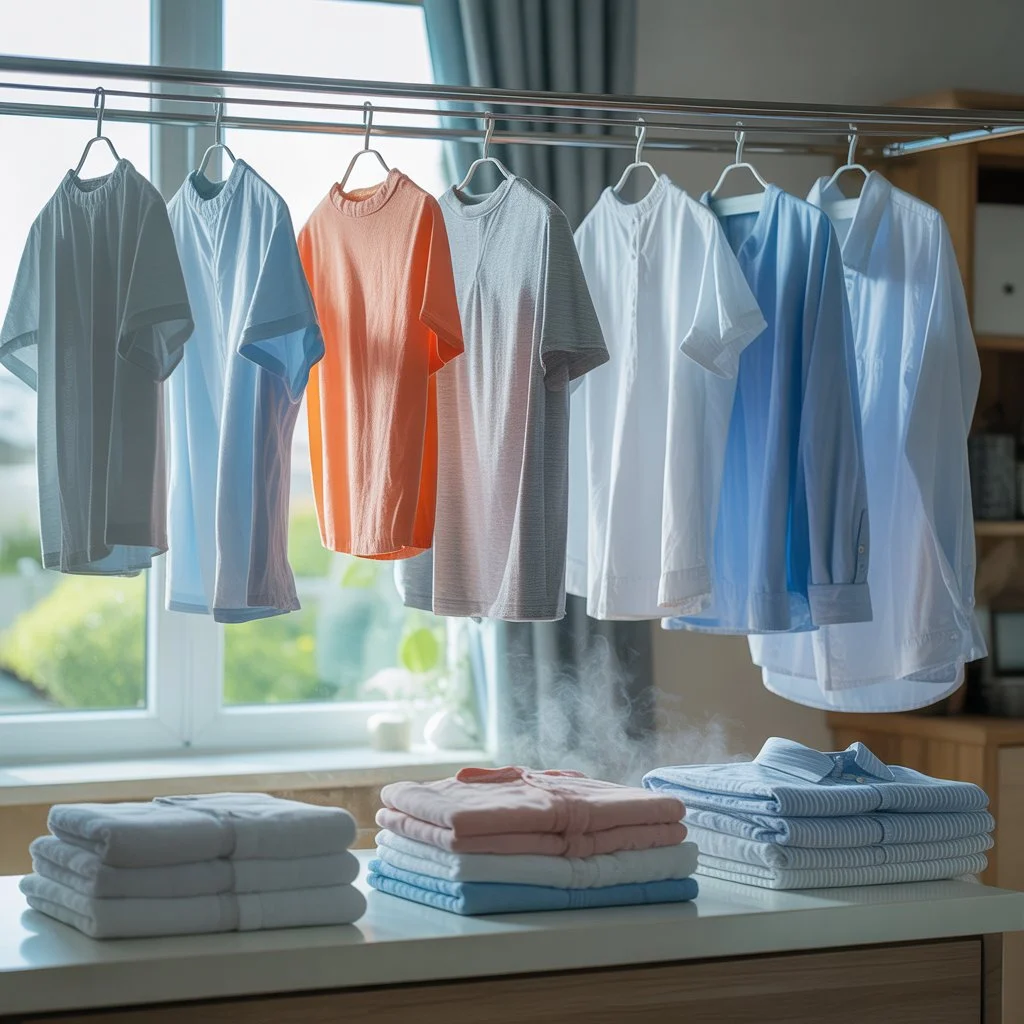
Clothes that smell even after washing usually have one of three causes: detergent residue, trapped body oils, or incomplete drying. While many people assume odor means the wash “didn’t work,” the real issue is often how fabric fibers interact with oils, moisture, and rinse performance.
To remove odor from clothes effectively, you need to identify the underlying cause and apply the correct fix. Clothes that smell right after washing, only when damp, or after drying each point to a different mechanism. This guide explains how to remove odor from clothes using practical, fabric-safe methods based on real-world laundry performance.
Quick Answer: To remove odor from clothes, use the correct amount of detergent, wash in warm water when fabric allows, run an extra rinse cycle, and dry completely with proper airflow. Persistent odor usually means residue buildup or oil retention in synthetic fibers.
Key Takeaways
- Complete drying prevents odor from returning.
- Most clothing odor is caused by residue or trapped body oils.
- Overusing detergent can make odor worse.
- Warm water removes oils better than cold (when fabric allows).
- Extra rinsing often solves persistent smell.
Identify Your Odor Problem in 20 Seconds
The fastest way to remove odor from clothes is to match the smell pattern to the right fix. Choose the situation that sounds most like yours:
Clothes smell immediately after washing
→ See: Why Clothes Smell After Washing
Clothes smell fine when dry but stink when damp or sweaty
→ See: Wet Clothes Smell Guide
Strong odors like smoke, gasoline, perfume, pet urine, or chemicals
→ Use the dedicated odor-specific removal guides.
Why Clothes Hold Odor Even After Washing
Odor sticks to fabric because of how fibers interact with oils, detergent, and moisture.
1. Body Oils Bind to Synthetic Fibers
Polyester, nylon, and spandex are oleophilic. This means they attract and hold oils. Since sweat odor attaches to oils, smells can stay trapped even after washing.
This is why activewear often keeps odor longer than cotton.
2. Detergent Residue Traps Odor
Using too much detergent, especially in high-efficiency (HE) washers common in U.S. homes, can leave buildup behind. That residue holds bacteria and odor compounds instead of removing them.
Hard water minerals can make this problem worse.
3. Moisture Reactivates Hidden Odor
Some clothes smell clean when dry but release odor again when damp. Moisture allows trapped compounds to become active again.
Understanding these causes helps you choose the correct fix instead of rewashing repeatedly.
Step-by-Step: How to Remove Odor From Clothes
Follow this universal framework before trying stronger treatments.
Step 1: Use Proper Detergent Dosing
Measure detergent carefully. More detergent does not mean cleaner clothes. In fact, overdosing reduces rinsing efficiency.
If odor persists, run one extra rinse cycle.
Avoid frequent use of liquid fabric softener, especially on synthetic fabrics.
Step 2: Wash at the Right Temperature
Warm water removes body oils more effectively than cold water. Always follow garment care labels.
For sweat-heavy clothing, enzyme-based detergents help break down proteins and oils.
Step 3: Dry Completely With Airflow
Clothing must dry fully before storage. Even slight dampness can cause odor to return.
Do not use high heat to “burn off” odor. Heat can set smells deeper into fibers.
Airflow is more important than fragrance.
Light vs Heavy Odor: What to Do
Not all smells require the same treatment.
| Odor Level | Recommended Action |
|---|---|
| Light odor | Standard wash with correct detergent and full drying |
| Moderate odor | Pretreat high-sweat areas, use enzyme detergent, add extra rinse |
| Heavy or set-in odor | Soak 30–60 minutes (fabric-safe solution), warm wash, double rinse |
If odor still remains after proper treatment, the issue may be washer contamination or persistent residue buildup.
How to Remove Sweat Smell from Clothes
Sweat smell usually becomes a fabric problem when sweat compounds and body oils stay trapped in the fibers, especially in polyester, nylon, and other activewear fabrics. Wash sweaty clothes promptly, use the correct detergent dose, and choose warm water when the care label allows. For stubborn odor, pretreat high-sweat areas and run an extra rinse to help clear leftover residue. For deeper steps, see my guide on getting sweat smell out of clothes.
How to Remove Mildew Smell from Clothes
Mildew smell usually appears when clothes stay damp for too long after washing, sweating, or storage. Rewash the garment promptly and dry it fully with good airflow. Mild musty odor may come out with a proper wash and complete drying, but persistent mildew smell often points to trapped moisture, washer contamination, or a need for more fabric-specific treatment. I cover that in more detail in my article on removing mildew smell from clothes.
How to Remove Smoke Smell from Clothes
Smoke smell is persistent because fine particles and residue cling to fabric surfaces. Start by airing out the garment, then wash it with the right detergent amount and a full rinse cycle. Avoid trying to mask the odor with more fragrance. If the smell is strong, set in, or still noticeable after washing, the garment may need repeat treatment. For stronger odors, read my full guide on how to get smoke smell out of clothes.
How to Remove Perfume Smell from Clothes
Perfume smell can linger because fragrance compounds often leave scented residue on the fabric. Start by airing out the item, then wash it with the correct detergent amount and avoid adding more fragrance through scented boosters or fabric softener. An extra rinse may help if the scent is still noticeable after washing. I explain the full process in my guide to removing perfume smell from clothes.
Odor Removal by Fabric Type
Different fabrics behave differently in the wash.
Cotton
Cotton absorbs sweat deeply but releases it well in warm water. Wash warm when allowed and dry fully.
Synthetic Fabrics (Polyester, Spandex, Nylon)
These fabrics trap oils easily. Use enzyme detergent and avoid fabric softener. Extra rinsing may help.
Wool and Delicates
Use cold water and mild detergent. Air dry flat. Avoid high heat.
Activewear
Activewear traps sweat more than most fabrics. Wash promptly after use and rinse thoroughly.
Rinse Engineering: The Overlooked Solution
High-efficiency washers use less water than traditional machines. While efficient, this can increase residue retention.
If clothes still smell after washing:
• Reduce detergent amount
• Add one extra rinse
• Avoid overloading the washer
Proper rinsing often fixes odor problems better than adding baking soda or vinegar.
Natural Odor Helpers (When Appropriate)
For mild odor, baking soda, airflow, or sunlight may help reduce surface smell. These methods can support odor control, but they do not replace proper washing, rinsing, and full drying when odor is embedded in the fabric.
How to Prevent Odor Buildup
Preventing odor is easier than removing it.
• Use correct detergent dosing
• Avoid overloading your washer
• Remove clothes promptly after cycles
• Dry completely before storage
• Clean your washing machine monthly
Regular maintenance prevents residue and odor transfer.
Frequently Asked Questions
Yes. Air drying, sunlight, freezer methods, and sprays can freshen lightly worn clothes.
Use enzyme detergents, warm water, and extra rinse cycles. Treat high-odor areas before washing.
Residue from detergent, sweat, or bacteria buildup can cause odor. Proper washing and extra rinsing helps.
Pre-soak, use enzyme detergents, avoid fabric softeners, and dry thoroughly.
Only if odor persists after repeated washes or the fabric is damaged
