


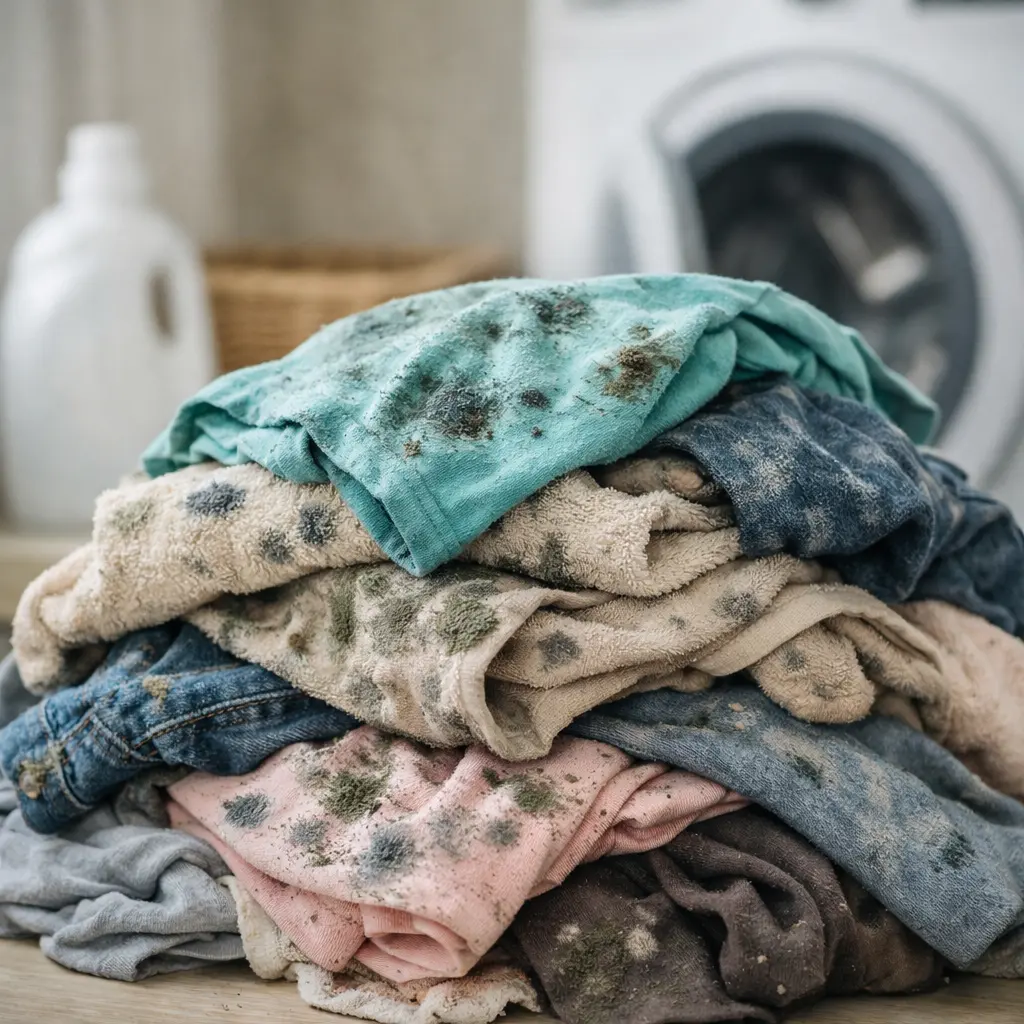
Quick Steps to Remove Mold Safely
- Brush off visible mold outdoors.
- Pre-treat based on fabric type (vinegar soak, oxygen bleach for label-approved fabrics, or borax).
- Wash using the warmest water allowed by the care label.
- Dry completely using sunlight, dryer heat (if safe), or strong airflow.
Tip: If odor or visible mold remains after two full treatment cycles, discarding the item is usually safest.
Key Takeaways
- Mold can grow on damp clothes within 24–48 hours
- Moisture and poor airflow are the main causes
- Some fabrics are harder to clean than others
- Not all moldy clothes can be saved
- Prevention is easier than removal
How to Get Mold Out of Clothes (Fast Steps)
- Brush off mold outdoors
Do not shake the item inside. Remove loose spores outside to prevent spreading.
- Soak the item
Use vinegar, baking soda, or borax—choose based on fabric type and care label.
- Wash properly
Use the warmest water the care label allows, plus quality detergent.
- Dry completely
Use direct sunlight, a dryer, or strong airflow. Ensure zero moisture remains.
- Recheck before storing
Confirm there is no remaining odor or visible spotting.
Introduction: Why Mold on Clothes Feels So Stressful
Finding mold on clothes is frustrating. Many people notice it when clothes smell musty, show dark spots, or feel damp even after washing. This often happens when laundry sits too long in the washer or gets stored before fully drying.
Rewashing without addressing moisture usually won’t fix the problem. Once mold appears, the goal is simple: remove it fully, dry the item correctly, and prevent it from returning. In textile testing, visible mold usually indicates prolonged moisture exposure rather than a single washing mistake.
What to Do Immediately If You Find Mold on Clothes
- Do not wear the item.
- Keep it separate from other laundry.
- Take it outside before brushing visible mold.
- Wear gloves when handling heavy mold.
- Decide whether the item is worth saving.
What Mold Looks Like on Clothes
Mold does not always look obvious. Common signs include:
- Small black dots
- Green or white fuzzy patches
- Gray powdery spots
- Yellow or brown stains
- Strong musty odor
Tip: Mold can grow deep in fabric. Clothes may smell musty even without visible spots.
Mold vs. Mildew Comparison
| Feature | Mold | Mildew |
|---|---|---|
| Grows into fabric | Yes | Usually surface-level |
| Odor strength | Strong | Mild |
| Fabric damage risk | Higher | Lower |
| Ease of removal | Harder | Easier |
If the issue is primarily odor without visible mold spots, see our guide on mildew smell for odor-focused treatment.
Why Mold Grows on Clothes
Mold on clothes develops when moisture and time combine in damp environments.
Common causes:
- Wet laundry left in washer or basket
Damp storage can also lead to wet clothes smell before visible mold appears. - Clothes stored before fully drying
- High indoor humidity
- Poor airflow in closets
- Damp towels or bedding
- Fabrics that hold moisture longer, such as:
- Cotton
- Towels
- Denim
- Wool
- Thick blends
How Fast Mold Can Grow
In warm and humid conditions, mold on clothes can begin forming within 24 to 48 hours.This is why mold often appears after delayed laundry, travel, floods, or humid weather.Understanding how to remove mold from clothes early prevents deeper fiber damage and repeated contamination.
Possible Effects of Mold Exposure from Clothes
Mold on fabric can release spores into the air when handled. Sensitive people may notice:
- Sneezing
- Skin irritation
- Runny nose
- Musty smell discomfort
Mold exposure from clothing differs from large indoor mold contamination but should still be handled.According to environmental health guidance from the CDC, mold exposure can irritate sensitive individuals when spores become airborne. Handling contaminated clothing carefully and cleaning it promptly reduces spread.
Tip: Keeping clothing fully clean and dry reduces these issues.
Is It Safe to Wear Moldy Clothes?
It’s generally best to avoid wearing clothing that still has visible mold or strong odor. Even small patches can spread to other fabrics during storage or washing. If mold or odor remains after cleaning, replacing the item is usually the safest choice.
How to Remove Mold from Clothes ( Step-by-step )

Step 1: Safety First
- Wear gloves
- Brush off mold outdoors
- Do not shake clothes inside
- Keep away from clean laundry
Step 2: Pre-treatment Options
- White vinegar: helps reduce odor and light surface mold.
- Oxygen bleach (color-safe): effective for many washable fabrics (check label).
- Borax: supports odor removal and cleaning power.
- Chlorine bleach: for whites only and label-approved fabrics.
Warning: Never mix bleach with vinegar or ammonia. This can create toxic fumes. Always check the fabric care label before applying strong chemicals.
Tip: Always check care label before pre-treatment.
Step 3: Wash Properly
- Use the hottest water the care label allows.
- Use strong detergent
- Add extra rinse
- Do not overload washer
Step 4: Dry Completely
- Drying is critical. Mold returns if moisture remains.
- Best options:
- Direct sunlight
- Dryer on proper setting
- Strong airflow indoors
- Never store clothes while damp.
Fabric-Specific Mold Removal
Towels & Bedding: Hot wash → Extra rinse → Full drying
Cotton & Linen: Vinegar soak → Hot wash if safe → Sun drying
Synthetic Fabrics: Warm wash → Avoid high heat → Dry fully
Delicates: Cold wash → Gentle detergent → Air dry completely
 Pro Tip: For delicate or sentimental items, repeat the vinegar soak and air dry rather than using harsh chemicals. This prevents damage while fully removing mold and odor.
When to Keep or Discard Moldy Clothes
| Condition | Keep? | Reason |
|---|---|---|
| Light surface mold, no odor after treatment | Yes | Cleanable with proper wash + full dry |
| Odor fully gone after one full treatment | Yes | Mold likely removed |
| Strong odor remains after two full treatments | No | Likely deep contamination |
| Thick patches / heavy staining on thick porous items (towels, denim) | No | Hard to fully remove from dense fibers |
| Mold returns after correct drying + storage | No | Moisture issue persists; reinfection risk |
Dense items with padding, insulation, or heavy stitching are harder to sanitize completely.
Why Mold Keeps Coming Back
Recurring mold usually means moisture is still present. Common sources:
- Damp storage
- Humid rooms
- Dirty washing machine. If mold odor continues after washing clean the washer drum and seal to remove buildup inside the drum and gasket.
- Slow drying
Environmental guidance consistently emphasizes moisture control and complete drying as the primary way to prevent mold regrowth (EPA).
How to Prevent Mold on Clothes
Laundry Habits
- Dry clothes immediately
- Do not leave laundry overnight
- Use correct detergent amount
- Avoid overloading washer
Storage Habits
- Ensure clothes are fully dry
- Allow airflow in closets
- Avoid sealed plastic storage
- Use moisture absorbers in humid areas
Mold Odor vs Mold Stain
A stain may remain even after mold is no longer active. Odor absence and no new spotting are better indicators of successful removal than stain appearance alone.
- Soak in vinegar or baking soda solution before washing
- Use enzyme detergent for strong odors
- Dry thoroughly in sun or high airflow
- Repeat treatment for persistent smell
Commercial Products for Mold Removal
- Enzyme-based laundry boosters – effective for odor and stains
- Fabric-safe mold treatment sprays – for localized pre-treatment on washable items (check compatibility first)
Tip: Use according to product instructions and check fabric compatibility.
FAQ — Mold on Clothes
Yes, especially if washing in cold water, short cycles, or without proper drying afterward.
Ensure clothes are fully dry, store in breathable containers, and use moisture absorbers.
No, even small patches can spread spores and odor. Remove or discard affected items.
Check moisture sources, clean washer thoroughly, and repeat pre-treatment and washing steps.
Final Thoughts
Mold on clothes is common but manageable. Acting quickly prevents fabric damage and reduces contamination risk. Most cases come from moisture and delayed drying, not poor washing.
If you’re dealing with odor issues across different fabrics, see our odor removal steps guide.
In household laundry care, mold problems almost always start with moisture rather than washing quality. Fixing drying and airflow habits prevents repeat contamination and keeps fabrics odor-free.
References
- Canadian Conservation Institute (CCI). Mould Growth on Textiles: Prevention and Treatment.
- Centers for Disease Control and Prevention (CDC). Mold Cleanup and Prevention Guidance.
- U.S. Environmental Protection Agency (EPA). Basic Mold Cleanup and Moisture Control Recommendations.
