


Introduction
Your front load washer smells? That’s a common problem many homeowners face. Even after washing, clothes can come out musty, sour, or damp, which is frustrating because clean clothes should smell fresh and clean.
Most odors in front load washers come from moisture, detergent residue, or bacteria trapped inside the drum, gasket, or filter. I’ve personally tested these issues, learning that proper cleaning routines and preventive habits are the only ways to stop smells permanently.
Quick Answer
A front load washer usually smells because moisture stays trapped in the gasket folds, drum, dispenser, or filter. Residue from HE detergent or softener can feed bacteria and mildew. Cleaning these areas and following a dry-out routine usually fixes it.
Is This Your Smell?
- Musty / Mildew → Gasket folds + drum moisture
- Sulfur / Rotten egg → Filter, drain hose, or pump area
- Soap / Chemical → Overdosing detergent + dispenser residue
- Sewage → Drain or plumbing issue (See: How to Clean a Washing Machine)
Why Front Load Washer Smells in the First Place
Front load washers trap more water than top loaders. That moist environment makes it perfect for mold, mildew, and bacteria. Over time, soap residue and fabric softener buildup worsen the problem.
Other reasons include:
- Leaving wet clothes inside for long
- Using only cold or short cycles
- Poor ventilation around the washer
Common Causes of Front Loader Odors
Mold & Mildew Growth in Gaskets and Drum
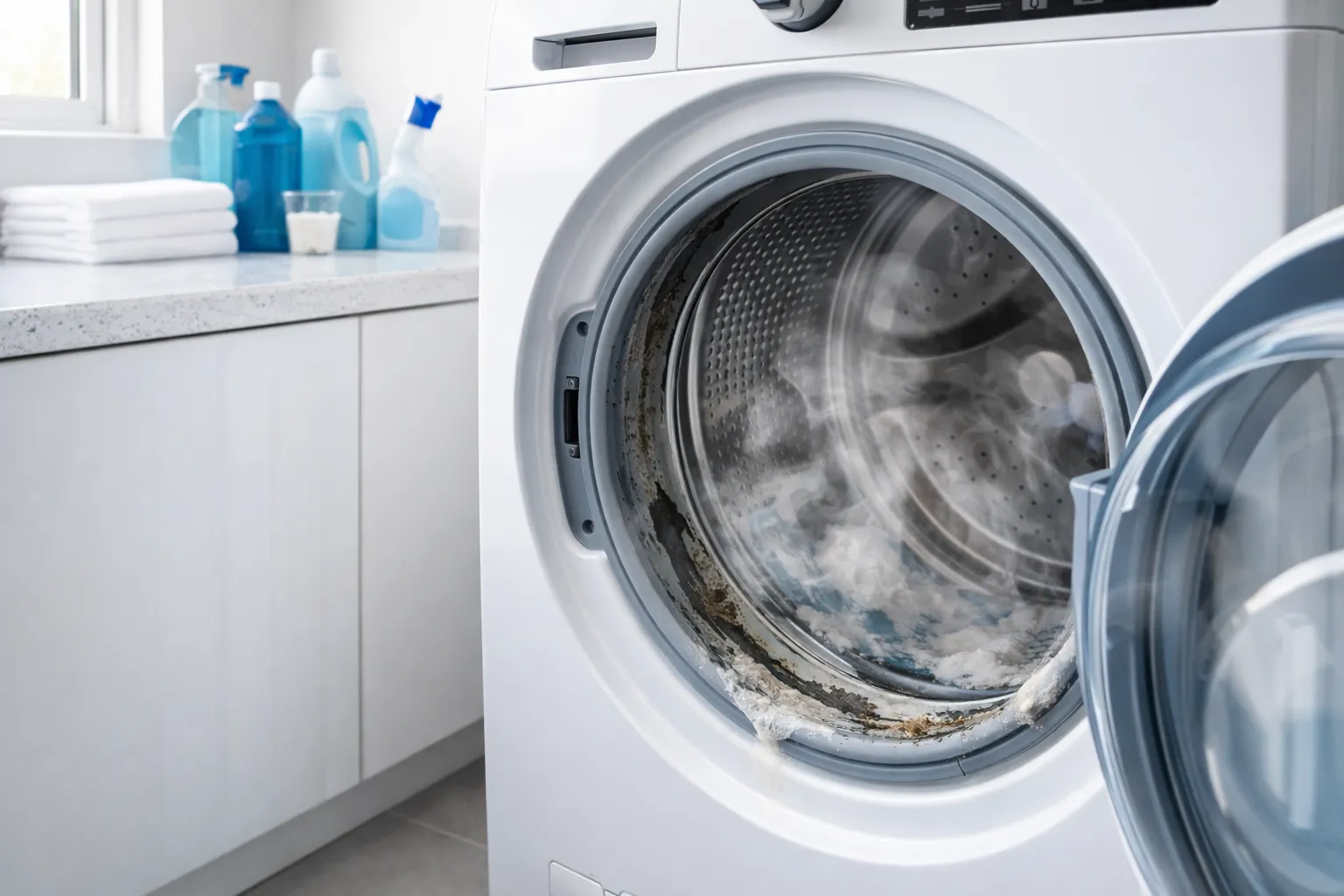
Mold grows where moisture and detergent residues stay. Check rubber gaskets, folds, and drum corners. Black spots or a musty smell usually signal mold.
Detergent & Fabric Softener Residue
Overusing HE detergent or fabric softener creates a sticky buildup. Soap residue traps bacteria and mildew, causing odors.
Stagnant Water & Incomplete Drainage
Standing water in the filter, pump, or drain hose can smell like sewage or chemicals. Blockages in the pump or drain worsen the problem. If drainage is slow, review our guide on how to clean a washing machine drain hose.
Bacteria & Sulfur Smells
Rotten egg or sulfur odors appear when bacteria thrive in damp areas. Hydrogen sulfide from buildup can make clothes smell even after washing.
Trapped Items Causing Odors
Small debris, socks, or lint trapped in the drum or gasket can generate odors that transfer to your laundry.
Smell Diagnostic Guide
| Smell Type | Likely Cause | Where to Check |
|---|---|---|
| Musty / Mildew | Mold / Residue | Gasket, Drum Folds, Dispenser |
| Sulfur / Rotten Egg | Bacteria / Drain Issue | Drain Hose, Pump Filter |
| Soap / Chemical | Detergent Residue | Dispenser, Drum |
Real User Smell Scenarios
Smell only on cold washes → residue + biofilm → monthly hot clean + correct dosing
Smell after laundry sits overnight → microbial bloom → unload fast + dry-out protocol
Smell returns after “cleaning” → gasket folds not dried + filter missed
How to Clean a Smelly Front Load Washer (Quick Checklist)
- Wipe gasket folds and remove visible residue
- Clean the detergent drawer and channels.
- Clean the pump filter (lint/hair/debris).
- Run Tub Clean / hottest empty cycle with a washer cleaner tablet (routine option).
- Do the dry-out protocol (below).
Keep vinegar as optional: “Vinegar can help occasionally for light residue,” not the main method.
Dry-Out Protocol (Prevents Odor Return)
- Run a quick spin/drain if water pools
- Wipe gasket folds dry
- Leave door and drawer open 2–3 hours (or overnight)
- Remove loads promptly
- Don’t store the dispenser cup wet
Step-by-Step Cleaning Tips
- Wear gloves when handling mold
- Leave door open after cleaning to dry gasket
- Use HE detergent sparingly
- Run hot cycles periodically
Quick Fixes at a Glance
| Problem | Quick Fix |
|---|---|
| Musty / Mildew Smell | Wipe gasket/drum, run hot cycle, dry door |
| Soap / Chemical Smell | Reduce detergent, clean dispenser, run hot wash |
| Sulfur / Rotten Egg Smell | Check drain filter/hose, clean pump, sanitize |
Best Practices to Keep Your Washer Smelling Fresh
- Keep the door and drawer open between washes
- Clean gasket and dispenser weekly
- Run a monthly hot cleaning cycle
- Avoid leaving wet clothes inside for long
- Properly dose HE detergent

Extra Prevention Tips (Often Missed)
- Improve laundry room airflow/humidity
- Don’t overdose softener
- Run a monthly hot maintenance cycle
When the Smell Is Not From the Washer
Sometimes odors come from plumbing issues. Check the P-trap, sewer vents, and drain hoses. If the washer is clean and smells persist, the source may be external.In some cases, the issue is not limited to the front loader design itself. See our guide on why my washing machine smells bad to rule out deeper mechanical or drainage causes.
Front Loader Features That Help With Odors
Some washers have FanFresh, Dry Drum, or FreshFlow cycles. These features reduce moisture and prevent mold. Automatic dosing and antimicrobial seals also help reduce odor buildup.
Health & Indoor Air Concerns
Persistent mold buildup can increase odor in the laundry area. Early cleaning and moisture control reduce repeat contamination.
Key Takeaways- Most odors come from **mold, mildew, and detergent residue**
- Check **gasket, drum, filter, and drawer** regularly
- Use proper **HE detergent and avoid overdosing**
- Leave **door open** to prevent moisture buildup
- Plumbing issues may mimic washer odors
- Follow monthly cleaning and drying habits for best results
Conclusion
Front load washer odors usually result from trapped moisture and detergent buildup. Cleaning the gasket, drum, filter, and maintaining proper drying habits prevents most smells. Consistent maintenance keeps both your washer and laundry fresh.
Most front load washer smells are preventable with correct detergent dosing, airflow management, and monthly maintenance cycles.
Frequently Asked Questions
Mold may remain in gasket folds or filter. Repeat cleaning and dry completely.
Vinegar can help with light residue occasionally, but washer cleaner tablets are more consistent for routine maintenance.
Use only if the manufacturer allows it, ventilate well, and don’t use it frequently.
Cold water doesn’t dissolve detergent fully and leaves residue for bacteria.
Front loaders trap more water, creating a damp environment ideal for mold growth.
Once a month, plus wipe gaskets weekly and check filters.
