


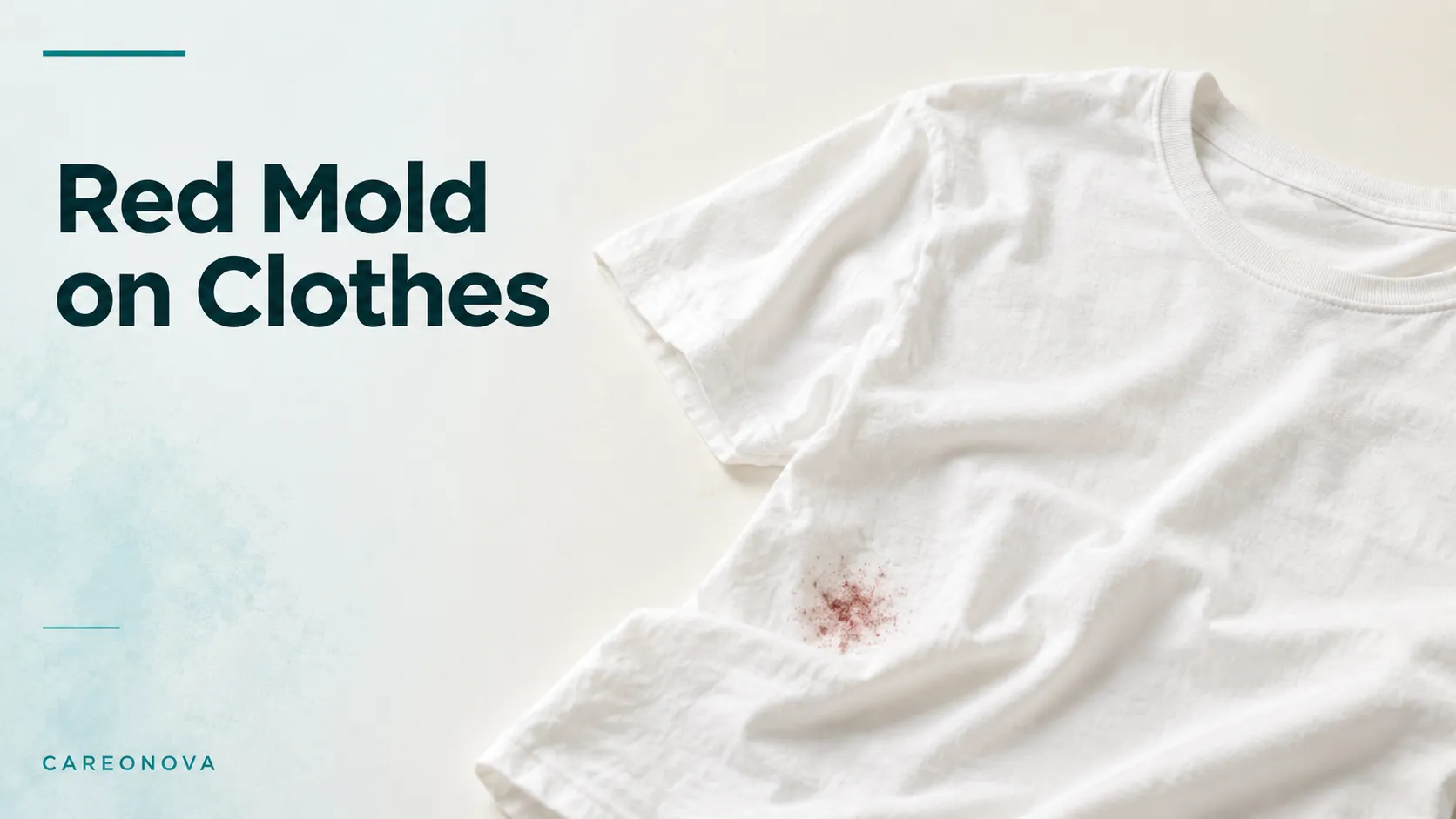
Red mold on clothes is usually a reddish patch that looks fuzzy or powdery, caused by fabric staying damp too long. Not every red mark is mold — rust, dye transfer, blood, and cosmetics can look similar. Real growth tends to appear after damp storage, often with a musty smell, and it spreads over time, while a flat mark that never changes is more likely a stain.
This guide covers how to tell red mold apart from rust and dye transfer, then walks through cleaning it safely: checking the care label, pretreating the spot, washing at the right temperature, and drying fully so it doesn’t return. It also explains how treatment differs for white versus colored clothes, when bleach is safe, how to handle delicate or dry-clean-only items, and the moisture sources, like damp closets or a slow washing machine, that let red mold keep coming back.
Before Cleaning, Check That the Red Mark Is Mold

Not every red spot on clothing is mold.
Possible mold is more likely when the mark looks fuzzy, powdery, raised, or irregular and the garment has been damp for some time. A musty smell or a history of wet storage can provide another clue.
A flat red mark may instead be rust, transferred dye, blood, food, cosmetics, or another stain.
| What You Notice | Possible Cause | What to Check |
|---|---|---|
| Fuzzy or powdery reddish patches | Possible mold growth | Check for damp storage, a musty odor, or spreading spots. |
| Flat orange-brown spots | Rust | Check metal fasteners, rusty surfaces, washer parts, or iron in water. |
| Pink or red areas after washing | Dye transfer | Check whether red, burgundy, or dark clothing was washed in the same load. |
| Dark red-brown local mark | Blood or food | Check the spill, stain, or contact history. |
| Red marks near collars or cuffs | Cosmetics | Check makeup, skincare, hair products, or other personal-care products. |
| Red marks that return with dampness | Possible microbial growth | Check the closet, washer, hamper, or another moisture source. |
If the mark is mainly pink, salmon, or pink-orange rather than red-brown, compare it with pink mold on clothes. Pink microbial-looking residue, dye transfer, and other stains can overlap in appearance, so the distinction can change how you treat the garment.
Red Mold vs Rust and Dye Transfer
Rust is one of the easiest stains to confuse with red mold. It usually appears flat and orange, brown, or reddish-brown. It may develop near metal fasteners, rusty drying surfaces, or metal parts inside a washer.
Dye transfer is different. It often appears directly after washing, especially when a red, burgundy, or dark garment has been washed with lighter clothing.
If red spots first appear after a wash cycle, check for dye transfer, rust, and washer residue before assuming new mold growth.
How to Remove Red Mold From Clothes
For washable clothing, focus on removing the contamination without damaging the fabric. If the garment has mold beyond the reddish area or several affected patches, use the broader mold-removal process for clothes to assess and clean the whole item rather than treating only one visible spot.
1. Separate the Affected Garment
Keep the affected item away from clean laundry until it has been washed and fully dried.
Avoid shaking visibly moldy clothing indoors. This can release loose material from the fabric.
If several garments were stored in the same damp place, inspect them as well.
2. Check the Care Label
Read the garment’s instructions before choosing a cleaner.
Check:
- washing method;
- allowed water temperature;
- bleach restrictions;
- drying method;
- dry-clean-only instructions.
Use an effective treatment that is compatible with the entire garment and its care instructions. A cleaner that works on a cotton towel may damage silk, wool, elastane, prints, or unstable dyes.
3. Handle Visible Surface Growth Carefully
If the fabric has obvious fuzzy or powdery growth, handle it gently.
Avoid vigorous dry brushing or shaking indoors. For a delicate garment or an item with extensive visible growth, professional cleaning may be safer than aggressive home treatment.
4. Pretreat the Red Area
Use a laundry stain remover or cleaning product that is suitable for the fabric.
Follow the product instructions for:
- amount;
- contact time;
- rinsing;
- colorfastness testing.
Do not assume vinegar, baking soda, peroxide, lemon juice, essential oils, or bleach are suitable for every garment.
Fabric type and dye stability matter.
5. Wash According to the Care Instructions
Wash the garment with detergent using the method allowed by its label.
Use the permitted water temperature rather than assuming hotter water will give a better result.
If the label limits bleach use, follow that restriction.
For a dry-clean-only item, move to professional cleaning instead of putting the garment through a normal wash cycle.
6. Dry the Clothing Completely
Do not return the garment to storage while any part remains damp.
Pay special attention to areas that dry slowly, including:
- cuffs;
- waistbands;
- pockets;
- seams;
- hoods;
- thick fabric layers.
Complete drying matters because continued moisture can allow mold to return.
7. Inspect the Garment Again
When the clothing is completely dry, inspect the treated area.
Check for:
- new fuzzy or powdery growth;
- persistent musty odor;
- remaining red discoloration;
- weakened or damaged fabric.
A flat red stain that remains after cleaning does not automatically mean active mold is still present.
How Treatment Changes by Fabric and Color
The mold may look similar on different garments, but the safest treatment can change significantly.
White Clothes
Red mold on white clothes is easier to notice, but white fabric is not automatically bleach-safe.
A white garment may still contain:
- elastane;
- colored stitching;
- printed sections;
- special finishes;
- bleach-sensitive fibers.
First rule out rust, especially when the spot looks orange or brown-red.
Then follow the care label when choosing a bleach or stain treatment.
Colored Clothes
Colored garments require more caution because strong treatments may fade or change the dye.
Use products labeled as suitable for colored fabrics and perform a hidden-area test when the product instructions recommend one.
If the red area appeared after washing with another colored garment, consider dye transfer before continuing with mold treatment.
When Bleach Is Appropriate
Do not choose bleach simply because the suspected mold looks red.
Some garments allow chlorine bleach. Others permit only non-chlorine bleach, while some should not be bleached at all.
The garment’s care instructions and the bleach product label should guide the decision.
Use bleach only when the garment care label and product instructions allow it. Never mix chlorine bleach with ammonia, vinegar, acidic cleaners, or other household cleaning chemicals.
Delicate and Dry-Clean-Only Clothes
Professional cleaning may be the better option for:
- wool suits;
- silk;
- structured coats;
- formalwear;
- delicate garments;
- expensive or sentimental clothing.
Tell the cleaner that you suspect mold and explain whether the garment was stored damp, exposed to a leak, or previously treated with a cleaning product.
Professional cleaning can provide a safer option for sensitive garments, but it cannot guarantee that every damaged item can be restored.
What If Red Spots Remain After Washing?
A red mark can remain even after the main mold problem has been cleaned.
The remaining discoloration may come from pigment, oxidation, fabric damage, rust, or another stain.
A residual stain is more likely when the area:
- remains flat;
- does not spread;
- develops no new texture;
- stays unchanged while the garment remains dry.
Possible returning growth deserves more attention when:
- new fuzzy material appears;
- the spots spread;
- a musty smell returns;
- the marks come back after damp storage.
Once the garment is clean and dry, treat a remaining flat mark as a stain rather than repeatedly using stronger mold treatments.
A remaining red stain does not automatically mean active mold remains. If the area stays flat, does not spread, and develops no new fuzzy or powdery growth while dry, the remaining problem may be discoloration rather than continued growth.
When Should You Throw Moldy Clothes Away?
Many lightly affected washable clothes can be cleaned, but some items are not practical to save.
Discarding moldy clothes may be reasonable when:
- mold covers a large area;
- the fabric has become weak or damaged;
- strong odor remains after proper cleaning;
- growth repeatedly returns;
- the garment cannot tolerate an appropriate cleaning method;
- the item was heavily contaminated by sewage or polluted floodwater.
For valuable or sentimental clothing, professional evaluation may be worthwhile before disposal.
Is Red Mold on Clothes Dangerous?
The red color itself does not tell you how dangerous the mold is.
Different people respond to mold exposure differently. Some may notice little or no reaction, while others can experience irritation, coughing, wheezing, eye irritation, skin irritation, or allergy-like symptoms.
People with asthma, mold allergies, chronic lung disease, or weakened immune systems may need greater caution.
Color also cannot reliably identify the mold species.
If mold exposure causes symptoms or you have a medical condition that makes exposure a concern, seek advice from a healthcare professional.
How to Keep Red Mold From Returning
Removing the visible mold is only part of the solution.
If the same conditions remain, the problem may return.

Dry Clothes Before Storage
Never store clothing that is only partly dry.
Thick seams, cuffs, waistbands, towels, and layered fabrics often hold moisture longer than the rest of the garment.
Move Wet Laundry Promptly
Remove washed clothes from the machine soon after the cycle ends.
Wet towels, swimsuits, or sweaty gym clothes should also not remain for long periods inside closed bags or hampers.
Check Closets and Wardrobes
If several garments develop similar mold-like spots, inspect the closet and storage area
Look for:
- damp walls;
- condensation;
- overcrowding;
- poor airflow;
- water leaks;
- persistent musty odor.
Treating each garment will not solve a closet that continues to stay damp.
Check the Washing Machine
If red or musty marks keep appearing across different loads, inspect the washing machine for mold.
Pay attention to areas that stay damp, such as the door seal, detergent drawer, drum area, and other parts listed in the manufacturer’s maintenance instructions.
Take Extra Care During Monsoon Weather
During humid monsoon periods, especially in many parts of India, clothing may take longer to dry.
Give thick garments, towels, uniforms, and indoor-dried laundry enough time to dry fully before storage.
Also check wardrobes near damp walls and avoid leaving wet clothes inside closed bags or cupboards.
Monsoon conditions do not create a special type of red mould on clothes. They simply make it easier for fabric to remain damp long enough for microbial growth.
The Bottom Line
Red mold on clothes can often be treated when the garment is washable, still in good condition, and not heavily affected.
First, make sure the reddish mark is likely to be mold rather than rust, dye transfer, or another stain. Then follow the care label, use a fabric-compatible treatment, wash the garment correctly, and dry it completely.
If the red spots return, investigate the moisture source rather than repeatedly applying stronger cleaners. A damp wardrobe, wet washer, leaking wall, or clothing stored before it is fully dry can keep the problem coming back.
