


Linen can shrink during washing or drying, especially when untreated fabric is exposed to hot water, strong agitation, high dryer heat, or overdrying. For anyone asking does linen shrink, the answer is yes, but the amount varies from one item to another. Pre-washed linen usually changes less, while fabric construction, finishing, garment fit, and previous care all influence the final size.
This guide explains how much shrinkage to expect, whether washing or tumble drying poses the greater risk, and why the first few care cycles often matter most. It also covers 100% linen, fitted garments such as shirts and pants, cold-water washing, dryer use, and practical ways to protect the original fit.
How Much Does Linen Shrink?
Linen may change by only a small amount when it has been pre-washed and cared for correctly. Untreated linen can change more during its first washing and drying cycles, especially when exposed to unsuitable heat or strong agitation.
There is no reliable percentage that applies to every linen shirt, pair of pants, sheet, or piece of fabric. The result depends on:
- whether the linen was pre-washed;
- how the fabric was woven or knitted;
- factory finishing and treatments;
- garment construction;
- previous washing;
- water temperature;
- drying method and heat.
Linen may also change more in one direction than another. Length, width, sleeves, waist, and inseam do not always shrink equally because yarn direction, seams, and garment construction affect the final measurements.
| Linen Type or Item | General Risk | What Matters Most |
|---|---|---|
| Pre-washed linen | Lower remaining risk | Dryer heat and care-label instructions |
| Untreated linen | Greater early-care uncertainty | Finishing, washing, and drying conditions |
| 100% linen | Can shrink | Fabric construction and previous treatment |
| Linen blend | Varies | Other fibers, blend percentages, and fabric structure |
| Fitted shirt or pants | Small changes may affect fit | Waist, chest, sleeves, rise, or inseam |
Treat online percentage ranges as estimates rather than guarantees. For a specific product, a manufacturer-tested figure or a before-and-after measurement is more dependable.
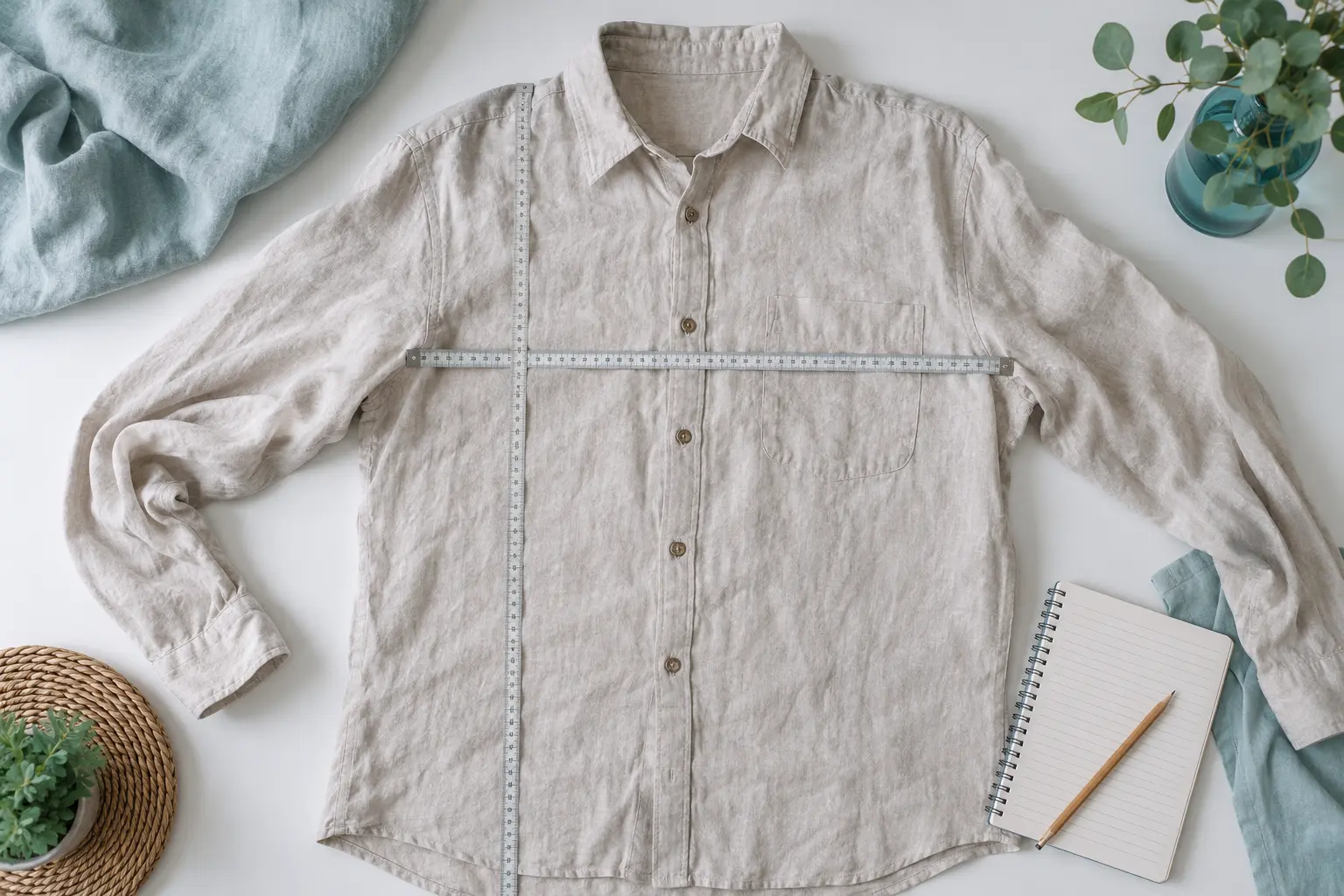
How to Measure Linen Shrinkage at Home
Does 100% Linen Shrink?
Yes, 100% linen can shrink. The fiber label confirms that the item is made from pure linen, but it does not show whether the fabric was pre-washed, stabilized, heavily finished, loosely woven, or designed for machine drying.
Two items labeled 100% linen can respond differently because their fabric weight, weave, finishing, seams, and garment construction may not be the same. Follow the care instructions for the finished item and use a method suited to washing linen properly rather than applying one rule to every pure-linen product.
Do Linen Shirts and Pants Shrink?
Linen shirts and pants can shrink, and fitted clothing makes even a small size change easier to notice. A slight reduction in chest width, sleeve length, waist, rise, or inseam may affect fit more than the same change would affect a loose garment.
Elastic waistbands, linings, interfacing, thread, trims, and structured seams may respond differently from the main linen fabric. When a garment combines several materials, the principles for washing different fabrics safely can help you protect both the linen and its supporting components.
Does Linen Shrink When Washed?
Linen can shrink when washed because wet treatment may release tension held in the yarns and fabric structure. The amount of change depends on how the linen was made, finished, and previously cared for.
Hotter water and strong agitation can increase the risk, but temperature is only one factor. Fabric construction, wash-cycle intensity, previous treatment, and the drying method also influence the final size.
Use the water temperature and cycle stated on the care label. Choosing the right washing temperature for the garment helps avoid unnecessary heat exposure, but cooler water cannot guarantee that untreated linen will remain exactly the same size.
Do not assume that every linen item requires the coldest possible wash. Some products permit warm washing, while others require cooler or gentler care. Check the washing symbols on the label before selecting the cycle, temperature, or hand-wash setting.
Does Linen Shrink in Cold Water?
Linen can still show some size change in cold water, especially when the fabric is untreated or has not been washed before. Cold water reduces heat-related risk, but it does not make linen shrink-proof.
Wetting alone may allow the yarns and fabric structure to relax. Drying conditions then help determine the final measurements.
Does Linen Shrink Only After the First Wash?
The largest noticeable change often appears during the first few care cycles, particularly with untreated linen. However, linen does not necessarily shrink only once.
An item that has already been washed may change again if it is later exposed to hotter water, stronger agitation, higher dryer heat, or longer drying. Pre-washed linen usually has less remaining size change, but it is not completely shrink-proof.
Does Linen Shrink in the Dryer?
Yes, linen can shrink in a dryer. High heat, long drying, and overdrying usually increase the risk. Linen should be tumble-dried only when the care label permits machine drying.
Can Linen Go in the Dryer?
Linen can go in the dryer when the care label allows tumble drying. Use the listed heat setting and remove the item promptly.
Low heat is generally less risky than high heat, but it is not a universal guarantee. A garment marked tumble dry low should be dried on low heat. If the label says line dry, dry flat, or do not tumble dry, follow that instruction.
Overdrying extends the time linen is exposed to heat and mechanical tumbling after it is already dry. This can increase the risk of further size change, distortion, and heavy wrinkling without adding a care benefit.
Air-drying is usually the lower-risk option when the label permits it and preserving the original fit is important. Reshape the item while damp, smooth the seams, and support it correctly so its own weight does not pull it out of shape.
Fitted linen pants and shirts may show dryer-related changes more clearly than loose garments. Even a small reduction in the waist, chest, sleeves, or inseam can alter the fit.

How to Prevent Linen From Shrinking
You cannot guarantee zero size change in every linen item, but careful washing and drying can reduce the risk.
- Read the complete care label. Follow the washing, drying, and ironing limits for the finished garment.
- Use the permitted water temperature. Do not choose hotter water simply because the item is heavily soiled.
- Choose the stated wash method. Use a gentle cycle when the label permits or recommends it. When the label calls for hand washing, wash the garment by hand without twisting, scrubbing, or stretching the wet linen.
- Avoid high dryer heat and overdrying. Tumble dry only when allowed, use the listed setting, and remove the item promptly.
- Reshape and air-dry when permitted. Smooth the seams, hems, sleeves, waist, and legs while the fabric is damp.
Do not overload the washer or twist wet linen aggressively. Heavy mechanical stress can distort the item and make it difficult to tell whether it has shrunk or simply dried out of shape.
Pre-washed linen generally has less remaining shrinkage, but the care label still matters. A blend, lining, elastic waistband, structured seam, or decorative trim may react differently from the main fabric.
What Can You Do If Linen Has Already Shrunk?
Mild distortion may sometimes improve when linen is dampened and gently reshaped, but full recovery is not guaranteed.
Lay the damp item on a suitable flat surface and restore its seams and edges evenly. Avoid aggressive pulling, which can distort the weave, seams, or garment shape. Let the item air-dry while supported in the corrected position.
Do not treat conditioner, shampoo, steam, or forceful stretching as guaranteed solutions. Severe shrinkage or heat-set size change may be permanent.
Tailored, lined, or valuable linen garments should not be stretched aggressively. Consider professional advice when reshaping could damage the seams, lining, or structure.
Final Takeaway
Linen can shrink in both the wash and dryer, but the amount depends on how the fabric was made, finished, previously treated, and cared for. Untreated linen has more early-care uncertainty, while pre-washed linen usually changes less. Follow the care label, avoid unnecessary dryer heat, remove items promptly, and air-dry when permitted to protect the original fit.
