


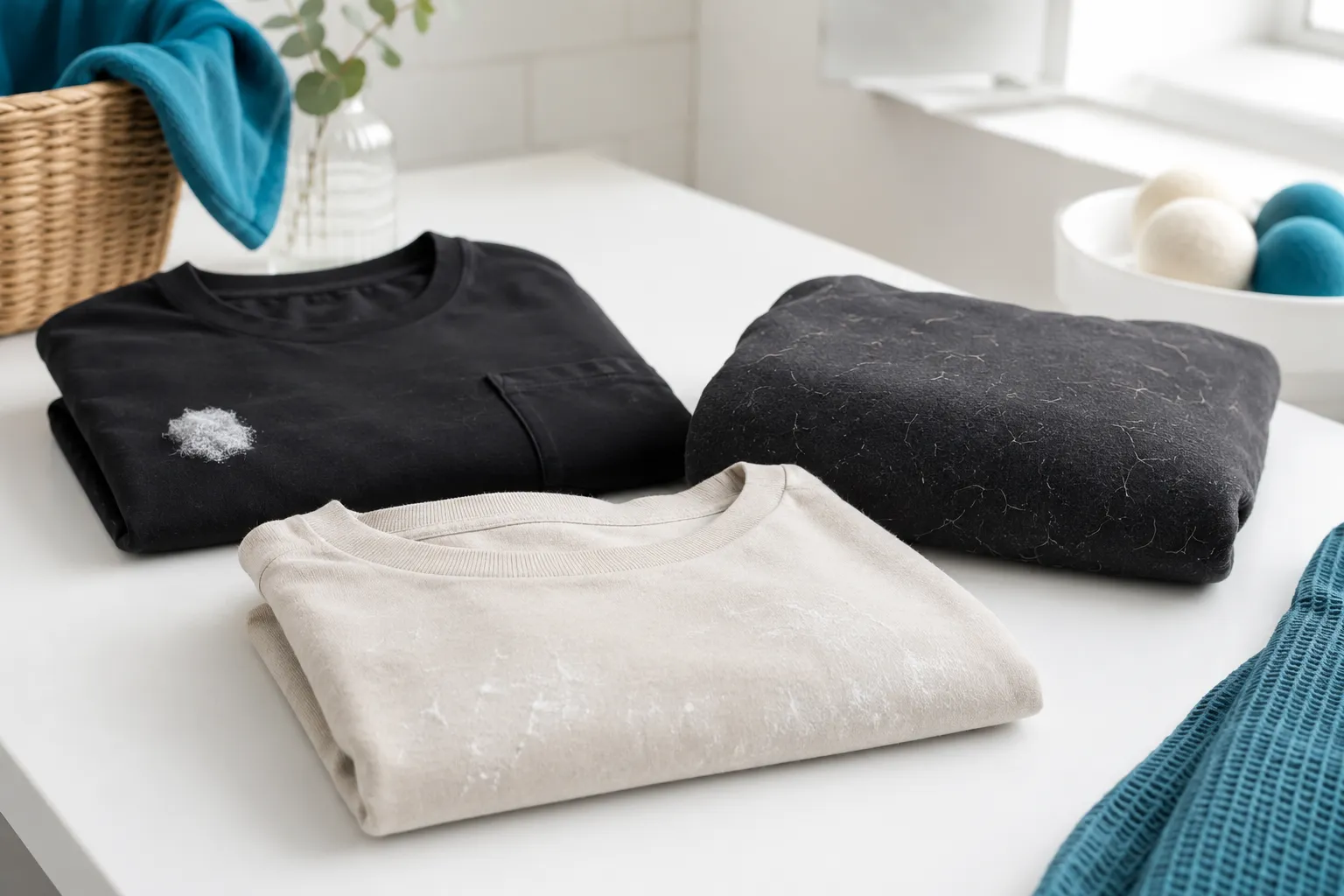
Found white fuzzy, powdery, or cotton-like patches on your clothes and wondering if they are mold? White marks can come from mold, but they can also be caused by lint, detergent residue, deodorant buildup, hard-water deposits, or fabric damage.
This guide will help you identify the difference, understand when mold is more likely, and choose the right next step. You will learn how to safely handle affected clothing, clean washable items, understand white marks that appear after washing, and prevent mold from returning in closets, drawers, basements, or storage boxes.
White mold on clothes often appears as irregular fuzzy or powdery patches after damp storage and may have a musty smell. Keep the item separate, rule out lint and laundry residue, then check the care label. Wash suitable garments with detergent at the warmest approved temperature, dry them fully, and correct the moisture source before storing them again.
Is the White Material Really Mold?
White mold” describes pale mold-like growth. It is not the name of one specific mold species. Possible white mold on fabric often forms irregular patches, while the broader signs of mold on clothing can include other colors, textures, and growth patterns.
Several common laundry problems can look similar.
| White Material | Main Clues | Best Next Step |
|---|---|---|
| Possible white mold | Irregular fuzzy or powdery patches, musty smell, and damp-storage history | Keep the item separate and assess it |
| Lint | Loose fibers that lift away easily | Remove with a lint roller or soft brush |
| Detergent residue | Chalky streaks or spots that appear after washing | Rinse or rewash correctly |
| Deodorant buildup | White marks mainly around the underarms | Treat as product residue |
| Hard-water residue | Pale, rough, or mineral-like deposits | Correct the washing or rinsing problem |
| Tissue residue | Small loose pieces spread across several garments | Let the clothes dry, then remove them |
| Fabric wear | Flat pale areas or damaged raised fibers | Check the material for damage |
Use several clues together. A patch is more likely to be mold when it developed during damp storage, has an irregular raised texture, smells musty, or returns in the same place.
Avoid shaking, rubbing, or brushing suspected mold inside the home. This can release loose material into the air.
What about white spots called “mold spores”?
Individual mold spores are microscopic. You cannot normally identify them as separate white dots with the naked eye.
Visible white fuzz or powder can be fungal growth, but it also be detergent, lint, dust, or another deposit. You do not need to identify the exact mold species before cleaning the item and correcting the moisture problem.
Why do white marks look worse on black clothes?

White marks stand out clearly on dark fabric. This makes white mold on black clothes easy to notice, but it also makes lint, tissue, deodorant, and detergent residue look more serious.
Lint usually lifts away easily. Detergent often forms streaks or chalky patches after washing. Deodorant stays mainly around the underarms.
Mold becomes more likely when irregular patches appeared after damp storage, smell musty, sit inside folds, or return in the same area.
Is It Safe to Handle and Keep?
White mold is not automatically safer or more dangerous than mold of another color. Color does not identify the species or show the level of risk.
Mold exposure may cause allergic, skin, or breathing irritation in some people. People with asthma, serious mold allergies, chronic lung disease, or weakened immunity should avoid handling visibly affected items when possible.
Do not wear the clothing until it has been cleaned and checked. Wear gloves, and use suitable eye and breathing protection if handling may disturb visible material.
Many washable garments can still be saved when the affected area is small and the fibers remain strong.
Avoid shaking or aggressively brushing suspected mold indoors. Wear gloves, and use suitable eye and breathing protection if handling may disturb visible material. People with asthma, serious mold allergies, chronic lung disease, or weakened immunity should ask someone else to handle the item.
| Garment Condition | Best Route |
|---|---|
| Small area on washable, undamaged clothing | Treat promptly at home |
| Dry-clean-only garment | Contact the cleaner before taking it in |
| Wool, silk, leather, or structured clothing | Use professional care |
| Expensive or sentimental item | Ask a textile-cleaning specialist |
| Weak, rotting, or badly damaged fibers | Discarding may be more practical |
| Growth across several stored garments | Inspect the storage environment |
| Growth that returns after cleaning | Fix the moisture source before storing again |
Professional help is the safer choice when the growth is widespread, the fibers feel weak, the odor keeps returning, or the item is valuable and difficult to wash. The decision to keep or discard moldy clothing should depend on the fabric’s condition, the extent of the problem, and whether the growth returns after cleaning.
How to Remove White Mold From Washable Clothes
For most washable garments, the basic process is simple: handle the item carefully, follow the care label, wash it with detergent, dry it completely, and check the result.
- Keep it separate.
Place the affected garment away from clean laundry. Wash it separately when practical. - Read the care label.
Check the allowed washing method, water temperature, bleach use, and drying instructions. Elastic, prints, trim, linings, and coatings limit which treatments are safe. - Start with detergent.
Laundry detergent is the main cleaning product for many washable items. A care-label-approved oxygen bleach may help with remaining discoloration.Chlorine bleach is not a routine solution. White clothing still contain spandex, colored stitching, prints, or finishes that bleach can damage. - Use the warmest approved water.
Follow the garment label and product directions. Very hot water can damage some fibers, dyes, elastic, and finishes. - Do not overload the washer.
Water and detergent need room to move through the fabric. - Rinse and dry fully.
Dry the item completely before returning it to a closet, drawer, suitcase, or storage box. - Check it when dry.
Look for four separate problems:- Raised or powdery material
- A flat stain
- A musty smell
- Weak or damaged fibers
A flat mark does not always mean mold is still growing. It may be discoloration left after cleaning.
Should you use white vinegar?
White vinegar is not a guaranteed mold remover for clothes. It may support cleaning on some washable garments, but it does not replace detergent, rinsing, complete drying, or removal of visible material.
Never mix vinegar with chlorine bleach.
Why Did White Marks Appear After Washing?
White marks that appear after a wash are not automatically mold. Their timing and texture can help identify the real cause.
| What You See | Possible Explanation | What to Do |
|---|---|---|
| New chalky streaks | Detergent or mineral residue | Rinse or rewash correctly |
| Loose white fibers | Lint or tissue residue | Let the item dry, then remove them |
| Raised or fuzzy material remains | Mold-like growth may remain, or the first identification may be wrong | Keep the item separate and reassess it |
| A flat pale or dark mark remains | Leftover discoloration | Treat it as a stain |
| The marks disappear but the item smells musty | Residue or trapped moisture may remain | Rewash and dry fully |
| Patches return during storage | The moisture source is still present | Inspect the closet or container |
Do not keep adding stronger cleaners until you know whether the problem is mold-like material, laundry residue, staining, odor, or fiber damage.
Why Did It Grow in the Closet?
Mold needs moisture. White mold on clothing may develop when garments remain damp or sit in a humid area with little airflow.
Long-term prevention for mold on clothes stored in a closet depends on dry garments, lower humidity, better airflow, and correction of leaks or condensation
Common Mistakes
- Assuming every white mark is mold: Check for lint, detergent, deodorant, tissue, and mineral residue first.
- Shaking the item indoors: This may release loose material into the room.
- Using bleach because the marks are white: Treatment safety depends on the garment, not the color of the growth.
- Mixing cleaners: Never combine chlorine bleach with vinegar, ammonia, or other household products.
- Ignoring the storage area: The problem may return while the closet, drawer, or box remains damp.
Final Takeaway
To deal with white mold on clothes, first check that the material is not lint, detergent residue, or another common deposit. When mold seems likely, separate the item, follow its care label, wash it with a compatible method, and let it dry fully. Then check for remaining growth, stains, odor, or fiber damage and fix the moisture source before storing the clothing again.
