

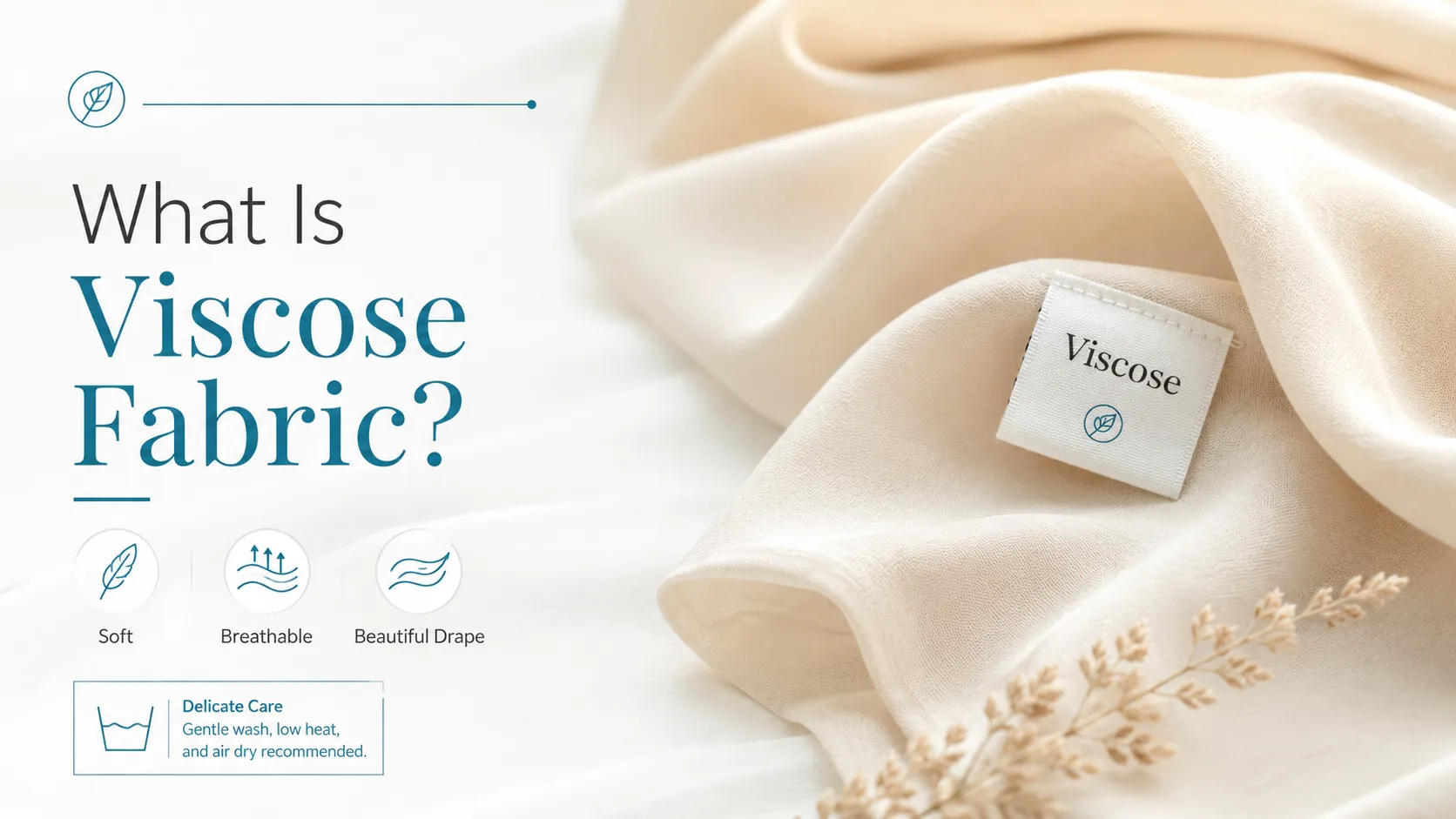
Viscose fabric is a semi-synthetic fabric made from regenerated plant cellulose, usually wood pulp. It is soft, smooth, breathable, and drapes nicely, which is why it is commonly used in dresses, blouses, shirts, pajamas, scarves, linings, and summer clothing.
It bridges the gap between natural and synthetic fabrics. The fiber starts from a plant source, but it becomes fabric through a man-made process. That is why it feels more natural than polyester but is not fully natural like cotton or linen.
The main thing to know is this: viscose can look and feel beautiful, but it needs gentle care. It can shrink, wrinkle, or lose shape if washed in hot water, twisted hard, or dried with high heat.
Viscose fabric is a soft, breathable, semi-synthetic material made from plant cellulose, usually wood pulp. It feels smooth and flowy, making it popular for dresses, blouses, shirts, pajamas, and summer clothing. Its main drawbacks are shrinkage, wrinkles, and weak wet strength, so viscose is best washed gently in cold water and air dried.
What Is Viscose Fabric?
Viscose fabric is made from regenerated cellulose. That cellulose usually comes from wood pulp.
This means the material starts from a natural plant source. But the final fabric is not fully natural. The plant cellulose goes through a man-made process before it becomes soft fiber.
Cotton and linen are natural fabrics. Polyester and nylon are synthetic fabrics. Viscose sits in the middle because it starts from plants but is made into fabric using processing and chemicals. For a wider breakdown of natural and synthetic fabric types, the source fiber and the final fabric structure both matter.
This is why it is often called a semi-synthetic fabric.
Is Viscose Natural or Synthetic?
Viscose is semi-synthetic.
It is not fully natural like cotton, linen, wool, or silk. It is also not fully synthetic like polyester, nylon, or acrylic.
In simple terms:
Viscose starts from natural plant cellulose, but it becomes fabric through a man-made process.
You may also see it described as a regenerated cellulose fabric. That means cellulose is broken down and turned into new fibers that can be spun into yarn and made into fabric.
So, if someone says viscose starts from plants, that is true. But if they say it is fully natural, that is not accurate.
How Is Viscose Fabric Made?
Viscose fabric is made by turning plant cellulose into soft fibers. First, wood pulp or another cellulose source is treated and dissolved into a thick liquid. This liquid is pushed through tiny holes called spinnerets to form fine fibers.
The fibers are then washed, finished, spun into yarn, and made into fabric.
This process is why viscose feels more natural than polyester but is not fully natural like cotton or linen. The source is plant-based, but the finished fiber is created through chemical processing.
You do not need to know every technical step to choose viscose clothing. The main point is simple: viscose starts from plants, but the final fabric is man-made.
Is Viscose the Same as Rayon?
Viscose is a type of rayon.
Rayon is the wider fabric family. Viscose is one common type inside that family. This is why some clothing labels say “viscose,” while others say “rayon” or “viscose rayon.”
Modal and lyocell are also related to rayon because they are made from cellulose too. But they are not exactly the same as traditional viscose.
When you see viscose on a clothing label, you can think of it as a rayon-type fabric with a soft, smooth, and flowy feel.
What Does Viscose Feel Like?
Viscose usually feels soft, smooth, cool, and light on the skin. It often has a gentle silky feel, which is why it is used in dresses, blouses, scarves, and flowy clothing.
The fabric is known for its drape. That means it falls nicely instead of looking stiff. A viscose dress or blouse usually hangs in a soft, relaxed way.
Viscose can feel:
- Soft
- Smooth
- Lightweight
- Cool on the skin
- Flowy
- Drapey
- Slightly silky
- Less stiff than many cotton fabrics
The feel can change based on the fabric type. A viscose challis dress may feel light and flowy. A viscose jersey top may feel soft and stretchy. A viscose twill pant may feel heavier and more structured.
So, this fabric does not always feel the same. The weave, knit, weight, and blend all matter.
Main Properties of Viscose Fabric
Here is a simple breakdown of how viscose fabric behaves in clothing.
| Property | What It Means for Clothing |
|---|---|
| Softness | Feels smooth and gentle on skin. |
| Breathability | Can feel cool in loose summer clothing. |
| Drape | Falls nicely instead of looking stiff. |
| Absorbency | Takes dye well but can hold moisture. |
| Stretch | Not naturally stretchy unless knitted or blended. |
| Wrinkling | Creases more easily than polyester. |
| Shrinkage | Can shrink with heat or rough washing. |
| Wet strength | Can weaken or lose shape when wet. |
The biggest benefit is comfort. The biggest care issue is that the fabric can be delicate when wet.
Common Uses of Viscose Fabric
Viscose is used in clothing and home textiles because it feels soft, hangs well, and can look more expensive than it is.
It is best used where softness and drape matter more than rugged strength.
Is Viscose a Good Fabric?
Yes, viscose is a good fabric when it is used for the right type of clothing.
It works well when you want a smooth feel, a soft drape, and breathable comfort. That is why it is common in summer dresses, blouses, skirts, scarves, shirts, pajamas, and relaxed pants.
But it is not the best choice if you want something rugged, wrinkle-free, dryer-safe, or very low maintenance.
Viscose is good for
- Summer dresses
- Blouses
- Soft shirts
- Skirts
- Scarves
- Pajamas
- Linings
- Relaxed pants
- Flowy clothing
Viscose is not ideal for
- Rough workwear
- Heavy daily-use pants
- Clothes you put in the dryer often
- Travel clothes that must stay wrinkle-free
- Garments you want to wash without special care
So, viscose is not a bad fabric. It just needs the right use and the right care.
Viscose Fabric Pros and Cons
Viscose has many benefits, but it also has some clear downsides.
| Pros of Viscose | Cons of Viscose |
|---|---|
| Soft and smooth | Can shrink |
| Breathable | Wrinkles easily |
| Drapes beautifully | Can weaken when wet |
| More affordable than silk | Needs gentle care |
| Takes color well | Can pill in some knits |
| Good for summer clothing | Sustainability depends on production |

Some viscose knits may pill in high-friction areas, such as underarms, thighs, or where a bag rubs against the fabric. Pilling usually depends on fiber strength, friction, and garment construction, which is why understanding why fabric pilling happens can help you care for soft knits better.
Overall, viscose is a good choice when comfort and drape matter. But it may not be the best fabric if you want easy washing, strong durability, or wrinkle resistance.
Does Viscose Shrink?
Yes, viscose can shrink, especially with hot water, rough washing, or tumble drying.
This is one of the main things you need to know before washing viscose clothing. The fabric is sensitive to heat and heavy movement. If you wash it in hot water or put it in a hot dryer, it may shrink or lose its shape.
It can also become weaker when wet. That means rough spinning, twisting, or wringing can stretch or distort the garment.
The safest way to prevent shrinkage is to wash viscose in cold water, handle it gently, and air dry it. The same basic rules apply to many shrink-prone garments, especially when heat, agitation, and drying methods are involved in clothes shrinking after washing.
Some garments are labeled dry clean only. If the care label says dry clean only, follow that advice. Viscose items can vary by weave, finish, lining, and blend, so the care label should always override general advice.
Does Viscose Wrinkle Easily?
Yes, viscose can wrinkle more easily than polyester.
This is common in soft, drapey fabrics. Viscose clothing may crease after washing, sitting, packing, or being folded for a long time.
To reduce wrinkles, shake the garment gently after washing, reshape it while damp, and let it dry smoothly. If the care label allows it, use steam or a low-heat iron.
Do not use high heat unless the label says it is safe. Too much heat can damage the fabric or affect the shape.
How to Wash Viscose Without Ruining It

Viscose needs gentle care. Always check the care label first because not all garments are made the same way.
At Careonova, we treat viscose as a delicate fabric because water, heat, and twisting can change how it looks and fits. The goal is to clean it without stressing the fibers.
Check the care label first
Before washing, read the label. Some viscose clothes can be hand washed. Some can go on a gentle machine cycle. Others may need dry cleaning.
The care label should always come first.
Use cold water
Cold water helps lower the risk of shrinkage and fabric damage. Avoid hot water unless the care label says it is safe.
Choose hand wash or gentle cycle
Hand washing is often the safest option. If the label allows machine washing, use a gentle cycle.
A gentle cycle helps reduce friction, twisting, and stretching.
Use mild detergent
Use a mild detergent. Avoid harsh cleaning products unless the care label allows them.
This fabric is soft, so it does not need aggressive washing in most cases.
Do not wring or twist hard
Do not twist viscose tightly to remove water. This can stretch the fabric or damage the shape.
Instead, press the water out gently. You can also roll the garment in a clean towel to remove extra water.
Reshape while damp
After washing, gently reshape the garment while it is damp. Smooth out the seams, sleeves, hem, and neckline.
This helps the item dry closer to its original shape.
Air dry instead of tumble drying
Air drying is usually safer than tumble drying. Heat and tumbling can shrink or distort viscose.
Lay the garment flat or hang it carefully, depending on the garment type and label instructions.
Can viscose go in the dryer?
It is usually safer not to put viscose in the dryer.
Heat and tumbling can shrink the fabric, twist the shape, or make the garment harder to smooth out. Air drying is the safer choice for most viscose clothing.
If the care label says tumble drying is allowed, use the lowest heat setting. But when in doubt, skip the dryer.
Iron or steam on low heat
Viscose can wrinkle, so you may need to steam or iron it. Use low heat and iron inside out if possible.
If you are unsure, place a thin cloth between the iron and the fabric.
Is Viscose Breathable and Good for Summer?
Yes, viscose can be breathable and good for summer, but the fabric weight, fit, and blend matter.
Lightweight woven viscose can feel cool and comfortable in hot weather. It is often used for summer dresses, loose blouses, skirts, and relaxed pants because it drapes well and does not feel stiff.
But not every viscose garment feels cool. A thick knit may feel warmer. A tight item may cling to the body. A fabric blended with a lot of polyester may feel less breathable.
One small downside is cling. Viscose can cling to the body when it is damp, sweaty, very thin, or worn in a tight fit. A loose fit usually feels more comfortable in hot weather.
The simple answer is:
Viscose can be good for summer when it is lightweight, loose, and not heavily blended with synthetic fibers.
Is Viscose Stretchy?
Pure viscose is not naturally stretchy like spandex or elastane.
But some viscose clothing can feel stretchy because of how the fabric is made. A woven viscose blouse usually has little stretch. A viscose jersey top may stretch because jersey is a knitted fabric.
True stretch usually comes from elastane or spandex.
| Garment Type | Stretch Level |
|---|---|
| Viscose challis dress | Flowy, usually not very stretchy |
| Viscose jersey top | Soft with some stretch |
| Viscose elastane leggings | Stretchy because of elastane |
| Woven viscose blouse | Smooth and drapey, but limited stretch |
So, if you want stretch, check the label. Look for words like elastane, spandex, or jersey knit.
Common Types of Viscose Fabric
Viscose comes in different forms. The type of fabric changes how it feels, hangs, and washes.
Viscose challis
Viscose challis is soft, light, and flowy. It is often used for dresses, blouses, skirts, and scarves.
It is a good choice when you want a relaxed garment that moves easily.
Viscose jersey
Viscose jersey is a soft knit fabric. It is often used for T-shirts, pajamas, loungewear, and soft tops.
Because it is knitted, it usually has more stretch than woven viscose.
Viscose satin
Viscose satin has a smooth and shiny surface. It can look dressy and silk-like.
It is often used for slip dresses, scarves, evening pieces, and soft blouses.
Viscose twill
Viscose twill is usually a little heavier and more structured. It can be used for trousers, skirts, jackets, and heavier dresses.
It has more body than very light viscose fabrics.
Viscose crepe
Viscose crepe has a slightly textured surface. It is less shiny than satin and often works well for dresses, blouses, and skirts.
It can give a soft but less slippery feel.
Bamboo viscose
Bamboo viscose is made from bamboo cellulose, but it still goes through chemical processing to become fabric.
Do not assume bamboo viscose is automatically eco-friendly. The source may be bamboo, but the production process still matters.
Viscose blends
Viscose is often blended with cotton, polyester, nylon, elastane, linen, or wool. These blends can change the feel, stretch, wrinkle resistance, and durability of the fabric.
Viscose Blends Explained
Fabric blends matter because they can change how viscose behaves.
Viscose and polyester
A viscose and polyester blend is usually more wrinkle-resistant and durable than pure viscose. But it may feel less breathable and less natural.
This blend can be useful for clothing that needs more structure or easier care.
Viscose and elastane
Viscose and elastane gives the fabric stretch. This is common in fitted tops, dresses, leggings, and body-skimming clothing.
The viscose adds softness. The elastane adds stretch.
Viscose and cotton
Viscose and cotton can create a soft and comfortable casual fabric. Cotton may add a more natural feel and better everyday wear.
This blend is common in shirts, dresses, and lightweight clothing.
Viscose and nylon or polyamide
Viscose blended with nylon or polyamide can feel smoother and stronger. This blend may appear in knits, pants, or fitted garments.
It can improve durability, but care still depends on the full label.
Viscose and linen
Viscose and linen blends often have better drape than pure linen. They can feel softer and less stiff.
But this blend can still wrinkle, so it is not always low maintenance.
Viscose vs Other Fabrics
Viscose is often compared with cotton, polyester, rayon, modal, lyocell, linen, silk, and bamboo. Here is the simple comparison.
| Fabric Comparison | Main Difference |
|---|---|
| Viscose vs cotton | Viscose is usually smoother and drapier. Cotton is usually easier to wash and more durable. |
| Viscose vs polyester | Viscose feels more breathable and natural. Polyester is stronger and more wrinkle-resistant. |
| Viscose vs rayon | Viscose is a type of rayon. Rayon is the broader category. |
| Viscose vs modal | Modal is often softer and may handle moisture better than traditional viscose. Both are regenerated cellulose fabrics. |
| Viscose vs lyocell | Lyocell often has better wet strength than traditional viscose and is commonly made with a closed-loop solvent process. |
| Viscose vs linen | Viscose is softer and drapier. Linen is more textured and often preferred for hot weather. |
| Viscose vs silk | Viscose can look silk-like but costs less. Silk is natural and usually more expensive. Both can need careful washing. |
| Viscose vs bamboo | Bamboo viscose still goes through chemical processing, so it is not automatically eco-friendly. |
If you want soft, flowy clothing, viscose is a good option. If you want easy washing and strong durability, cotton, polyester, or some blends may be better.
Is Viscose Eco-Friendly?
Viscose starts from plant cellulose, but that does not automatically make it eco-friendly.
The environmental impact depends on how the cellulose is sourced and how the fabric is made. Wood sourcing, chemical use, wastewater treatment, and factory standards all matter.
Traditional viscose production can raise concerns because it uses chemicals and water. Poor production can also create pollution problems.
Better viscose depends on better sourcing and better processing. For forest sourcing, look for signs such as FSC or PEFC. For textile safety, OEKO-TEX STANDARD 100 can show that the finished textile has been tested for harmful substances.
Lyocell is often seen as a better option because it is commonly made with a closed-loop solvent process. But even then, the brand, wood source, and supply chain still matter.
The simple answer is this:
Viscose can be better or worse depending on how it is made. Avoid simple eco-friendly claims unless there is proof.
Should You Buy Viscose Clothing?
Viscose can be a smart choice if you know what to expect.
Also check the fabric thickness before buying. Very light viscose can feel beautiful, but it may be see-through or need a lining. Heavier viscose can feel more premium, but it may also feel warmer.
Buy viscose if
- You want soft and flowy clothing.
- You like breathable summer pieces.
- You want a silk-like look at a lower price.
- You are okay with gentle washing.
- You can air dry your clothes.
- You do not mind steaming or ironing.
Avoid viscose if
- You put most clothes in the dryer.
- You hate wrinkles.
- You need rugged everyday durability.
- You want very low-maintenance clothing.
- The label says dry clean only and you do not want dry-cleaning costs.
Before buying viscose clothing, check the care label. If the item needs dry cleaning and you want easy home washing, it may not be the best choice.
Final Verdict: Is Viscose Worth It?
Viscose fabric is worth it if you want softness, comfort, breathability, and a beautiful drape. It is a good fabric for dresses, blouses, skirts, shirts, pajamas, scarves, and other flowy clothing.
But it is not perfect. It can shrink, wrinkle, and lose shape if you wash it badly. It also needs more care than polyester and many cotton fabrics.
The best way to think about viscose is simple:
Viscose is a good fabric when you choose it for the right reason and care for it gently. It is best for soft, flowy clothing, not rough wear or laundry routines that use the dryer often.
