


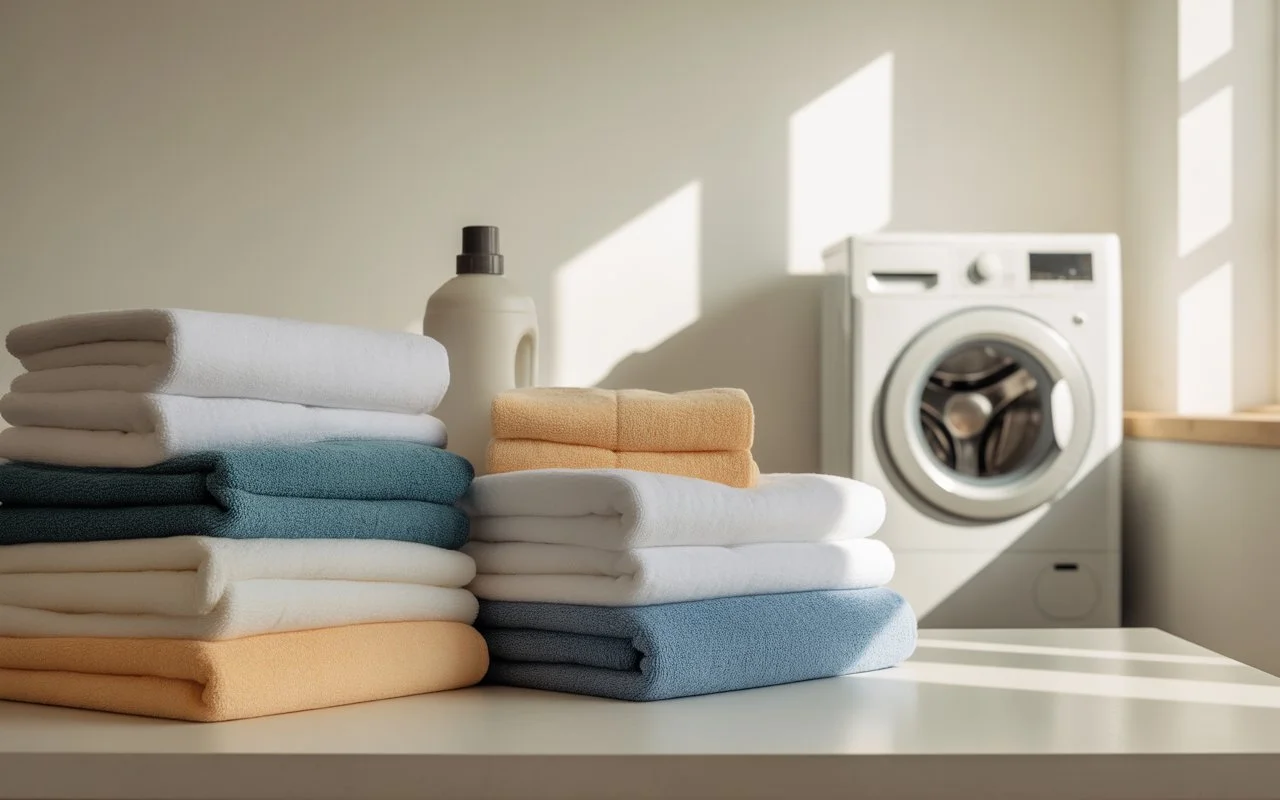
Knowing how to wash microfiber towels correctly is essential to maintain their absorbency and structure. Because microfiber is made of fine synthetic strands, improper care can quickly reduce cleaning performance. For a broader overview of washing settings across materials, see our guide on washing different fabric types.
Learning how to wash microfiber towels and dry them correctly keeps the fibers open, soft, and effective for kitchen cleaning, car detailing, dusting, and household use.
Quick Answer: How to Wash Microfiber Towels
- Shake out dirt before washing.
- Wash microfiber separately from cotton or linty fabrics.
- Use a small amount of mild liquid detergent.
- Run warm or cold water.
- Select a gentle or normal cycle.
- Avoid fabric softeners and bleach.
These steps keep fibers clean and absorbent.
Quick Answer: How to Dry Microfiber Towels
- Air dry when possible.
- Or use a tumble dryer on low heat.
- Do not use high heat or dryer sheets.
Low heat protects fibers and maintains absorbency.
Microfiber Towel Problems: Quick Fix Finder
- Towels feel greasy or repel water → detergent/softener residue
- Towels leave streaks on glass → residue + too much detergent
- Towels feel rough → overdrying/high heat
- Towels pick up lint → washed with cotton

What Are Microfiber Towels?
Microfiber towels are made of tiny synthetic fibers. These fibers grab dust, dirt, and liquids better than regular cloth. Microfiber is typically made from polyester and polyamide blends that are split into ultra-fine filaments. These split fibers create a large surface area that traps dust and moisture but can clog if coated with detergent residue.Like polyester garments, microfiber requires controlled heat and gentle agitation; see our guide on how to wash polyester correctly for related care principles.
Because the fibers are small, residue from detergent or softener can clog them. Proper washing keeps microfiber effective and soft.
How to Wash Microfiber Towels (Step-by-Step Guide)
Step 1: Shake Out Dirt
Remove loose dust and debris before washing. This prevents lint and dirt from settling during the wash.
Step 2: Wash Separately
Do not mix microfiber with cotton or other fabrics. Cotton lint sticks to microfiber, reducing performance.
Step 3: Use the Right Detergent
- Use a small amount of mild liquid detergent.
- Avoid powder detergent, bleach, or fabric softeners.
Too much detergent or additives blocks fibers and reduces absorbency.
Step 4: Choose Water Temperature
Warm or cold water works best. Very hot water over time can weaken microfiber fibers.
Step 5: Select Proper Cycle
Gentle or normal cycles are ideal. Heavy cycles are unnecessary and may damage towels.
Best Detergent to Wash Microfiber Towels
- Mild, liquid, low-suds detergent
- Fragrance-free if possible
Softener and bleach coat fibers and stop towels from absorbing liquids.
How to Clean Microfiber Towels
Cleaning microfiber towels is slightly different from washing them with the rest of your laundry. The goal is not just to remove visible dirt, but also to clear detergent residue, trapped oils, and lint that can reduce absorbency.
Start by shaking out loose dust and debris. Wash microfiber towels separately from cotton or lint-shedding fabrics, then use a small amount of mild liquid detergent. Avoid bleach, fabric softener, and heavy detergent doses because they can clog the fibers and reduce performance.
If the towels still feel greasy or leave streaks after washing, run an extra rinse cycle or rewash them with less detergent. Occasional residue buildup can also be reduced by using white vinegar in the rinse cycle.
How to Dry Microfiber Towels
Air Drying
Hang towels in a clean, dry area. Air drying is safest and preserves fibers.
Machine Drying
- Use low heat or delicate cycle.
- Remove towels promptly.
- Do not use dryer sheets.
High heat can damage or distort microfiber fibers and reduce performance.
🧺 Washing Frequency by Use Case
- Kitchen cleaning: After 1–2 uses
- Bathroom cleaning: After each use
- Dusting: After several uses
- Car detailing: After each use
How to Hand Wash Microfiber Towels
If you only have a few microfiber towels to clean, hand washing is a good option. Fill a sink or bucket with warm water and add a small amount of mild liquid detergent. Agitate the towels gently to loosen dirt and residue, then rinse thoroughly until the water runs clear.
Squeeze out excess water without twisting the fibers too aggressively. Hang the towels to air dry in a clean, well-ventilated area. Hand washing is especially useful for lightly soiled microfiber cloths used for dusting or quick household cleaning.
Removing Heavy Dirt or Grease
- Soak towels in warm water with detergent.
- Wash separately afterward.
- Use an extra rinse cycle if needed.
This removes oils, wax, and cleaning chemicals.
How to Restore Absorbency
If towels stop absorbing:
- Wash in warm water with mild detergent.
- Add 1 cup white vinegar to the rinse cycle.
- Avoid fabric softeners.
Use vinegar as an occasional rinse aid (not every wash) to help strip light residue.
This removes residue and restores microfiber performance.
Absorbency test: Wet one corner under the tap. If water beads up or streaks remain on glass, residue is still present—rewash with less detergent and add an extra rinse.
When Microfiber Towels Need Rewashing
Microfiber towels often need to be washed again if they still feel greasy, leave lint, streak glass, or stop absorbing water properly. These are usually signs of detergent buildup, softener residue, trapped oils, or washing with linty fabrics.
If this happens, rewash the towels separately using a smaller amount of mild detergent and add an extra rinse cycle. Avoid using heat until the fibers feel clean again, because residue can become harder to remove after drying.
Common Mistakes That Ruin Microfiber Towels
- Using bleach or fabric softener
- Drying with high heat
- Washing with cotton towels
- Using too much detergent
- Skipping extra rinse cycles
Even small mistakes can reduce microfiber towel lifespan and absorbency.
| Do | Don’t |
|---|---|
| Wash separately | Mix with cotton |
| Use mild detergent | Use softener |
| Dry on low heat | Use high heat |
| Use small detergent amounts | Overuse detergent |
FAQ: Washing and Drying Microfiber Towels
Yes, but only on low heat.
Microfiber towels should be washed after each heavy cleaning task or after 3–5 light uses. Regular washing removes trapped dust, oils, and cleaning residues that can clog the microscopic fibers. Keeping microfiber clean helps maintain its absorbency, streak-free performance, and lint-free cleaning ability.
Fabric softener and chlorine bleach can damage microfiber fibers and reduce their performance. Softener leaves a coating that blocks the tiny fibers responsible for trapping dirt and absorbing liquid, while bleach can weaken the synthetic material over time. Avoid both products to keep microfiber towels effective.
A microfiber towel may be worn out if it loses absorbency, leaves lint behind, or feels stiff instead of soft. These signs usually appear when the fibers become damaged from high heat, residue buildup, or improper washing. When microfiber stops cleaning effectively, it may be time to replace it.
It is best not to wash microfiber towels with regular laundry like cotton towels or clothing. Microfiber attracts lint easily, and washing it with other fabrics can cause lint buildup that reduces its cleaning effectiveness. For best results, wash microfiber items together in a separate load.
White vinegar can help remove detergent buildup and odors from microfiber towels when used occasionally during the rinse cycle. It works as a natural residue remover without coating the fibers. However, vinegar should be used sparingly and not mixed directly with detergent during the wash cycle.
