


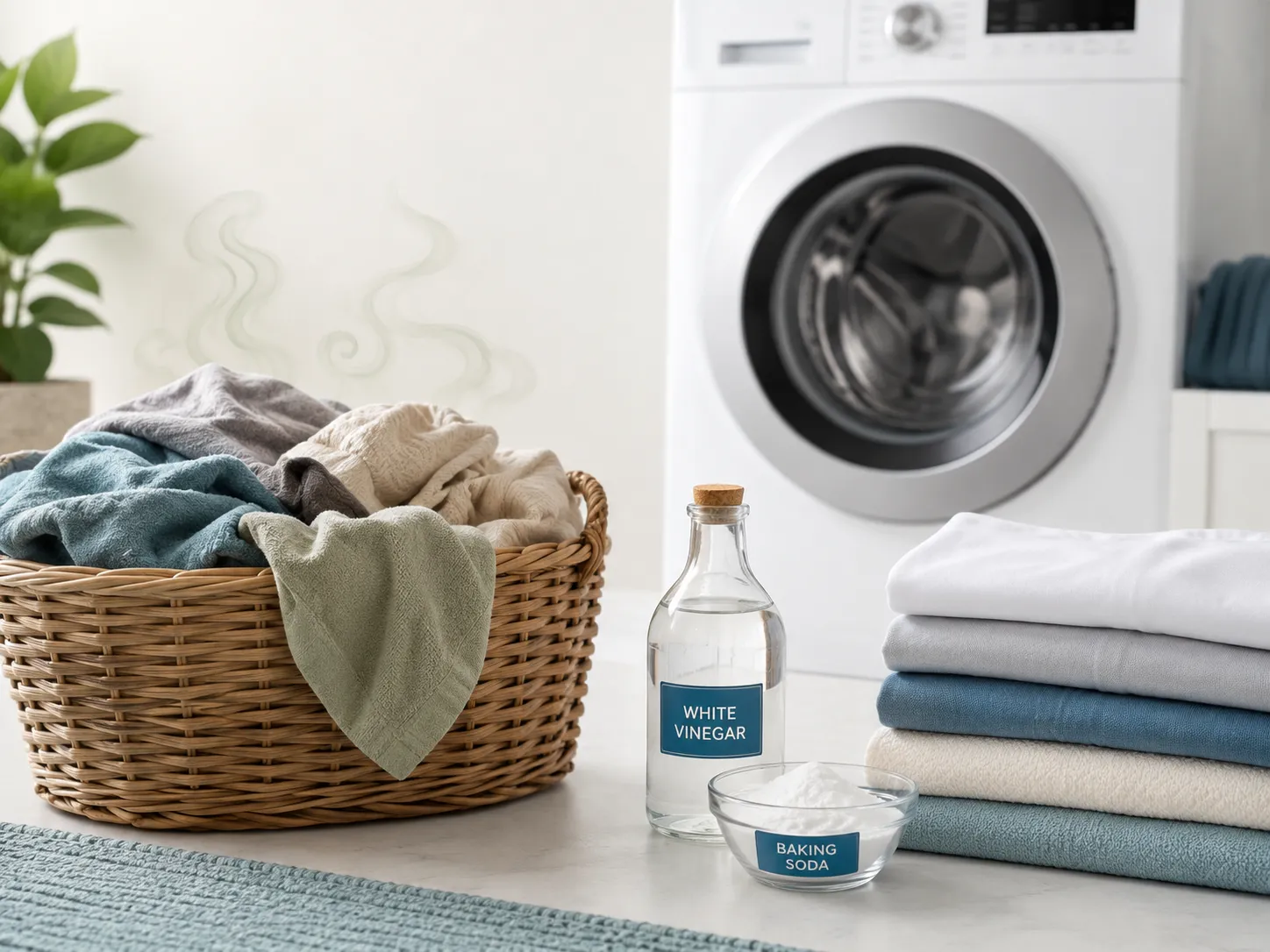
Trying to get mildew smell out of clothes that still smell musty after washing? The odor often starts when laundry stays wet too long, dries slowly, sits in damp storage, or picks up odor from a musty washing machine. Detergent and fabric-softener buildup can also trap stale smells inside the fibers.
A musty smell does not always mean active mildew is growing on the clothing. Before adding vinegar, baking soda, sanitizer, or extra detergent, check where the odor is coming from. This guide explains the best first wash, when an optional treatment can help, and what to do when the smell keeps returning.
Rewash musty clothes with the correct amount of garment-safe detergent, using the warmest temperature allowed by the care label. Leave enough space in the washer, rinse thoroughly, and dry every part of the garment completely. When several loads smell musty, inspect the washer first. When fuzzy or colored growth is visible, treat the mold before focusing on odor.
Why Do Clothes Smell Musty?
Clothes can develop a mildew-like smell when they stay damp too long, dry slowly, sit in humid storage, or absorb odor from a dirty washer. Product buildup can make the smell harder to rinse away. New online-order clothing can raise a similar question when the odor seems damp or musty rather than chemical.
Swipe horizontally to view the full table.
| Likely Cause | Main Clue | First Action |
|---|---|---|
| Clothes stayed wet after washing | The whole load smells after sitting in the drum. | Rewash promptly and dry everything completely. |
| Laundry dried too slowly | Seams, waistbands, pockets, or thick areas smell strongest. | Improve airflow and allow more drying time. |
| Too much detergent or softener | The fabric feels coated, stiff, slippery, or chalky. | Run an extra rinse and reduce the product dosage. |
| Dirty or damp washer | Different loads smell musty immediately after washing. | Clean and dry the washer before rewashing the clothes. |
| Damp closet or storage box | Clothes smell fresh after washing but become musty later. | Correct the storage moisture and improve airflow. |
| Visible mold-like growth | Fuzzy, powdery, raised, or colored patches are visible. | Keep the item separate and treat the visible growth first. |
When fuzzy, powdery, or raised growth is present, follow the process for removing mold from clothes instead of treating the problem as odor alone.
How to Remove Mildew Smell From Clothes
For most washable garments, start with one complete rewash. Do not combine several household remedies in the same load.
1. Check the clothing and washer
Inspect the garment for visible growth, staining, weak fibers, and areas that still feel damp.
Smell the washer drum, gasket, dispenser, and other moisture-prone areas. When several loads have the same odor, the washer is likely contributing to the problem.

2. Read the complete care label
Check the approved washing method, water temperature, bleach limits, and drying instructions.
The instructions apply to the whole garment, including elastic, linings, prints, trim, coatings, fasteners, and decorative details. Do not use hotter water or stronger products only because the odor is severe.
3. Rewash with the correct detergent amount
Use a detergent suitable for the garment and selected water temperature. Follow the recommended dose for the load size and water conditions.
More detergent does not mean better odor removal. Excess product can stay in the fabric, reduce effective rinsing, and create another stale-smelling layer.
Wash strongly affected items separately when practical.
4. Use suitable settings and rinse well
Use the warmest temperature allowed by the care label and detergent directions. Cold water can still clean garments that require it when the detergent and cycle are suitable.
Do not overload the washer. The garments need room for water and detergent to move through the fabric.
Add an extra rinse when the clothing feels coated, too much detergent or softener was used, or chalky residue remains.
5. Dry everything completely
Remove the load as soon as the cycle ends. Do not leave clean clothing sitting wet in the washer.
Dry according to the care label. Use a dryer when permitted, or air-dry the garment in a clean place with good airflow. Check seams, pockets, waistbands, hoods, and layered areas before storage.
Judge the result only after the clothing is fully dry.
What to Try If Rewashing Is Not Enough
Use only one additional treatment at a time.
Swipe horizontally to view the full table.
| Situation | Optional Next Step | Important Limit |
|---|---|---|
| Detergent or softener buildup | Run a complete extra rinse without adding more product. | Reduce the detergent or softener dosage in future washes. |
| Persistent odor on compatible washable fabric | Use a diluted vinegar pretreatment outside the washer. | Check the garment care label and appliance guidance first, then rinse the garment thoroughly before washing. |
| Laundry sanitizer is specifically approved | Use the sanitizer exactly as its label directs. | Sanitizing does not replace proper washing, rinsing, or complete drying. |
| Delicate or dry-clean-only garment | Contact a professional cleaner. | Avoid experimenting with several household treatments. |
Never mix vinegar with chlorine bleach. Do not combine chlorine bleach with ammonia, acids, laundry sanitizer, or another cleaner. Use only one optional treatment at a time and follow its label directions.
Adjust the Method for the Fabric
Swipe horizontally to view the full table.
| Fabric or Item | Best Adjustment |
|---|---|
| Towels and sturdy cotton | Use the warmest care-label-approved wash and avoid excessive fabric softener. |
| Polyester and activewear | Use a suitable detergent, avoid softener buildup, and limit high drying temperatures. |
| Wool, silk, and other delicates | Follow fiber-specific care instructions and avoid prolonged soaking unless approved. |
| Dry-clean-only garments | Contact a professional cleaner before applying any treatment. |
Thick clothing can need more drying time, even when the outer surface feels dry.
Why Does the Smell Remain After Washing?
Do not automatically add more detergent or repeat the same cycle. First identify the likely cause.
Swipe horizontally to view the full table.
| What Happens | Likely Reason | Best Next Step |
|---|---|---|
| The whole load smells immediately after washing | Washer odor or product buildup | Inspect and clean the washer before washing another load. |
| Only thick areas smell | The garment did not dry completely. | Improve airflow and allow more drying time. |
| The fabric feels stiff or coated | Detergent or softener residue remains. | Run a complete rinse without adding more product. |
| The odor returns in the closet | Damp storage or poor airflow | Correct the storage environment before returning the clothes. |
| Fuzzy or colored patches appear | Visible mold-like growth remains. | Keep the item separate and treat the visible growth. |
| Odor remains after careful treatment | Thick fibers, padding, or layers may still hold odor or moisture. | Consider professional care and reassess whether the item is worth saving. |
When several loads have the same odor, address why the washing machine smells bad before washing more clothes.
When the smell does not clearly resemble mildew, check other reasons clothes smell after washing, such as product residue, incomplete rinsing, and slow drying.
Can You Remove the Smell Without Washing?
Airing can reduce a light storage smell when the garment is clean and the odor developed in a closed drawer or suitcase. It does not reliably remove odor trapped inside washable fibers.
For washable clothing, rewashing and complete drying are usually necessary. Follow professional-care instructions for delicate, structured, or dry-clean-only garments.
Avoid covering the odor with perfume, scent boosters, or fabric spray. Fragrance can hide the smell temporarily without fixing its source.
Is Mildew Smell Permanent?
Mildew smell is often removable, especially when the garment is washable and the moisture source is corrected.
A smell that keeps returning can point to:
- A dirty washer
- Detergent or softener buildup
- Incomplete drying
- Damp storage
- Odor held inside thick or layered fabric
- Unresolved visible growth
- Fiber damage
Stop repeated treatment when the garment begins to fade, stretch, roughen, or weaken.
When Professional Care or Disposal Makes Sense
Professional cleaning is the safer option for valuable, sentimental, delicate, structured, coated, or dry-clean-only clothing.
Disposal becomes more practical when visible growth remains, fibers feel weak, or a strong odor repeatedly returns after correct washing and complete drying. Use the fuller decision process when deciding whether to keep or throw out moldy clothes.
How to Stop the Smell From Returning
- Remove wet laundry from the washer promptly.
- Dry garments completely before folding or storing them.
- Use the correct detergent amount.
- Clean a washer that smells musty.
- Fix damp storage, condensation, and poor airflow.
When air-drying indoors, leave space between garments instead of crowding them on one rack.
Final Takeaway
To get mildew smell out of clothes, start with the odor source instead of adding several home remedies. Rewash washable garments with the correct detergent amount, use care-label-approved settings, rinse well, and dry them completely.
When the smell returns, check the washer, product buildup, drying method, storage conditions, and clothing for visible mold before choosing another treatment.
Reviewed Sources
- Federal Trade Commission — Complying With the Care Labeling Rule
- Consumer Reports — How to Get Mildew Smell Out of Clothes
- Centers for Disease Control and Prevention — Mold Cleanup Guidance
Research Method
This article was reviewed against garment care-label requirements, appliance guidance, laundry-product instructions, and public-health guidance for visible mold. It provides general fabric-care information and does not identify mold species from odor or appearance alone.
