


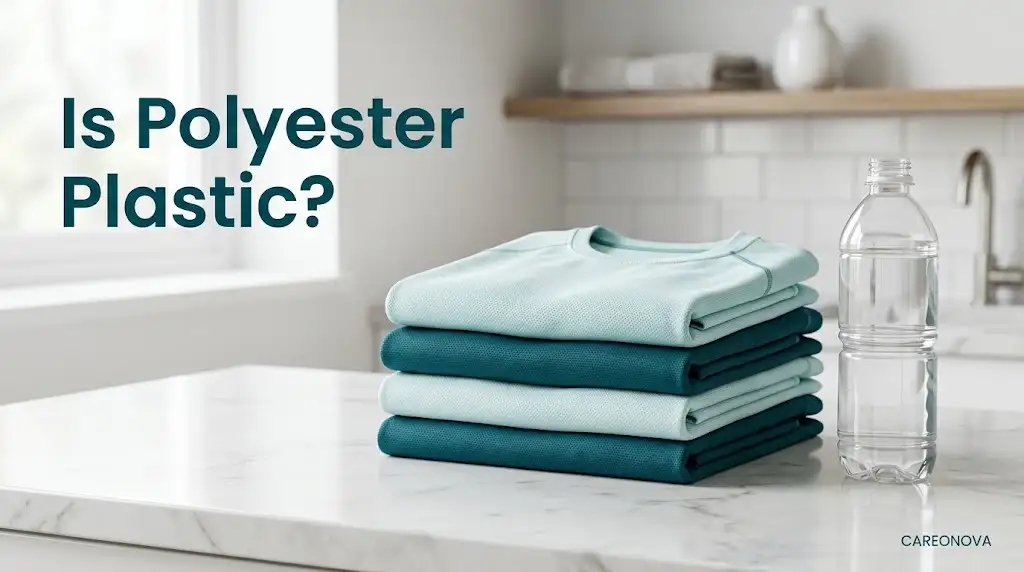
If you are looking at a clothing tag and wondering, is polyester plastic, the answer is a direct yes. Polyester is 100% plastic. Specifically, polyethylene terephthalate (PET) makes up the polyester in your everyday clothing. Manufacturers use this exact same chemical plastic to create clear, disposable water bottles.
It can feel strange to realize a soft t-shirt and a hard soda bottle share the exact same chemical makeup. However, understanding this core polyester fabric
chemistry helps you know exactly how to wash, dry, and wear your clothes without ruining them.
Key Takeaways: Polyester & Plastic
- Yes, it is plastic: It is a synthetic polymer that chemical refineries create from crude oil.
- Fabric is just the form: “Plastic” is the chemical material; “fabric” is the woven structure.
- Heat melts it: Because it is a thermoplastic, hot water and high-heat dryers permanently warp or glaze the fibers.
- It traps body odor: Plastic is oleophilic (oil-attracting), meaning it binds tightly to the natural oils in your sweat.
- It sheds microplastics: Washing synthetic fabrics releases microscopic plastic threads into the water system.
Is Polyester Plastic or Fabric? (Clearing the Confusion)
A common point of confusion is whether a shirt is plastic or fabric. The truth is that it is both. “Plastic” describes the chemical substance, while “fabric” describes the physical shape the manufacturer creates.
Think of it like wood. Wood is a raw material. You can carve it into a hard, solid chair, or you can pulp it down into a soft, thin sheet of paper. The material remains the same, but the final form looks and acts completely different.
The same rule applies to PET plastic.
Plastic vs. Plant vs. Animal (The Material Differences)
Because laboratories synthesize polyester entirely from petroleum, it has no natural plant or animal origins. (This technically makes polyester a “vegan” material, though many eco-conscious vegans avoid it due to its environmental footprint).
Because it acts like plastic, it reacts to water, heat, and odors very differently than natural fabrics like cotton or wool.
| Property | Polyester (Plastic) | Cotton (Plant) | Wool (Animal) |
|---|---|---|---|
| Raw Origin | Petroleum / Crude Oil | Cotton Bolls (Cellulose) | Sheep Fleece (Protein) |
| Water Reaction | Hydrophobic (Repels water completely) | Hydrophilic (Absorbs water easily) | Hygroscopic (Breathes and manages moisture) |
| Odor Reaction | Oleophilic (Attracts & traps body oils) | Releases oils easily in the wash | Naturally odor & bacteria resistant |
| Heat Sensitivity | Melts or glazes at high temperatures | Withstands hot water and high-heat irons | Shrinks and felts with heat and heavy agitation |
How Wearing Plastic Changes Your Laundry Routine
Most laundry mistakes happen because people wash their plastic synthetic shirts the exact same way they wash their cotton bath towels.
Why High Heat Melts and Glazes Polyester
Polyester is a thermoplastic. In simple terms, this type of plastic softens and melts when extreme heat hits it.
If you put a 100% polyester shirt into a hot dryer, the fibers actually soften. As they tumble against the hot metal drum, the plastic threads warp, shrink, and fuse together. This reaction explains why synthetic clothes often come out of the dryer looking shiny, melted, or feeling strangely stiff.

The “Permanent Stink”: Why Plastic Traps Body Odor
If you ever notice your polyester workout clothes still smelling like body odor right after you wash them, the plastic chemistry is to blame.
Plastic is oleophilic, meaning it loves oil. Human sweat contains lots of lipids and body oils. When you sweat into a polyester shirt, those oils chemically bond to the plastic threads. Regular laundry detergent often struggles to break this bond. To get the smell out of plastic fabrics, you need an enzyme-based detergent that specifically eats away the trapped oil.
The Environmental Reality of Plastic Fabric
When people realize their clothing contains plastic, they usually start questioning the environmental impact of their wardrobe.
What About Recycled Polyester (rPET)?
You likely see clothing tags boasting about “Recycled Poly” or rPET (Recycled Polyethylene Terephthalate). Recycling facilities create this material by collecting post-consumer plastic water bottles, chopping them up, melting them down, and spinning them into clothing yarn.
While rPET keeps bottles out of landfills initially and uses less energy to produce than virgin plastic, it creates a recycling dead-end. Textile-to-bottle recycling remains chemically complex and incredibly rare. Once a facility turns a plastic bottle into a t-shirt, that shirt will almost certainly end up in a landfill at the end of its life.
Is Polyester Biodegradable?
No, polyester does not biodegrade. Because it represents a petroleum-derived synthetic plastic, microorganisms in the soil do not recognize it as food. If a polyester shirt ends up in a landfill, it can take anywhere from 20 to 200 years to break down, and even then, it only breaks apart into smaller plastic fragments.
Stopping Microplastic Shedding in the Wash
The biggest environmental issue with wearing plastic revolves around what happens inside your washing machine. According to a major report by the International Union for Conservation of Nature (IUCN)
, synthetic textiles act as one of the leading sources of primary microplastics in our oceans. As clothes tumble and rub against each other, the friction causes thousands of microscopic plastic threads to snap off. These “microplastics” drain out of your washer and eventually make their way into rivers and waterways.
You can drastically reduce microplastic shedding with three simple laundry habits:

- Wash in cold water: Heat softens the plastic threads, making them much easier to snap and break. Cold water keeps the fibers strong.
- Wash full loads: A full washing machine drum reduces the harsh friction between garments.
- Use liquid detergent: Powdered laundry detergents act like liquid sandpaper, grinding against the plastic fibers and causing more shedding. Liquid detergent washes your clothes much more gently.
Is Wearing Plastic Safe for Your Skin?
If petroleum and chemicals make up your clothes, you naturally wonder if they remain safe to wear against your bare skin.
The short answer is yes. To sell globally, clothing brands must prove their PET meets strict international safety standards—like OEKO-TEX certification—to ensure the final product remains chemically inert. This means the plastic will not react with your skin or poison you through contact.
However, because plastic repels water entirely (hydrophobic), the fabric does not absorb sweat. Instead, the moisture sits trapped on the surface of your skin. This warm, damp environment breeds bacteria rapidly, which explains why wearing tight synthetic clothing often causes friction chafing, heat rashes, or contact dermatitis for people with sensitive skin.
Want a deeper look into skin reactions, chemical dyes, and the health concerns of synthetic fabrics? Read our full breakdown:Is Polyester Bad for You?
Conclusion
So, the next time you check a clothing tag and see “100% polyester,” you know exactly what you are holding: a flexible, woven plastic. While wearing plastic comes with a few environmental and maintenance trade-offs—like trapping body odor and shedding microplastics—it is also incredibly durable and affordable. The secret to keeping your synthetic clothes looking and smelling fresh is simple: treat them like the plastic they are. Wash them in cold water, use enzyme detergents, and always keep them away from high heat.
