

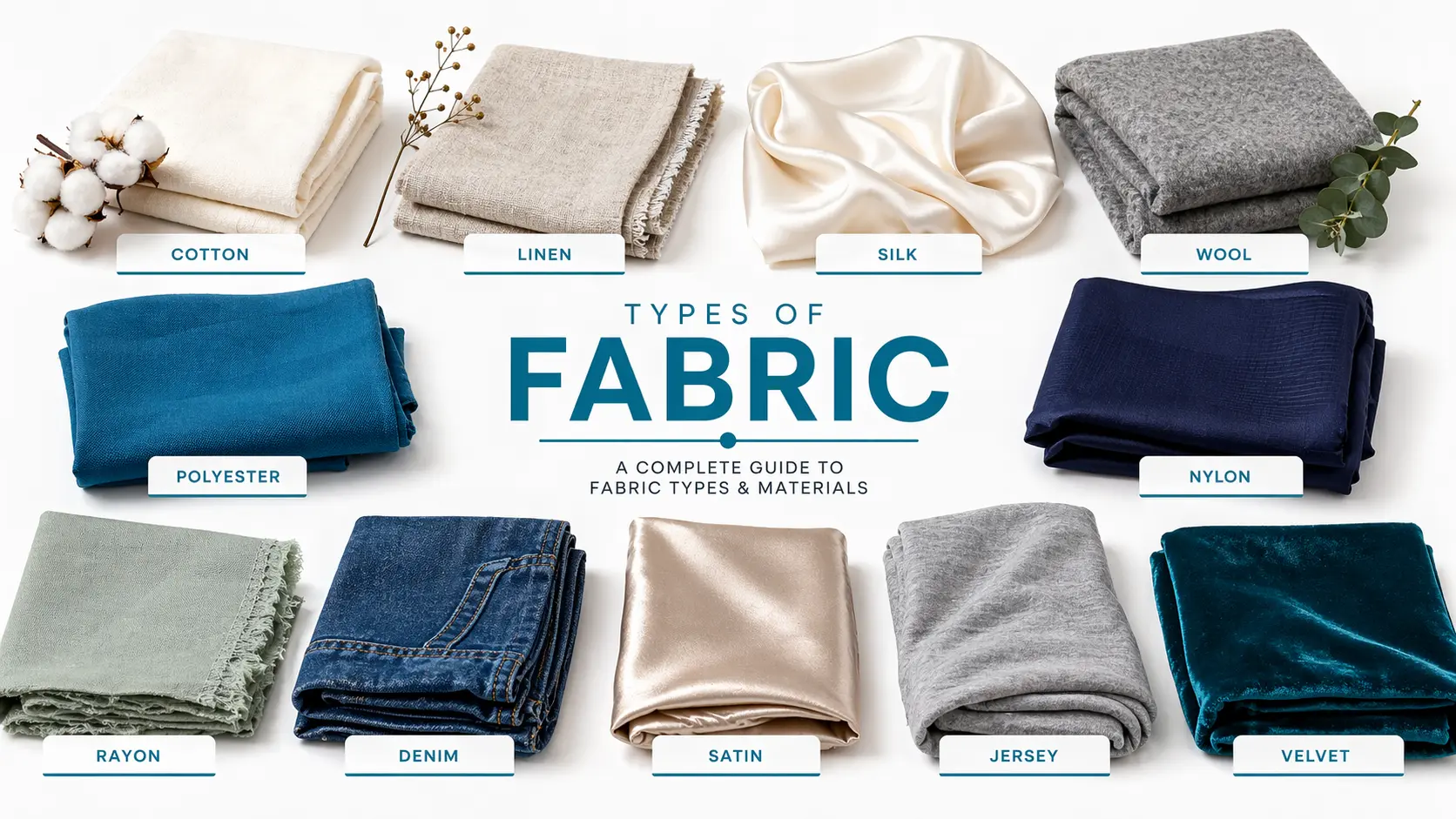
The main types of fabric for clothes can be grouped by fiber source and fabric construction, and both affect comfort, breathability, stretch, durability, and care. The most common fabric groups include natural fibers like cotton and wool, synthetic fibers like polyester and nylon, and regenerated materials like rayon, and each one behaves differently in clothing. This Fabric Types & Material Guide explains the most common types of fabric, how they feel, what they are used for, and how to choose the right fabric material for real-life wear.
In the textile industry, cloth is a collective term for fabrics and materials used in the production of clothing and accessories. The process starts with raw fibres that are twisted together to create threads, then woven or knit into a workable material that can be cut, stitched, and turned into garments. That is why no fabric material is exactly the same: each type of fibre has unique characteristics, and the right choice depends on the application. For example, a football shirt is usually better suited to a synthetic fabric with moisture wicking qualities, while wool retains heat and works better in warm, more structured clothing. When you understand the different fabric types, blends, and desirable qualities behind them, it becomes much easier to improve print quality, feel, wear, performance, and overall product quality.
What are the main types of fabric?
A practical way to classify the main types of fabric is by what the fabric is made from and how the fabric is constructed. This matters because a garment’s comfort, stretch, breathability, wrinkle level, and durability depend on both.
Most clothing fabrics fit into four broad fiber groups:
- Natural fibers: cotton, linen, silk, wool, cashmere
- Synthetic fibers: polyester, nylon, acrylic, spandex, PBT
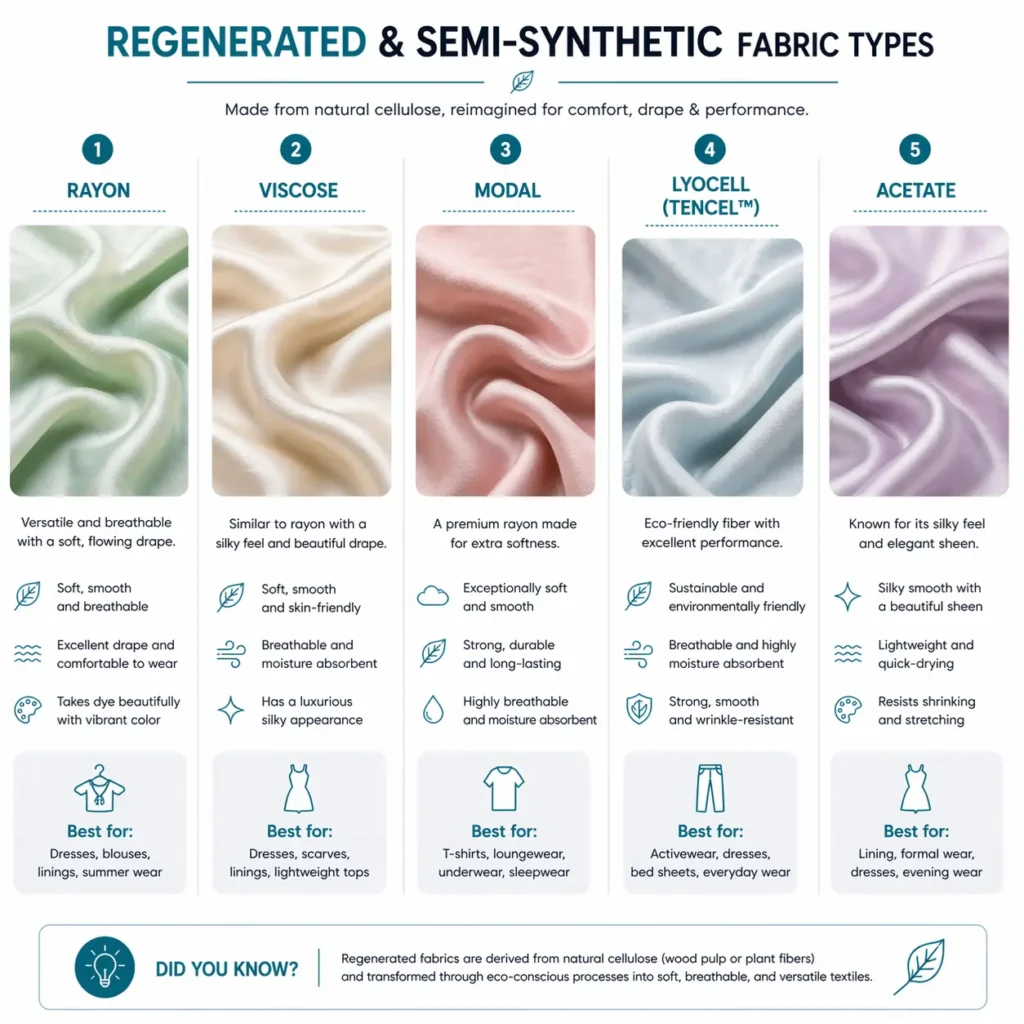
- Regenerated or semi-synthetic fibers: rayon, viscose, modal, lyocell, acetate
- Blends: combinations such as cotton-polyester or rayon-spandex
But that is only half the story. Fabric names can also describe construction or surface effect, not just fiber.
Fiber vs fabric vs construction vs finish
Here is the cleanest way to think about it:
Fiber, fabric, and construction are not the same thing
Fiber
The raw material, such as cotton, wool, polyester, or rayon.
Fabric
The finished textile made from fibers or yarns.
Construction
How it is built, such as woven, knit, nonwoven, or mesh.
Finish
How the surface looks or feels, such as satin, brushed, or pile.
That is why cotton poplin, cotton jersey, and cotton fleece are all cotton, but they do not feel alike and are not used for the same garments.

What is fabric GSM?
GSM means grams per square meter, and it is a simple way to describe fabric weight. Higher GSM usually means a heavier or denser fabric, but it does not automatically mean better quality.
In practical terms:
- Lightweight fabrics often feel cooler, drapier, and better for warm weather
- Medium-weight fabrics work for everyday shirts, dresses, trousers, and layering
- Heavyweight fabrics feel thicker, warmer, and more structured
GSM matters because two fabrics made from the same fiber can behave very differently. A lightweight cotton voile and a heavyweight cotton fleece are both cotton, but one is airy and the other is warm and substantial.
Fabric types chart: feel, breathability, stretch, warmth, and best uses
The easiest way to understand different types of fabric is to compare how they feel, perform, and where they work best.
| Fabric | Main Group | Feel | Breathability | Stretch | Warmth | Common Uses | Main Trade-Off |
|---|---|---|---|---|---|---|---|
| Cotton | Natural | Soft, familiar | High | Low unless blended | Low-Medium | T-shirts, shirts, dresses, basics | Can wrinkle or shrink |
| Linen | Natural | Crisp, airy | Very high | Low | Low | Summer shirts, trousers, dresses | Wrinkles easily |
| Silk | Natural | Smooth, light | Medium | Low | Low-Medium | Blouses, dresses, scarves | Delicate care |
| Wool | Natural | Warm, textured | Medium | Low | High | Sweaters, coats, suiting | Can itch or felt |
| Polyester | Synthetic | Smooth or varied | Low-Medium | Low unless blended | Low-Medium | Activewear, dresses, easy-care clothing | Can trap heat |
| Nylon | Synthetic | Smooth, strong | Low-Medium | Medium | Low | Outerwear, sportswear, hosiery | Can hold odor |
| Rayon / Viscose | Regenerated | Soft, drapey | Medium-High | Low | Low | Dresses, tops, linings | Often weaker when wet |
| Modal | Regenerated | Very soft | Medium-High | Medium | Low | Underwear, basics, sleepwear | Can pill if poorly made |
| Lyocell | Regenerated | Smooth, cool | High | Low-Medium | Low | Shirts, dresses, polished casualwear | Needs gentle care in some garments |
| Spandex / Elastane | Synthetic | Stretchy | Low | Very high | Low | Activewear, fitted clothes, denim blends | Rarely used alone |
| Denim | Usually cotton-based | Firm, sturdy | Medium | Low unless blended | Medium | Jeans, jackets, skirts | Can feel stiff |
| Jersey | Knit construction | Soft, flexible | Medium-High | Medium | Low-Medium | T-shirts, dresses, loungewear | Can stretch out |
| Poplin | Woven construction | Smooth, crisp | Medium | Low | Low | Shirts, dresses, uniform pieces | Less forgiving fit |
| Oxford | Woven construction | Textured, durable | Medium | Low | Low-Medium | Button-down shirts | Less crisp than poplin |
| Chiffon | Lightweight fabric | Sheer, floaty | Medium | Low | Low | Dresses, overlays, scarves | Delicate and slippery |
| Satin | Weave/surface term | Slick, glossy | Medium | Low | Low | Dresses, blouses, occasionwear | Snags and shows marks |
| Velvet | Pile fabric | Plush, rich | Low-Medium | Low-Medium | Medium | Jackets, dresses, eveningwear | Can crush or mark |
| Pique | Knit construction | Textured, breathable | Medium-High | Medium | Low | Polos, summer tops | Less drape than jersey |
| Mesh | Open construction | Airy, structured | High | Medium | Low | Sportswear, panels, layers | Can snag |
| Corduroy | Woven pile fabric | Ribbed, warm | Medium | Low | Medium | Trousers, jackets, shirts | Adds bulk |
20 most common types of fabric for clothes
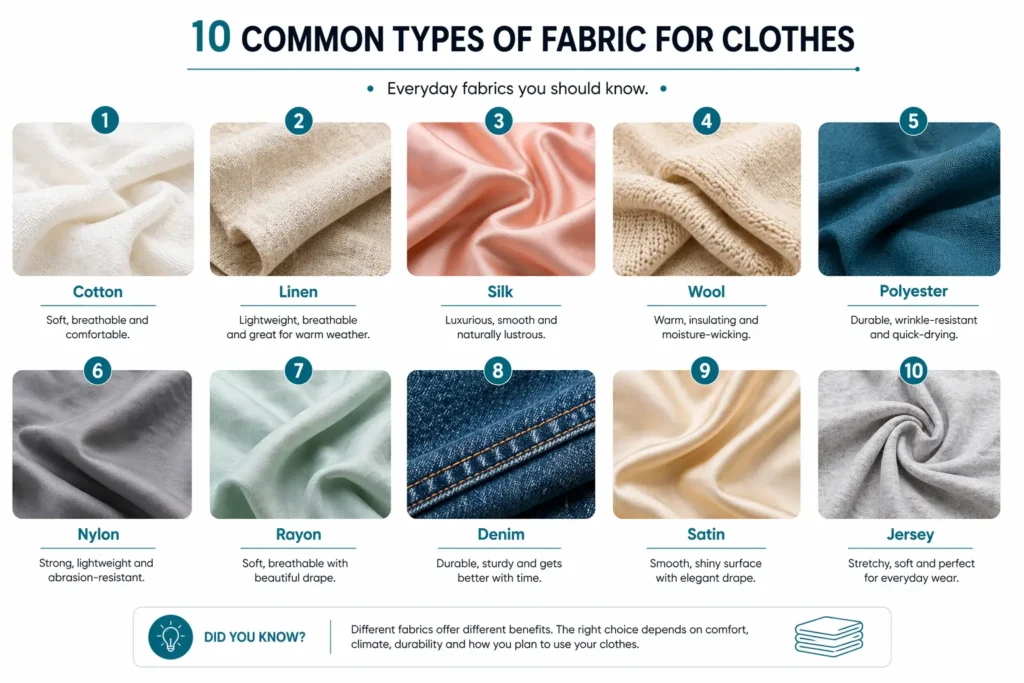
These are the fabric names most people see when shopping for clothing. Each one behaves differently, so understanding the basics makes it much easier to choose the right fabric for the right garment.
Cotton
Cotton is a natural fabric made from plant fibers and is one of the most common materials used in clothing. It usually feels soft, breathable, and comfortable against the skin, which makes it a reliable choice for everyday wear. Cotton is often used in T-shirts, shirts, dresses, underwear, and casual basics because it works well in many climates and fabric constructions. Its biggest strengths are comfort and breathability, but it can wrinkle, shrink, and hold moisture more than many synthetic fabrics. Cotton is often compared with linen, modal, and cotton blends when comfort and ease of wear matter.
Linen
Linen is a natural fabric made from flax fibers and is widely known for its light, airy feel. It usually feels crisp, breathable, and cool on the skin, which makes it one of the best fabrics for hot weather. Linen is commonly used in summer shirts, dresses, trousers, and relaxed tailoring because it allows airflow and feels less heavy than denser fabrics. Its biggest advantage is breathability, but it wrinkles easily and often looks more casual than polished. Linen is especially useful to compare with cotton, lyocell, and other summer clothing fabrics.
Silk
Silk is a natural protein fiber known for its smooth surface, soft drape, and refined appearance. It usually feels light, cool, and elegant, which is why it is common in blouses, scarves, dresses, and occasionwear. Silk works best when the goal is fluid movement and a more polished finish rather than rugged everyday durability. Its biggest strengths are drape and softness, but it is delicate and often needs careful washing or dry cleaning. Silk is often considered alongside satin, chiffon, georgette, and other dress fabrics.
Wool
Wool is a natural animal fiber valued for warmth, insulation, and seasonal comfort. It can feel soft or textured depending on the wool type, fabric finish, and garment construction used. Wool is common in sweaters, coats, suiting, scarves, and cold-weather layers because it holds warmth better than many lighter fabrics. Its biggest strengths are warmth and structure, but some wool fabrics can feel itchy and some require gentler care. Wool is most useful when compared with merino, cashmere, fleece, and other winter fabric materials.
Polyester
Polyester is a synthetic fabric used in a huge range of clothing because it is durable, wrinkle-resistant, and quick to dry. It can feel smooth, slick, light, or structured depending on the knit, weave, and finish used in the garment. Polyester is common in activewear, dresses, shirts, outerwear, and easy-care basics because it holds shape well and is widely available. Its main strengths are durability and low-maintenance care, but some polyester fabrics feel less breathable in hot weather. Polyester is often compared with cotton blends, nylon, and other activewear or wrinkle-resistant fabrics.
Nylon
Nylon is a synthetic fabric known for strength, smoothness, and abrasion resistance. It usually feels lightweight and slightly more elastic than basic polyester, which makes it useful in performance clothing and technical garments. Nylon is often used in sportswear, outerwear, hosiery, bags, and lining fabrics because it handles friction and movement well. Its biggest strengths are durability and flexibility, but it can retain odor and may feel less breathable than lighter natural fabrics. Nylon is especially relevant in activewear, outerwear, and synthetic performance material comparisons.
Rayon
Rayon is a regenerated cellulose fabric made from plant-based material that is chemically processed into textile fiber. It usually feels soft, fluid, and drapey, which is why it is often chosen for clothing that needs movement and a smoother finish. Rayon is commonly used in dresses, blouses, linings, and lightweight tops because it can imitate the feel of silk, cotton, or linen at a lower cost. Its biggest drawback is that some rayon fabrics weaken when wet and need gentler care than cotton or polyester blends. Rayon is most useful to compare with viscose, modal, and lyocell within the same regenerated fiber family.
Modal
Modal fabric is a type of rayon known for its very soft feel, smooth finish, and comfortable drape. It usually feels softer and more refined than many standard rayon fabrics, especially in knit basics and body-close clothing. Modal is common in underwear, sleepwear, lounge sets, T-shirts, and soft everyday layers because it feels gentle on the skin. Its biggest strengths are softness and comfort, but lower-quality versions may pill over time or lose their clean finish. Modal is often compared with rayon, viscose, cotton, and other comfort-focused fabric materials.
Denim
Denim is usually a cotton twill fabric with a durable, structured feel and a casual look. It often feels sturdy and slightly firm at first, though softer or stretch versions can feel much more flexible. Denim is best known for jeans, but it is also used in jackets, shirts, skirts, dresses, and workwear-inspired clothing. Its biggest strengths are durability and shape, but some denim fabrics can feel stiff or heavy compared with softer woven materials. Denim is often discussed alongside chambray, twill, canvas, and other sturdy everyday fabrics.
Satin
Satin usually refers to a weave or surface effect rather than a fiber itself. It typically feels smooth, glossy, and slippery, which gives garments a polished and more formal look. Satin is often used in dresses, blouses, skirts, lingerie, and eveningwear because it reflects light and drapes well. Its main appeal is appearance, but it can snag easily and often shows pressure marks, water spots, or surface wear. Satin is most helpful when compared with silk, acetate, polyester satin, and other formalwear fabrics.
Chiffon
Chiffon is a sheer, lightweight fabric known for softness and movement. It usually feels airy and delicate, which makes it popular in dresses, scarves, overlays, sleeves, and occasionwear. Chiffon is used when a garment needs flow and softness rather than structure or warmth. Its biggest strengths are lightness and drape, but it is delicate, slippery, and less practical for rough everyday use. Chiffon is commonly compared with georgette, organza, and other lightweight dress fabrics.
Velvet
Velvet is a pile fabric with a soft plush surface and a rich visual finish. It usually feels smooth, dense, and slightly warm, which makes it popular in seasonal fashion and occasionwear. Velvet is commonly used in dresses, jackets, blazers, trousers, and evening pieces because it adds depth and texture. Its biggest strength is visual richness, but it can crush, mark, or flatten if handled poorly. Velvet is often compared with velour, chenille, and other textured or pile fabrics.
Jersey
Jersey is a knit fabric best known for comfort, softness, and flexibility. It usually feels smooth and easy to wear, which is why it is one of the most common materials used for T-shirts, dresses, and loungewear. Jersey works especially well for clothing that needs stretch, movement, and a relaxed fit without heavy structure. Its biggest strengths are comfort and flexibility, but lower-quality jersey can twist, cling, or stretch out over time. Jersey is often compared with rib knits, pique, interlock, and other knit fabrics for everyday wear.
Spandex / Elastane
Spandex, also called elastane, is the fiber that gives clothing strong stretch and shape recovery. It usually appears in small percentages, but even a little can noticeably improve mobility, fit, and comfort. Spandex is common in leggings, activewear, fitted dresses, jeans, underwear, and body-hugging garments because it helps clothes move with the wearer. Its biggest strength is elasticity, but it is rarely used alone and is usually only one part of a blend. Spandex is most relevant in stretch denim, activewear, compression garments, and fit-focused fabric blends.
Lace
Lace is a decorative openwork fabric used more for visual detail than for warmth or durability. It can feel soft, crisp, or textured depending on the fiber and pattern, and it is often chosen for feminine or formal styling. Lace is commonly used in dresses, tops, trims, lingerie, sleeves, and occasionwear because it adds texture and a lighter decorative finish. Its biggest strength is appearance, but it is usually delicate and not ideal for heavy daily wear without support or lining. Lace is most often considered alongside bridal fabrics, dress fabrics, and decorative textile materials.
Canvas
Canvas is a heavy woven fabric known for strength, structure, and durability. It usually feels firmer and more rugged than everyday shirt fabrics, which makes it useful for utility clothing and hard-wearing garments. Canvas is often used in jackets, overshirts, workwear, bags, and some outerwear pieces because it holds its shape well. Its biggest strength is toughness, but it can feel stiff or bulky when softness and drape are more important. Canvas is commonly compared with denim, twill, and other durable workwear fabrics.
Corduroy
Corduroy is a woven fabric with raised ribs, also called wales, that give it warmth and texture. It usually feels soft but structured, which makes it useful for cooler-weather clothing with a bit more body. Corduroy is commonly used in trousers, jackets, overshirts, skirts, and seasonal casualwear because it combines texture with durability. Its biggest strengths are warmth and character, but it can add bulk and may feel heavier than smoother woven fabrics. Corduroy is often compared with velvet, flannel, and other textured cool-weather fabrics.
Flannel
Flannel is a soft fabric, often brushed, that feels cozy and slightly warmer than many plain woven fabrics. It usually has a relaxed look and a soft hand-feel, especially in shirts, pajama sets, and casual cool-weather clothing. Flannel is commonly used when comfort and warmth matter more than crisp structure or wrinkle resistance. Its biggest strengths are softness and warmth, but some flannels pill over time and lighter versions are less durable than heavy twills or denim. Flannel is often considered alongside brushed cotton, wool flannel, and other winter layering fabrics.
Georgette
Georgette is a lightweight fabric with a slightly grainy surface and fluid movement. It usually feels a little more textured and stable than chiffon, which makes it useful when a garment needs drape without becoming too slippery. Georgette is often used in dresses, blouses, sleeves, and occasionwear because it balances softness with a bit more body. Its biggest strengths are movement and versatility, but it still needs gentler handling than sturdier everyday fabrics. Georgette is commonly compared with chiffon, crepe, and other lightweight formalwear fabrics.
Poplin
Poplin is a smooth, tightly woven fabric that feels crisp, neat, and more structured than many knit fabrics. It is commonly used in shirts, dresses, uniforms, and cleaner everyday garments because it holds a polished shape without feeling overly heavy. Poplin works best when you want a smooth woven fabric that looks sharper than jersey but lighter than denim or canvas. Its biggest strengths are structure and clean appearance, but it has less stretch and less softness than many knit materials. Poplin is especially useful to compare with oxford cloth, shirting fabrics, and woven cotton materials.
Types of fabric by fiber source
If you want to shop by category instead of individual names, this is the simplest map.
Natural fabrics
Natural fabrics come from plant or animal sources and usually focus on comfort, breathability, or insulation.
Common examples:
- Cotton
- Pima cotton
- Supima cotton
- Organic cotton
- Linen
- Wool
- Merino wool
- Cashmere
- Silk
Regenerated or semi-synthetic fabrics
These fabrics start with natural cellulose, then go through chemical processing to become textile fibers.
Common examples:
- Rayon
- Viscose
- Modal
- Lyocell
- Acetate
Rayon vs viscose vs modal:
Rayon is the broad category. Viscose is the most common rayon type, and modal is a softer, more refined rayon variation often used in knitwear and underwear.
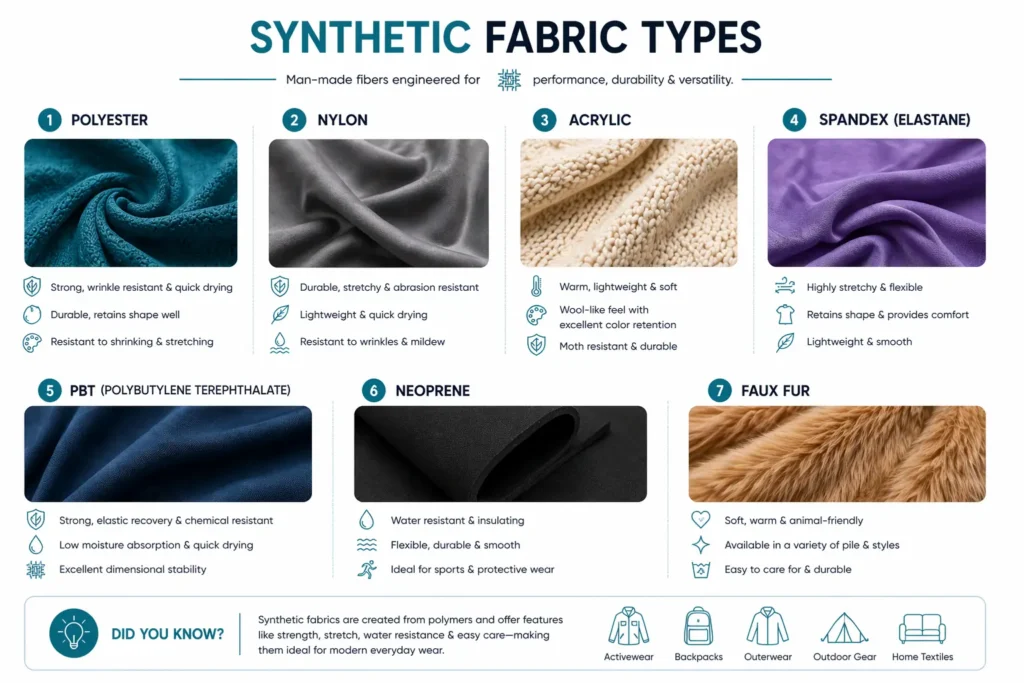
Synthetic fabrics
Synthetic fabrics are man-made and often chosen for durability, stretch, resilience, or lower-maintenance care.
Common examples:
- Polyester
- Nylon
- Spandex / elastane
- Acrylic
- PBT
- Neoprene
- Faux fur
Blended fabrics
Blended fabrics combine fibers to balance performance and comfort.
Common examples:
- Cotton-polyester for easier care
- Cotton-spandex for stretch
- Rayon-spandex for drape plus fit
- Wool-nylon for durability
- Polyester-viscose for suiting and dresses
Natural fabric types in more detail
Natural fabrics are usually the first choice for people who prioritize comfort, breathability, and familiar everyday wear.
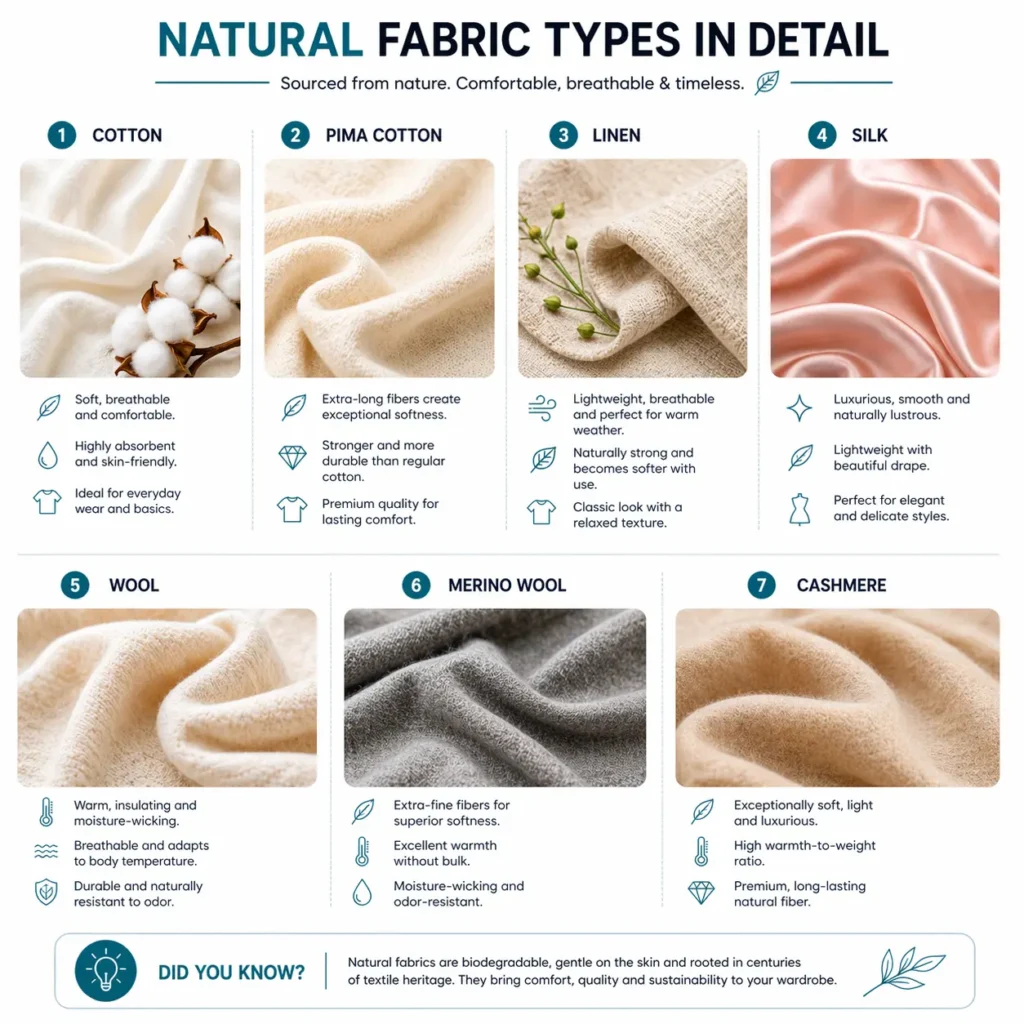
Pima cotton
Pima cotton is a premium cotton made from longer fibers, which usually gives it a smoother and softer feel than many standard cotton fabrics. It often feels cleaner and less fuzzy on the surface, which is why it is used in better-quality T-shirts, polos, knitwear, and bedding. Pima cotton is chosen when brands want softness and durability without changing the familiar comfort of cotton itself. Its main advantage is quality feel and better resistance to pilling, though it usually costs more than regular cotton. It is especially useful when comparing fabric quality, premium basics, and long-staple cotton materials.
Supima cotton
Supima is a branded American-grown Pima cotton known for long-staple fibers and premium quality positioning. It usually feels soft, smooth, and durable, especially in higher-end basics and knit garments. Supima cotton is common in premium T-shirts, polos, underwear, and elevated casualwear because it keeps the comfort of cotton with a more refined finish. Its biggest strength is consistency and softness, though the final performance still depends on garment construction and fabric weight. Supima is most relevant when comparing premium cotton fabrics and upscale everyday materials.
Pima cotton vs cotton
Pima cotton is still cotton, but it uses longer fibers that usually create a smoother and more durable fabric than many regular cotton options. Standard cotton can still be excellent, but it varies more widely in softness, surface finish, and resistance to pilling. This comparison matters most when shoppers want to understand why one cotton shirt feels noticeably better than another. The main takeaway is that Pima usually offers a more refined feel, while regular cotton gives more price variety and wider product availability. It is one of the clearest material comparisons within the broader cotton category.
Organic cotton
Organic cotton refers to how the cotton is grown rather than a guaranteed difference in softness or texture. It can feel very similar to conventional cotton because the comfort of the finished fabric still depends on fiber quality, weave or knit structure, and finishing. Organic cotton is commonly used in basics, baby clothing, underwear, sleepwear, and products marketed around lower-impact materials. Its biggest value is the farming and sourcing angle, not an automatic upgrade in feel or performance. It is best understood as a sourcing distinction within cotton fabric materials rather than a separate fabric behavior category.
Merino wool
Merino wool is a finer and softer wool than many traditional wool fabrics, which makes it easier to wear next to the skin. It usually feels lighter, less itchy, and more flexible than coarser wool, especially in sweaters, base layers, and performance clothing. Merino is common in knitwear, socks, cold-weather basics, and travel clothing because it offers warmth without heavy bulk. Its main strengths are softness and thermal comfort, though some garments still need careful washing. Merino is especially useful in comparisons with regular wool, cashmere, and winter performance fabrics.
Cashmere
Cashmere is a soft luxury animal fiber known for warmth, lightness, and a refined hand-feel. It usually feels smoother and more delicate than many regular wool fabrics, which is why it is associated with premium knitwear and cold-weather layers. Cashmere is often used in sweaters, scarves, wraps, and soft outer layers where comfort and elegance matter more than rugged durability. Its biggest strengths are warmth and softness, but it is more expensive and needs gentler care than many everyday materials. Cashmere is most helpful when compared with merino, lambswool, and other luxury winter fabrics.
Regenerated and semi-synthetic fabric types in more detail
These fabrics are common in fashion because they often combine softness, drape, and a polished look.
What is rayon fabric?
Rayon is a regenerated cellulose fiber made from plant-based material that has been chemically processed into fiber. It usually feels soft, cool, and fluid, which is why it is often used when brands want drape without the cost of silk. Rayon is common in dresses, blouses, linings, wide-leg trousers, and lightweight tops because it moves well and often feels comfortable against the skin. Its main drawback is that some rayon fabrics weaken when wet and wrinkle more easily than synthetic blends. Rayon is easiest to understand when compared with viscose, modal, and lyocell.
Viscose fabric
Viscose is the most common form of rayon and is often used when a garment needs softness and movement. It usually feels smooth, light, and drapey, which is why it appears in dresses, blouses, skirts, and lightweight woven pieces. Viscose works well when the goal is a polished look with fluid movement rather than heavy structure. Its biggest strengths are softness and drape, but it can wrinkle and may require gentler care than polyester-heavy fabrics. Viscose is most relevant in rayon family comparisons and dress-fabric discussions.
Lyocell
Lyocell is another regenerated cellulose fiber known for a smooth feel, soft drape, and polished finish. It often feels cooler and cleaner on the skin than many synthetic fabrics, which makes it popular in shirts, dresses, trousers, and smart-casual clothing. Lyocell is used when brands want a softer fabric with a slightly elevated look and better breathability than many easy-care synthetics. Its biggest strengths are comfort and drape, though some garments still need gentler washing depending on the construction. Lyocell is commonly considered alongside rayon, modal, cotton, and summer clothing fabrics.
What is acetate fabric?
Acetate is a cellulose acetate textile fiber commonly used in linings, dresses, and occasionwear. It usually has a smooth, silky look and a more formal finish, which makes it popular in garments that need shine or a clean drape. Acetate is often used in special-occasion clothing rather than hard-wearing everyday basics because it looks polished but is not especially rugged. Its main strength is appearance, while its weakness is lower durability and more delicate care needs than fabrics like cotton or nylon. Acetate is most useful to compare with satin, lining fabrics, and other formalwear materials.
Synthetic fabric types in more detail
Synthetic fabrics are useful when you need resilience, structure, stretch, or easier care.
Polypropylene fabric
Polypropylene fabric is a lightweight synthetic material that absorbs very little water and dries quickly. It can be woven, knitted, or made into nonwoven material, so its texture and performance vary widely. Polypropylene is used in products such as base layers, sports clothing, reusable bags, rugs, upholstery, and filters. Its low moisture absorption is useful in damp or outdoor settings, although the material needs care around high heat.
Acrylic fabric
Acrylic is a synthetic fiber often used as a wool alternative in sweaters, scarves, hats, and winter accessories. It usually feels light and warm, and some versions are brushed or textured to imitate the softness of natural animal fibers. Acrylic is common in budget-friendly cold-weather clothing because it is affordable and easy to produce in many colors and textures. Its biggest strength is warmth at a lower price point, but lower-quality acrylic can pill faster and feel less breathable than natural wool. Acrylic is often compared with wool, fleece, and other winter fabric materials.
PBT fabric
PBT is a type of polyester often used in performancewear, swimwear, and stretch garments. It usually offers better shape retention and rebound than many basic polyester fabrics, which makes it useful in clothing that needs repeated stretch and recovery. PBT is common in swimsuits, training gear, and technical garments where resilience matters more than a soft natural feel. Its biggest strengths are durability and recovery, but it is not as widely recognized by everyday shoppers as cotton or nylon. PBT is best understood within activewear, swimwear, and performance fabric comparisons.
Neoprene
Neoprene is a thicker, more structured synthetic material that feels denser than most standard apparel fabrics. It is used in some performance garments, outerwear pieces, and fashion items that need body and shape rather than softness and airflow. Neoprene is chosen when a garment needs a sculpted silhouette, insulation, or a more modern technical look. Its biggest strength is structure, but it is heavier and less breathable than many woven or knit clothing fabrics. Neoprene is most relevant when comparing technical fabrics and structured outerwear materials.
Faux fur
Faux fur is a synthetic pile fabric designed to imitate the look and feel of fur. It usually feels soft, fluffy, and visually bold, which makes it common in trims, jackets, coats, and winter accessories. Faux fur is used when warmth and statement texture matter more than lightness or breathability. Its biggest strength is appearance and softness, but it can feel bulky and is not practical for all-day indoor wear. Faux fur is often considered alongside pile fabrics and winter outerwear materials.
Knit, woven, nonwoven, and finish terms in fabric types
Some common fabric names describe structure or surface effect instead of fiber. Knowing these terms helps you understand labels more accurately.
Woven fabrics
Woven fabrics are made by interlacing yarns. They usually feel more stable and structured than knits.
Common woven examples:
- Poplin
- Oxford
- Twill
- Denim
- Canvas
- Chiffon
- Georgette
- Organza
- Taffeta
Knit fabrics
Knit fabrics are made by interlooping yarns. They usually stretch more and feel softer or more flexible.
Common knit examples:
- Jersey
- Pique
- French terry
- Cotton fleece
- Rib knit
Nonwoven fabrics
Nonwoven fabrics are made without traditional weaving or knitting. They are bonded, felted, or pressed together.
Common example:
- Felt
Surface and finish terms
These terms often describe appearance or texture rather than fiber content.
- Satin: smooth, glossy surface created by a satin weave
- Velvet: plush pile surface
- Brushed: surface raised for softness, as in some flannels
- Mesh: open construction for airflow
- Sherpa: fluffy pile-like texture often used in linings
Specialty fabric types worth knowing
These fabric names show up often in clothing, especially when fit, texture, or season matters.
Pique fabric
Pique fabric is a textured knit fabric most commonly associated with polo shirts. It usually feels more breathable and slightly more structured than plain jersey, which makes it useful for smart-casual warm-weather clothing. Pique is often used in polos, summer tops, and uniform-style garments because it gives a cleaner look without losing all the comfort of knit fabric. Its biggest strength is its balance of breathability and structure, but it has less drape than softer knits like jersey or modal blends. Pique is most useful to compare with jersey, interlock, and other knit shirt fabrics.
Oxford fabric
Oxford fabric is a woven shirting fabric with a slightly textured, basket-like surface. It usually feels durable, stable, and a little less crisp than poplin, which makes it a favorite for classic button-down shirts. Oxford is commonly used in casual and business-casual shirts because it balances structure, comfort, and everyday wearability. Its biggest strengths are durability and versatility, but it does not drape as softly as lighter dress fabrics. Oxford is often compared with poplin and other woven shirting materials.
Mesh fabric
Mesh fabric has an open structure that increases airflow and reduces visual density. It usually feels light, breathable, and slightly sporty, though the exact texture depends on the fiber, hole size, and finish used. Mesh is common in activewear, sports uniforms, lining panels, and layered fashion details where ventilation or visual contrast matters. Its biggest benefit is breathability, but delicate mesh can snag more easily than denser woven or knit fabrics. Mesh is most relevant in sportswear, summer layering, and performance fabric discussions.
Chenille fabric
Chenille fabric has a soft, fuzzy, plush texture that gives it a cozy and slightly dimensional look. It often feels warm and tactile, which is why it appears in knitwear, blankets, loungewear pieces, and some textured fashion items. Chenille is chosen more for feel and visual softness than for technical performance or sharp structure. Its biggest strength is comfort, but it can feel bulky and may not hold crisp garment shapes well. Chenille is often considered alongside velvet, fleece, and other plush-texture fabric materials.
French terry
French terry is a knit fabric that is smooth on one side and looped on the other. It usually feels lighter and more breathable than fleece, which makes it useful for casual clothing that needs comfort without too much bulk. French terry is common in sweatshirts, joggers, shorts, and transitional layers because it works well across mild weather conditions. Its biggest strength is versatility, but it is not as warm as brushed fleece in colder weather. French terry is often compared with fleece, jersey, and other casual knit fabrics.
Cotton fleece
Cotton fleece is a soft, brushed knit fabric designed for warmth and comfort. It usually feels thicker and cozier than jersey, which makes it common in hoodies, sweatpants, sweatshirts, and cool-weather basics. Cotton fleece is used when softness and casual warmth matter more than crisp structure or formal appearance. Its biggest strengths are comfort and insulation, but it can feel bulky and less breathable than lighter knit fabrics. Cotton fleece is most useful to compare with French terry, polar fleece, and sweatshirt materials.
Terry cloth
Terry cloth is a looped fabric known for absorbency and a soft casual feel. It usually feels textured and practical rather than sleek, which is why it is commonly used in robes, towels, lounge sets, and resortwear. Terry cloth works well when softness and moisture absorption matter more than structure or sharp appearance. Its biggest strength is absorbency, but it is heavier and less refined than many woven or lightweight knit fabrics. Terry cloth is most relevant in resortwear, lounge clothing, and fabric texture comparisons.
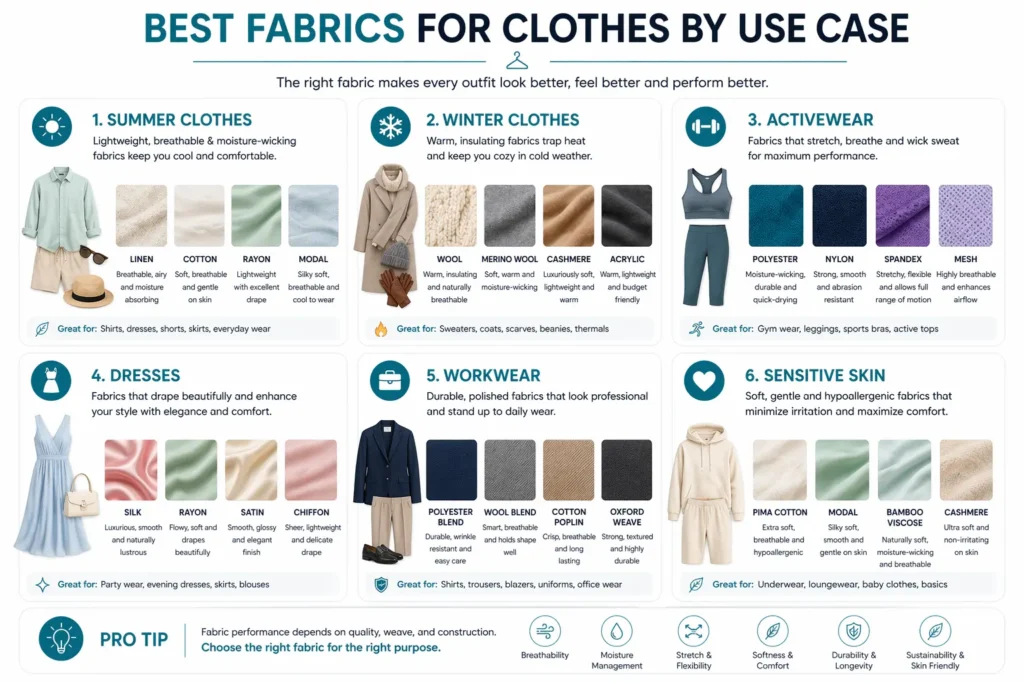
Best fabrics for clothes by use case
The best fabrics for clothes depend on weather, activity, comfort, care needs, and the look you want. Matching the fabric material to the job is more useful than chasing one “best” option for everything.
Best fabrics for summer clothes
Choose linen, lightweight cotton, voile, chambray, and some lyocell fabrics for hot weather. These options usually feel cooler and breathe better than heavier synthetics or dense brushed fabrics.
Best fabrics for winter clothes
Choose wool, cashmere, corduroy, flannel, fleece, and heavier knits when warmth matters. These fabrics tend to trap heat better and feel more comfortable in cool conditions.
Best fabrics for activewear
Choose polyester, nylon, elastane blends, mesh panels, and some PBT fabrics when stretch, recovery, and faster drying matter. Plain cotton can feel comfortable, but it often stays damp longer.
Best fabrics for dresses and formalwear
Choose silk, satin, chiffon, georgette, crepe, velvet, lace, and some acetate linings depending on whether you want shine, softness, structure, or texture.
Best fabrics for workwear and everyday structure
Choose twill, oxford, poplin, denim, canvas, and durable cotton blends for clothing that needs shape, durability, and a cleaner outline.
Best fabrics for sensitive skin
Choose soft cotton, modal, silk, and fine merino if comfort is the priority. Fabric finish, seam quality, and detergents also affect comfort, so the softest fiber is not the only factor.
Best low-maintenance fabrics
Choose polyester blends, stable knits, denim, and easy-care cotton blends if you want less ironing and simpler washing. Pure linen and delicate silk are usually not the easiest daily-care options.
Quick fabric buying checklist
Use this checklist before buying clothes online or in store:
- Check the fiber content on the label
- Check whether the fabric is woven, knit, or textured
- Think about your climate and how often you will wear it
- Decide whether you want breathability, stretch, warmth, or structure
- Look for blends if you want balance, such as softness plus stretch
- Check the care label for machine wash, delicate wash, or dry clean
- Watch for fabrics that wrinkle easily if low-maintenance matters
- If possible, compare weight and hand-feel, not just fiber names
Smart Fabric Buying Tip
Do not choose fabric by name alone. Check the fiber content, the construction (woven, knit, mesh, pile), the weight, and the care label before deciding whether the material actually suits the garment you want.
How to identify fabric types
The easiest way to identify fabric types is to start with the label, then confirm with feel, stretch, weight, texture, and structure. Appearance alone helps, but it is not enough for a confident answer.
Read the clothing label
The label usually tells you the fiber content, such as 100% cotton or 65% polyester, 30% rayon, 5% elastane. That is the most reliable starting point.
Check texture and drape
Soft, fluid fabrics like rayon and silk usually drape more easily. Crisp fabrics like taffeta or poplin hold shape better.
Look at construction
Knits usually stretch more and feel more flexible. Wovens usually feel more stable and structured.
Compare weight, recovery, and surface
If a fabric springs back quickly, it may include elastane or a knit structure. If it looks shiny or plush, surface effect may matter just as much as fiber content.

A–Z fabric names list
Here is a practical glossary of common fabric names and fabric materials used in clothing and textiles.
A–C
- Acetate – smooth cellulose acetate fiber often used in linings and dress fabrics
- Acrylic – synthetic wool-like fiber used in sweaters and cold-weather accessories
- Bamboo-derived rayon – regenerated cellulose fabric marketed for softness and drape
- Batiste – lightweight plain weave fabric, often soft and fine
- Brocade – decorative woven fabric with raised patterns
- Calico – simple woven cotton fabric, often plain or lightly printed
- Canvas – heavy woven fabric with strength and structure
- Cashmere – soft luxury animal fiber used in knitwear
- Chambray – lightweight woven cotton fabric that resembles softer denim
- Chenille – plush fuzzy fabric or yarn with a soft textured surface
- Chiffon – sheer lightweight fabric with floaty movement
- Corduroy – ribbed woven fabric with raised wales
- Cotton fleece – brushed knit fabric used in hoodies and sweats
- Crepe – fabric with a crinkled or pebbled surface
D–H
- Damask – patterned woven fabric, often decorative
- Denim – sturdy cotton twill used for jeans and jackets
- Elastane – stretch fiber also known as spandex
- Faux fur – synthetic pile fabric that imitates fur
- Felt – nonwoven fabric made by matting fibers together
- Flannel – soft fabric, often brushed, for shirts and cool-weather clothing
- French terry – knit fabric with loops on the inside and a smoother face
- Gabardine – tightly woven twill fabric with durability and structure
- Georgette – drapey lightweight fabric with a slightly grainy feel
- Gingham – checked woven fabric used in shirts and dresses
- Herringbone – V-shaped weave pattern, often seen in suiting and coats
- Hemp fabric – strong plant-based fabric often used in durable clothing and blends
J–M
- Jacquard – woven fabric with patterns built into the construction
- Jersey – soft stretch knit used in T-shirts and dresses
- Lace – decorative openwork fabric
- Linen – flax-based breathable fabric for warm weather
- Lyocell – smooth regenerated cellulose fiber
- Mesh – open construction fabric for airflow and layering
- Merino wool – soft fine wool used in knitwear and performance layers
- Modal – soft type of rayon often used in basics and underwear
- Mohair – lustrous animal fiber often used in knitwear
- Muslin – plain woven cotton fabric, usually simple and lightweight
N–P
- Neoprene – thick structured synthetic fabric
- Nylon – strong synthetic fiber common in outerwear and activewear
- Organza – sheer crisp fabric used in formalwear
- Oxford – textured woven shirting fabric
- PBT – resilient polyester often used in performance and swimwear
- Pile fabric – fabric with raised fibers, such as velvet
- Pima cotton – long-staple cotton known for softness
- Pique – textured knit often used in polo shirts
- Pleather – synthetic leather-look material used in some fashion items
- Polar fleece – soft warm brushed synthetic knit
- Poplin – smooth tightly woven fabric common in shirts
R–S
- Rayon – regenerated cellulose fiber known for drape and softness
- Rib knit – knit fabric with vertical ribs and good stretch
- Sateen – cotton fabric with a satin-like smooth surface
- Satin – weave or surface effect with a glossy face
- Seersucker – puckered woven fabric that stays slightly away from the skin
- Sherpa – fluffy pile-like fabric used in linings and jackets
- Silk – smooth natural fiber with elegant drape
- Spandex – high-stretch synthetic fiber
- Suede – soft napped leather finish
- Supima cotton – branded American-grown Pima cotton
T–W
- Taffeta – crisp smooth fabric used in formalwear
- Terry cloth – absorbent looped fabric
- Toile – printed or decorative woven fabric; also used for test garments in sewing
Triacetate – more heat-resistant acetate-family fiber used in some garment - Tulle – lightweight net fabric often used in formalwear
- Tweed – textured woolen fabric often used in jackets and suits
- Twill – weave with diagonal line
- Velour – knit fabric with a soft plush face
- Velvet – plush pile fabric with a rich surface
- Viscose – common rayon type known for softness and drape
- Voile – lightweight semi-sheer woven fabric
- Wool – warm natural animal fiber used in knitwear and tailoring
Conclusion
Understanding the different types of fabric comes down to reading past the fiber name. A label tells you what a garment is made from, but texture, drape, weight, and whether it’s knit or woven tell you how it will actually wear — and those details separate a soft, breathable cotton jersey from a stiff cotton canvas, or a drapey rayon from a crisp linen. Once you get comfortable checking fiber content, construction, and weight together instead of judging fabric by name alone, choosing clothes for the right season, activity, or occasion stops being a guess and starts being a habit you can rely on every time you shop.
