

Most sheets should be washed in warm water because it removes sweat, skin oils, and everyday buildup without being too harsh on the fabric. Understanding what temperature to wash sheets helps you choose between warm, hot, and cold water based on the sheet material, hygiene needs, and how often you wash your bedding.
Hot water is useful after illness, heavy sweating, or allergy problems when the care label allows it, while cold water is safer for bamboo, silk, satin, dark colors, and fabrics that can shrink or fade. This guide explains the best sheet-washing temperature by fabric type, when to use hot or cold water, how often to wash sheets, and how drying temperature affects softness, odor, and fabric life.
What Temperature Should You Wash Bed Sheets?
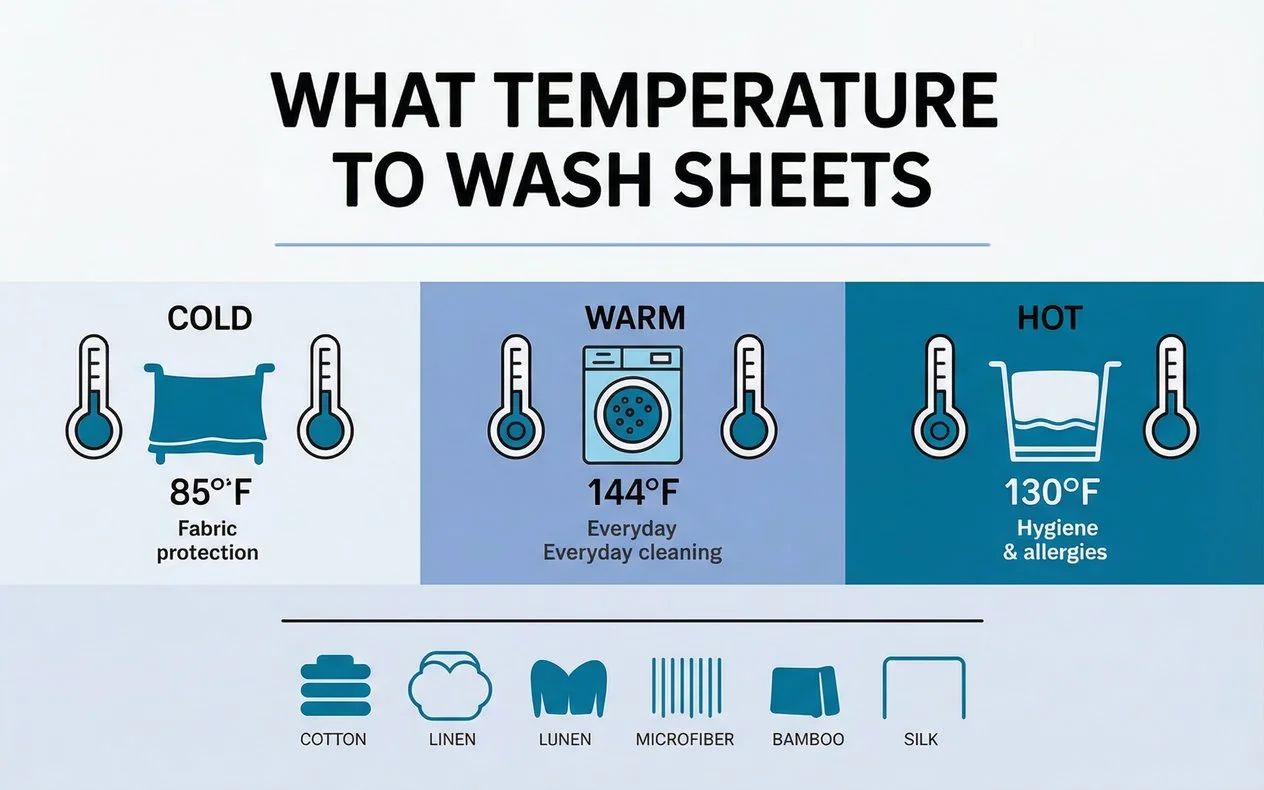
Most bed sheets should be washed in warm water, around 104°F to 113°F. Warm water removes sweat, body oils, and light odor without being as harsh on fabric as hot water.
Use hot water only for illness, heavy sweating, allergy concerns, or contamination when the care label allows it. Use cold water for bamboo, silk, satin, dark sheets, printed sheets, and fabrics that may shrink or fade.
Best Water Temperature for Washing Bed Sheets
Warm water is suitable for most bedding. Hot water improves sanitation when needed. Cold water protects delicate fibers and prevents color fading.
Should You Wash Sheets in Hot or Cold Water?
For most households, warm water is the best balance between cleanliness and fabric care. Hot water is better when you need extra hygiene, such as after illness, heavy sweating, or allergy flare-ups. Cold water is the safer option for delicate sheets, dark colors, and fabrics that shrink or fade easily.
If you are unsure, start with the care label. Cotton sheets often handle warm water well, while bamboo, silk, satin, and some rayon-based bedding usually need colder washing. Choosing the right temperature helps keep sheets clean without shortening their lifespan, especially when you also need to avoid shrinkage from washing mistakes.
Best Temperature to Wash Sheets by Purpose
Everyday Sheet Washing
Warm water cleans sweat and body oils well without damaging fabric. This is the best choice for weekly washing, and the same temperature logic also applies when you compare wash temperatures across everyday clothing fabrics.
Washing Sheets for Allergies or Germs
HoHot water above 130°F helps reduce dust mites and bacteria. Use this setting after illness or for allergy control, and consider a laundry sanitizer only when the sheet fabric and care label allow extra hygiene treatment.
Washing Sheets to Protect Fabric
Cold water helps prevent fading and shrinking.
This is best for delicate fabrics and printed sheets.
Temperature to Wash Sheets by Fabric Type
Best Temperature to Wash Cotton Sheets
Wash at warm (104°F–113°F).
Use hot water only when deep cleaning is needed.
Linen Sheets
Use warm or cold water. High heat can weaken fibers, so linen sheets need the same careful temperature control used when washing linen properly.
Microfiber & Polyester Sheets
Wash in cold or warm water. Synthetic bedding materials require controlled heat, similar to microfiber care principles, because hot water can damage synthetic fibers.
Bamboo or Rayon Sheets
Use cold water only.
These fabrics shrink easily.
Silk or Satin Sheets
Always wash in cold water on a gentle cycle.
Recommended Washing Temperature by Fabric Type
Always check the care label before washing. Using the correct temperature helps extend fabric lifespan, prevent shrinkage, and maintain softness.
Does Hot Water Really Kill Germs in Sheets?
Hot water helps reduce bacteria and dust mites. However, detergent, mechanical washing, and complete drying also play a major role, especially when bedding has odor, sweat, or residue that can make clothes smell after washing.
Warm water is enough for most households.
Hot water should be used only when needed.
Most bacteria reduction occurs through detergent action combined with mechanical agitation and complete drying, not temperature alone.
When to Use Warm, Hot, or Cold Water for Sheets
Warm water is the best default for most sheet washing because it cleans well without putting unnecessary stress on the fabric. Hot water is better reserved for allergy control, illness, or heavily soiled bedding. Cold water works best for delicate fibers, printed sheets, and fabrics that are more likely to shrink or fade.
This means the right setting is not the same for every load. Weekly maintenance washes usually do well in warm water, while occasional hot washes make more sense for hygiene-driven situations. Cold water is the protective option when fabric care matters more than deep sanitation.
How Often Should You Wash Sheets?
Wash sheets once a week for normal use.
Wash more often if you sweat heavily or have allergies.
Weekly washing usually does not require hot water.
Drying Sheets: Temperature Matters Too
High dryer heat can cause shrinkage and fabric wear.
Use low to medium heat for most sheets.
Air drying helps extend fabric life.
Common Mistakes When Washing Sheets
- Using hot water on every load.
- Washing delicate sheets on a harsh cycle.
- Overloading the washer.
- Washing sheets with towels, jeans, or zippers.
- Using too much detergent.
- Ignoring the care label.
- Using high dryer heat every time.
- Leaving sheets damp too long before drying or storing.
Quick Decision Guide
- Sheets smell musty → Use Warm or Hot Water
- Allergies or illness → Use Hot Water
- Fading or shrinking → Switch to Cold Water
- Weekly washing → Use Warm Water
Final Takeaway
Warm water is the best default for washing most sheets because it cleans sweat, skin oils, and everyday buildup without being too harsh on fabric. Use hot water only when the care label allows it and the sheets need extra hygiene care.
Choose cold water for bamboo, silk, satin, dark colors, printed sheets, and fabrics that shrink or fade easily. For the best results, match the water temperature with the fabric type, washer setting, detergent amount, and drying temperature.
