


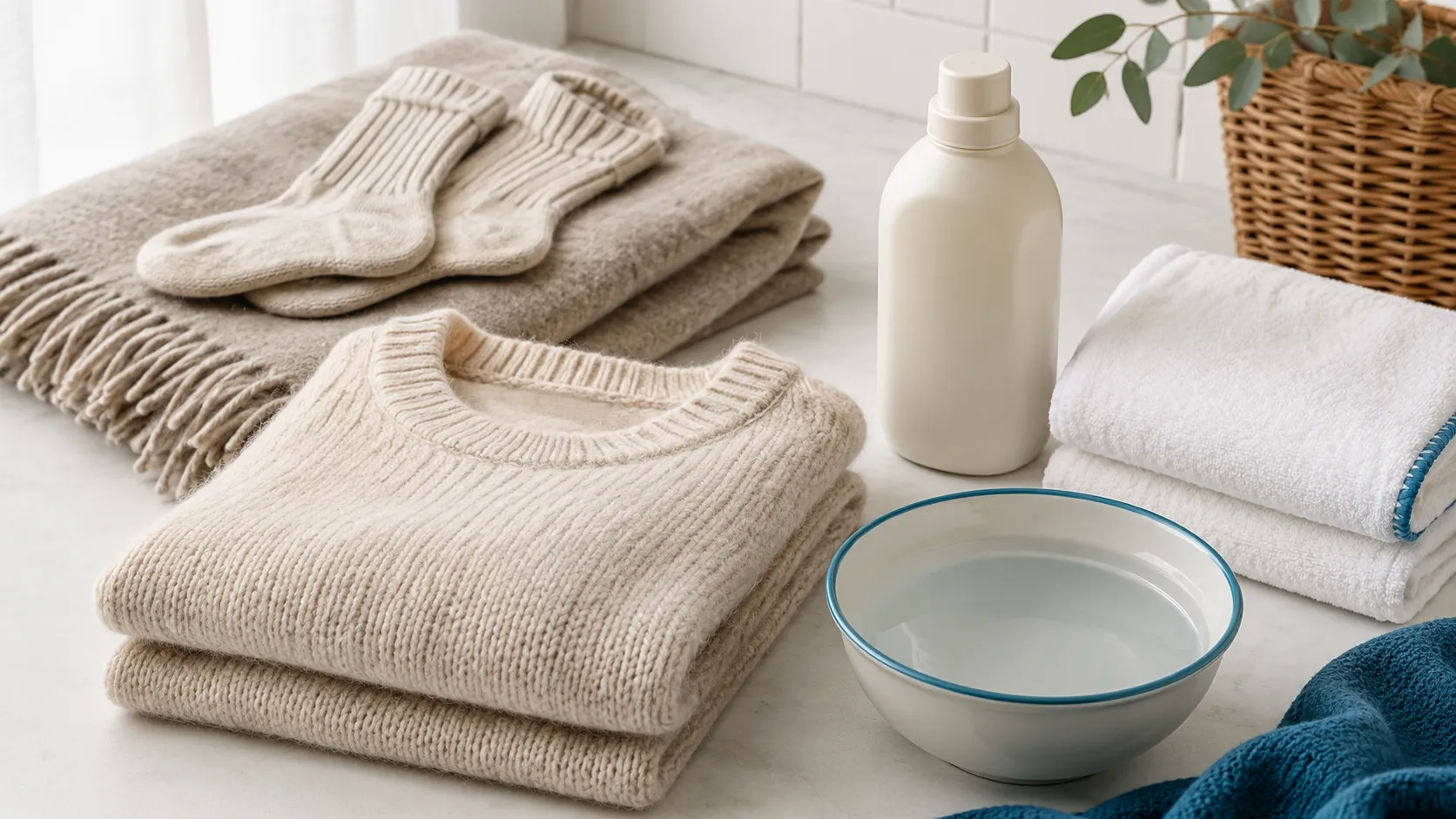
Wool can be washed safely when the care label allows it. The right method depends on whether the item is machine washable, hand wash only, or dry clean only. To wash wool without shrinking or felting it, use a mild wool detergent, limit heat and friction, support the fabric while wet, and reshape it before drying.
Check the Care Label Before Washing Wool
The care label should decide how you clean the item. Two garments made from 100% wool may need different treatment because of their knit, lining, dyes, trims, or factory finish.
| Care Instruction | Correct Washing Method |
|---|---|
| Machine washable | Use the approved wool or delicate cycle. |
| Hand wash only | Wash gently by hand. |
| Dry clean only | Use professional cleaning. |
| Spot clean only | Clean only the affected area. |
| No readable label | Identify the item’s construction before washing. |
Machine-washable wool has been designed or tested for controlled washing. Loose knits, tailored clothing, and lined garments may need gentler care even when the fiber content looks similar.
Prepare Wool Before Washing
Take a minute to prepare the item before washing:
- Check for damage: Repair small holes, loose seams, or damaged trims first.
- Empty and fasten: Clear pockets, remove accessories, and close suitable buttons or zippers.
- Sort and turn: Separate light and dark colors, then turn plain knitwear inside out.
- Treat stains gently: Blot with a wool-safe product. Avoid rubbing or scrubbing the fibers.
How to Wash Wool in a Washing Machine
Machine wash wool only when the care label allows it.
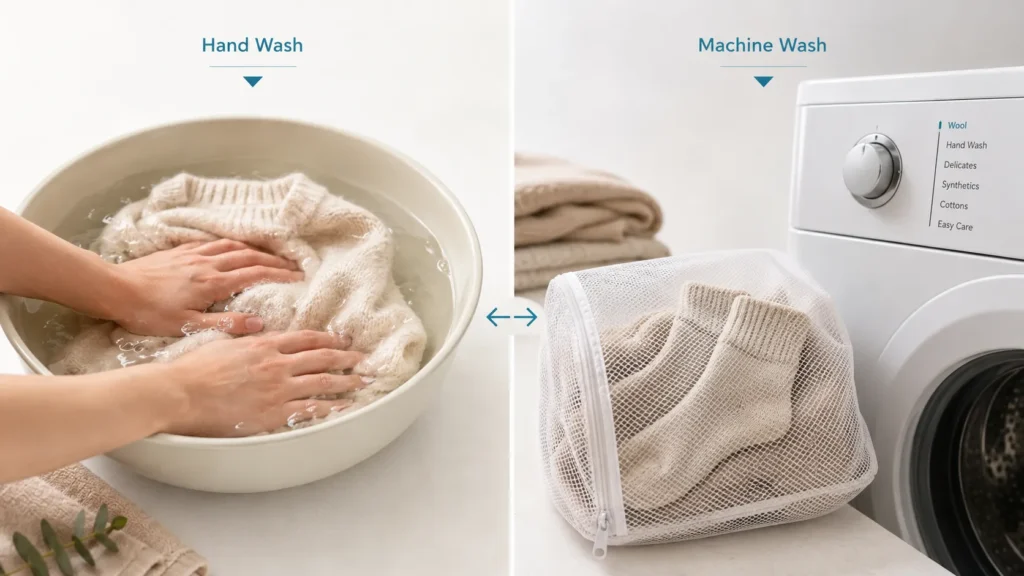
- Prepare the item: Turn it inside out and place delicate knits in a mesh laundry bag.
- Sort carefully: Wash with similar colors and lightweight fabrics.
- Avoid rough items: Keep wool away from towels, jeans, exposed zippers, and abrasive fasteners.
- Leave drum space: Do not overcrowd the washer.
- Remove promptly: Take the garment out as soon as the cycle ends and reshape it before drying.
Recommended Wool Washer Settings
| Setting | What to Choose |
|---|---|
| Cycle | Use the approved wool, hand-wash, or delicate cycle. |
| Temperature | Follow the temperature stated on the garment label. |
| Detergent | Use a small measured amount of mild wool detergent. |
| Load | Leave enough drum space for gentle movement. |
| Spin | Use the lowest setting allowed by the garment instructions. |
| After washing | Remove, support, and reshape the item promptly. |
Cycle names vary between washing machines. A program labeled “delicate” may use more movement or a faster spin than a dedicated wool cycle. Check the actual settings rather than relying only on the cycle name.
Avoid overcrowding the drum. A packed load may rinse poorly and increase pressure on the fabric.
When the cycle finishes, lift the item with both hands. Reshape it immediately before beginning the approved drying method.
How to Hand Wash Wool
Hand washing is suitable when the garment instructions allow it and the item needs gentler handling than a machine cycle.
- Prepare the water and detergent.
Fill a clean basin with the temperature stated on the label. Mix in a small amount of mild wool detergent. - Lower the item with full support.
Hold the garment with both hands so it does not stretch under its wet weight. - Clean with light pressure.
Press the water gently through the fabric. Avoid rubbing, scrubbing, twisting, or pulling. - Rinse carefully.
Drain the wash water and rinse according to the garment and detergent instructions. - Remove excess water.
Place the item on a clean towel and press or roll the towel gently. Never wring wool. - Reshape before drying.
Smooth the body, sleeves, cuffs, neckline, seams, and hem back into position.
Avoid long soaking unless the product instructions recommend it. Some dyes, trims, and loosely constructed knits may not respond well to extended soaking.
Best Detergent and Water Temperature for Wool
Use a mild, neutral detergent made or approved for wool, and measure it carefully. Using too much detergent can leave residue, make the fibers feel stiff, and require extra rinsing.
Follow the care label for water temperature. Many wool garments use cold or lukewarm water, while some machine-washable items allow a warmer controlled cycle. There is no universal cold-water or 30°C rule for all wool.
Avoid heavy-duty, bleach-containing, or enzyme detergents unless they are clearly labeled as wool-safe. Baby shampoo is not a dependable substitute because formulas vary. Fabric softener is also usually unnecessary unless both the garment and product instructions allow it.
Is Cold Water Always Best for Wool?
No single water temperature is correct for every wool item. Many garments use cold or lukewarm water, while some machine-washable products permit a warmer controlled cycle.
Follow the temperature stated on the label instead of applying one cold-water or 30°C rule to every item. Excess heat may increase the risk of shrinkage, felting, color change, or damage to linings and trims.
How to Dry Wool Without Stretching or Shrinking
Reshape wool while it is damp and follow the drying instructions on the care label. Heavy sweaters and knitwear are usually safest when dried flat.
- Remove excess water: Press the item between clean towels. Do not twist or wring it.
- Reshape while damp: Smooth the shoulders, sleeves, cuffs, neckline, seams, and hem back into position.
- Dry with support: Lay heavy knits flat on a clean surface with good airflow. Use a broad hanger only for woven garments that allow hanging.
- Avoid direct heat: Keep wool away from radiators, heaters, and strong sunlight. Turn the item when needed for even drying.
- Check the dryer label: Tumble dry only when permitted, using the approved wool, delicate, or low-heat setting.
Never hang a heavy wet sweater from its shoulders because the weight may stretch the body and sleeves. Let the item dry completely before wearing or storing wool clothes.
Washing Different Wool Items
he main washing rules stay the same, but construction and weight change the biggest risk. Wool sweaters need shoulder support, reshaping, and flat drying, while Merino clothing may follow different hand- or machine-wash instructions depending on the product label.
| Wool Item | Main Care Priority |
|---|---|
| Sweater | Support the shoulders, reshape the garment, and dry it flat. |
| Merino clothing | Follow the item’s specific hand-wash or machine-wash instructions. |
| Blanket | Check washer capacity and support the heavy wet fabric. |
| Socks and base layers | Reduce abrasion and protect cuffs and elastic areas. |
| Coat or suit | Protect the lining, padding, interfacing, and tailoring. |
| Pants or dress | Preserve the waistband, creases, lining, and overall structure. |
Large blankets can become extremely heavy when wet. Check washer capacity before washing a wool blanket, and make sure the wet fabric can be moved and dried with full support. Professional cleaning may be safer when the blanket does not fit comfortably in the washer.
Coats, suits, pants, and dresses often contain lining, interfacing, shoulder pads, or trims. These extra materials may make home washing unsuitable even when the outer fabric is wool.
Common Wool Washing Problems
| Problem | Likely Cause | First Step |
|---|---|---|
| Shrinkage | Excess heat, movement, or incorrect drying | Reshape gently while damp. Recovery may be limited. |
| Felting | Moisture and friction caused the fibers to lock | Stop forceful stretching to avoid further damage. |
| Stretching | Hanging or unsupported handling while wet | Reshape the item while damp and dry it flat. |
| Stiff texture | Detergent residue or too much product | Rinse again when the garment instructions allow it. |
| Pilling | Surface friction during wear or washing | Remove pills carefully and reduce future rubbing. |
| Musty odor | Incomplete drying or storage moisture | Dry the item fully and reassess the odor. |
| Color transfer | Light and dark colors were washed together | Separate similar colors during future washes. |
Shrinkage and felting are not the same. Shrinkage means the item has become smaller. Felting happens when wool fibers lock together, leaving the fabric denser, stiffer, and harder to reshape.
Mild distortion may improve through gentle damp reshaping. Heavily felted wool may not return to its original size, so avoid forceful stretching or guaranteed “unshrinking” treatments.
When Professional Cleaning Is Safer
Consider professional care for dry-clean-only items, tailored coats and suits, heavily lined clothing, leather or suede trims, large oil stains, serious dye transfer, vintage wool, or garments with structural damage.
Specialized cleaning cannot guarantee full restoration, but it may reduce the risk of making the stain, felting, or shape damage worse.
Final Takeaway
The safest way to wash wool is to follow the garment instructions, choose the correct hand or machine method, and use a small amount of mild wool detergent. Limit heat and friction, support wool while it is wet, reshape it before drying, and use professional care when the item’s structure or condition makes home washing risky.
