


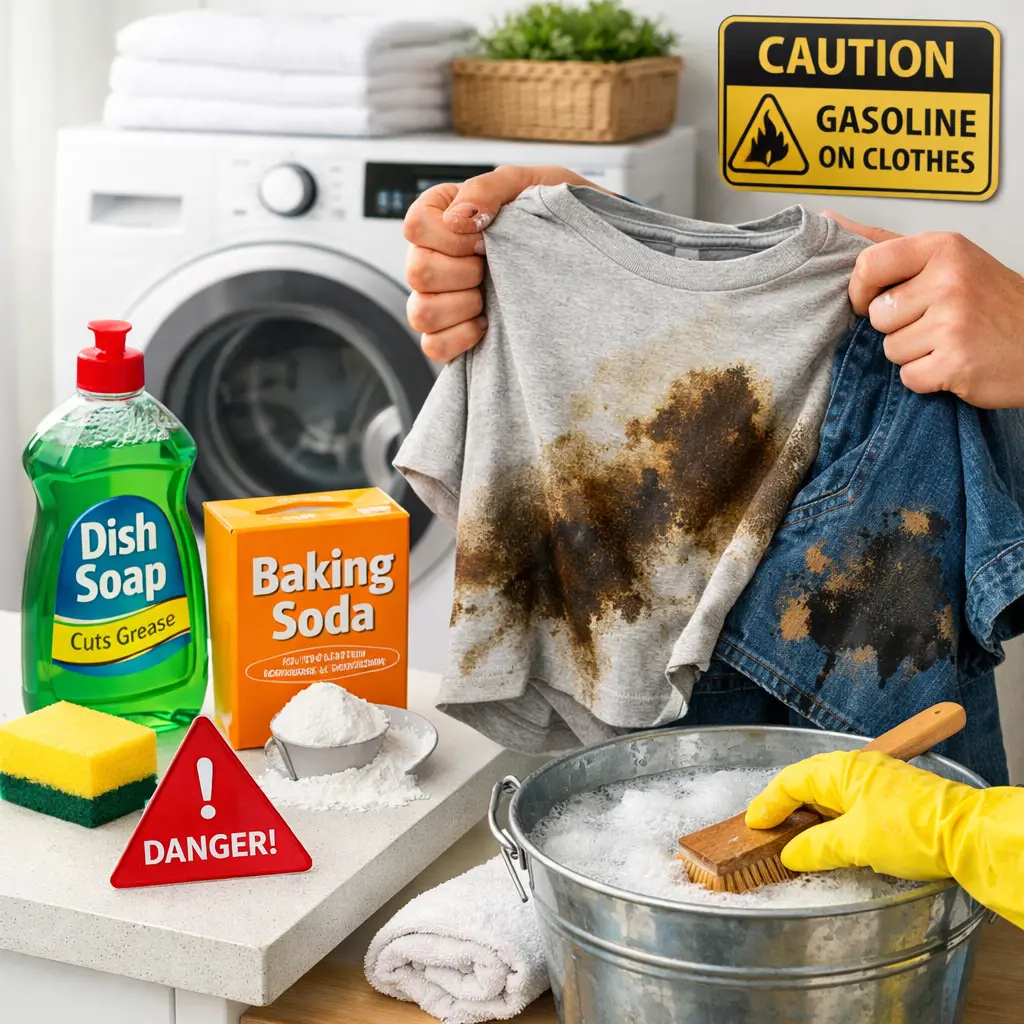
Gasoline smell on clothes is not like normal laundry odor. Gas is oil-based, strong, and flammable, so the safest fix is to remove excess fuel, air out the fabric, pretreat the oily residue, wash carefully, and avoid dryer heat until the smell is completely gone.
To get gasoline smell out of clothes, blot or absorb fresh fuel first, let the clothing air outdoors away from heat, pretreat the area with dish soap or a fabric-safe stain remover, soak if needed, then wash the item separately. A gas smell on clothes usually means fuel residue is still trapped somewhere in the fabric, especially in seams, pockets, cuffs, or waistbands.
Quick Takeaways
- Do not put gasoline-smelling clothes in the dryer.
- Keep fuel-exposed clothing away from heat, flames, sparks, and other laundry.
- Blot or absorb fresh gasoline before washing.
- Air the clothing outdoors before pretreating.
- For fresh spills, oily fabric, or strong odor, hand-wash or basin-treat first.
- Use the washing machine only when the item no longer feels wet, oily, or strongly fuel-scented.
- If the fabric still smells like gas after washing, repeat treatment before drying.
- Throw away clothing that stays oily, strongly fuel-scented, or damaged after repeated cleaning.
Safety First: When Gasoline on Clothes Is Dangerous
Gasoline residue can stay trapped in seams, waistbands, pockets, heavy cotton, denim, workwear, and synthetic fabrics. If the item still smells strongly of gas, it may still hold oily fuel residue.
Do not place gasoline-soaked clothing straight into a regular laundry load. First, move the item away from people, heat, flames, sparks, cigarettes, heaters, dryers, stoves, and indoor living areas. Handle it outdoors if possible.
A small splash is different from a saturated garment. If clothing is soaked with gasoline, still smells strongly after airing, or feels oily after blotting, disposal may be safer than home washing.
What to Do Right After Gas Spills on Clothes
Act quickly, but do not rush the item into the washer.
Remove the clothing if it is safe to do so. Keep it away from open flames, cigarettes, heaters, dryers, stoves, sparks, and other laundry. Place it in a ventilated outdoor area, not in a laundry basket with regular clothes.
Blot fresh gasoline with paper towels or an absorbent cloth. Do not rub hard because rubbing can push the fuel deeper into the fibers. For a larger spill, sprinkle baking soda, cornstarch, or cat litter over the area and let it sit for several hours to absorb oily residue.
Brush off the absorbent material outdoors before pretreating the fabric. Let gasoline-contaminated paper towels, rags, or absorbent powder air out safely away from heat or flames, then dispose of them according to local waste guidance. Do not leave them in a laundry basket, dryer area, or closed indoor bin while they still smell like fuel.
Can You Wash Clothes That Smell Like Gasoline?
You can wash lightly gasoline-exposed clothes only after excess fuel has been removed and the item no longer feels wet or oily. Do not wash gasoline-smelling clothes with regular laundry because the odor can transfer to other fabrics.
For fresh spills, strong odor, or oily fabric, hand-wash or basin-treat the item first. Use the washing machine only after the clothing has aired out, the oily feel is gone, and the fuel smell is much weaker.
Wash the item separately. Use the warmest water the care label allows and choose a detergent that can handle oily residue. If the smell is still strong before washing, air the clothing longer and pretreat again.
If gasoline smell keeps returning after washing, the problem may be trapped fuel residue, not weak detergent.
How to Get Gasoline Smell Out of Clothes
The safest process is to remove fuel from the fabric before normal washing. Regular detergent works better after the oily residue has been loosened.
Step 1: Absorb excess gasoline
If the spill is fresh, cover the affected area with baking soda, cornstarch, or cat litter. Let it sit for a few hours so it can pull out oily fuel.
Shake or brush the powder off outside. Do not do this near flames, heaters, dryers, or sparks.
Step 2: Air the clothing outdoors
Hang the item outdoors or place it in a shaded, ventilated area. Letting fumes air out first makes pretreatment safer and more effective.
Avoid direct dryer heat, indoor heat vents, and enclosed laundry rooms. Good airflow matters more than speed, especially when using air drying for odor-sensitive clothing.
Step 3: Pretreat the oily area
Apply a small amount of dish soap or fabric-safe stain remover to the affected area. Work it in gently with your fingers or a soft brush if the fabric is sturdy.
Let it sit for 10 to 15 minutes. Dish soap can help break down oily residue before detergent does the final cleaning.
Do not mix strong cleaning chemicals. Avoid bleach, and never mix bleach with ammonia or vinegar.
Step 4: Soak or hand-wash first

Fill a bucket or sink with warm water if the care label allows it. Add baking soda for odor absorption, then soak the garment for 30 minutes to several hours depending on the smell.
For strong odor, oily fabric, or a fresh spill, hand-wash the affected area in the basin before using a washing machine. This helps remove fuel residue before it reaches the washer.
For light odor, a small amount of white vinegar may help, but use it carefully on delicate fabrics, dark dyes, wool, silk, and specialty finishes.
If the gasoline smell is still strong, repeat the pretreating and soaking process before machine washing.
Step 5: Wash separately
Wash the garment by itself or with only other fuel-exposed items. Use the warmest water that is safe for the fabric.
Choose a heavy-duty detergent when the garment can handle it. For workwear, denim, cotton, and sturdy fabrics, this helps lift oily residue better than a mild wash. If the gasoline exposure overlaps with greasy residue, the same oil-removal logic used for oil smell in clothes can apply.
Step 6: Air dry and smell-test
Air dry the garment completely. Then smell the thickest areas, including seams, collars, cuffs, waistbands, and pockets.
If any gas smell remains, do not use the dryer. Repeat pretreating, soaking, and washing until the odor is gone.
Best Fix by Gas Smell Situation
Different gasoline odor problems need different levels of treatment. A light splash from refueling does not need the same approach as work clothes soaked from fuel handling.
Light gasoline smell
For light gas smell, air the item outdoors first. Pretreat the affected area with dish soap, soak briefly with baking soda, then wash separately.
Air dry and check the smell before putting the item back in your closet.
Strong gasoline spill
For a strong spill, absorb the fuel first and air the clothing longer. Do not rush straight to the washer.
Pretreat the oily area, soak or hand-wash the garment, and machine wash separately only after the item no longer feels wet or oily. If the odor remains strong after repeated treatment, throw the garment away.
Gasoline smell after washing
If clothes smell like gasoline after washing, fuel residue is still trapped in the fibers. Do not dry the item.
Air it out, pretreat the affected area again, soak with baking soda, and wash separately a second time. If the whole washer smells after the load, the odor may transfer to future laundry, which can make clothes smell after washing even when the next load was never exposed to fuel.
Gas smell in work clothes
Work clothes can hold fuel odor longer because denim, cotton duck, canvas, uniforms, and thick seams trap oily residue.
Treat the worst-smelling areas first, especially pockets, cuffs, knees, and waistbands. A second soak may be needed before the odor fully clears.
Petrol smell on clothes
Petrol smell and gasoline smell should be handled the same way. Air the fabric first, remove oily residue, wash separately, and avoid the dryer until the smell is completely gone.
If petrol odor is mixed with other solvent-like smells, the treatment may overlap with removing chemical smell from clothes, especially when the fabric has absorbed fumes.
Diesel-like fuel odor
Gasoline and diesel are not exactly the same. Diesel is heavier and oilier, so it can cling to fabric longer. If the odor feels more greasy, smoky, or heavy than sharp gasoline fumes, the cleaning process may need the stronger degreasing approach used for diesel smell on clothes.
Can You Put Gasoline-Smelling Clothes in the Dryer?

No. Do not put gasoline-smelling clothes in the dryer.
Dryer heat can make odor harder to remove, and fuel residue can create a safety risk. Even if the garment looks clean, the smell test matters. If you can smell gas in seams, waistbands, or pockets, the item is not ready for dryer heat.
Air dry first every time. Use the dryer only after the gasoline smell is fully gone.
What If the Gasoline Smell Still Remains?
If the smell remains after one wash, do not assume the garment is clean. Gasoline odor usually means some fuel residue is still present.
Repeat the process:
- Air the item outdoors again.
- Pretreat the affected area.
- Soak or hand-wash with baking soda.
- Wash separately only when the fabric no longer feels oily.
- Air dry and smell-test.
For stubborn odor, focus on thick areas of fabric. Seams, pockets, waistbands, cuffs, and layered fabric can hold residue longer than flat areas.
If the odor remains after several attempts, or the garment still feels oily, disposal may be safer than repeated home washing.
When to Throw Gasoline-Soaked Clothes Away
Some gasoline-exposed clothes are not worth saving. Throw the item away if it was heavily soaked, still feels oily, smells strongly after airing, smells strongly after repeated treatment, or shows fabric damage.
You should also discard the item if the odor keeps returning after washing and air drying. That usually means fuel residue is still trapped deep in the fabric.
For expensive, delicate, or dry-clean-only clothing, contact a professional cleaner and clearly explain that the garment was exposed to gasoline. Do not use a home dry-cleaning kit on gasoline-exposed clothing because those kits often involve dryer heat.
Should You Clean the Washer After Washing Gasoline Clothes?
If the washer smells like gasoline after washing fuel-exposed clothing, clean it before running normal laundry.
Run an empty hot cycle or tub-clean cycle if your washer allows it. Wipe the drum, door, gasket, and detergent drawer. Leave the washer door open so the inside can air out.
If odor or residue remains inside the machine, a deeper washing machine cleaning routine may be needed before washing everyday clothes again.
What Not to Do With Gasoline-Smelling Clothes
Do not put the item in the dryer while any gas smell remains.
Do not wash gasoline-exposed clothes with towels, bedding, kids’ clothes, or regular laundry.
Do not use bleach on gasoline residue.
Do not mix vinegar, ammonia, bleach, or other strong cleaners.
Do not use a home dry-cleaning kit on gasoline-exposed clothes.
Do not store gasoline-smelling clothes indoors while they are still giving off fumes.
Do not ignore odor in seams, pockets, or waistbands. These areas often hold residue after the main fabric seems clean.
How to Prevent Gasoline Smell on Clothes
Preventing gas smell is easier than removing it. Wear work clothing or an apron when handling fuel, lawn equipment, generators, motorcycles, or gas cans.
Change clothes as soon as possible after fuel exposure. Keep contaminated clothing separate from normal laundry. Treat small splashes early before odor spreads through the fabric.
Store gasoline containers away from laundry areas, closets, bedrooms, and indoor fabric storage. Even fumes can cling to clothing if garments sit near fuel containers.
Final Takeaway
Gasoline smell on clothes needs careful handling because fuel odor can mean oily, flammable residue is still trapped in the fabric. Absorb fresh gasoline, air the clothing outdoors, pretreat the oily area, soak or hand-wash if needed, wash separately only when the fabric no longer feels oily, and air dry before checking the smell. Do not use the dryer until the gas smell is completely gone. If the clothing stays oily, strongly scented, or damaged after repeated treatment, throwing it away is the safer choice.
Sources
- U.S. Consumer Product Safety Commission — Flammable Liquids Safety Alert
https://www.cpsc.gov/s3fs-public/5140.pdf - NFPA — Safety With Oily Rags Wet With Flammable or Combustible Liquid
https://www.nfpa.org/downloadable-resources/safety-tip-sheets/safety-with-oily-rags-wet-with-flammable-or-combustible-liquid - City of Spokane Fire Department — Prevent a Clothes Dryer Fire
https://my.spokanecity.org/news/stories/2015/02/03/prevent-a-clothes-dryer-fire/
