


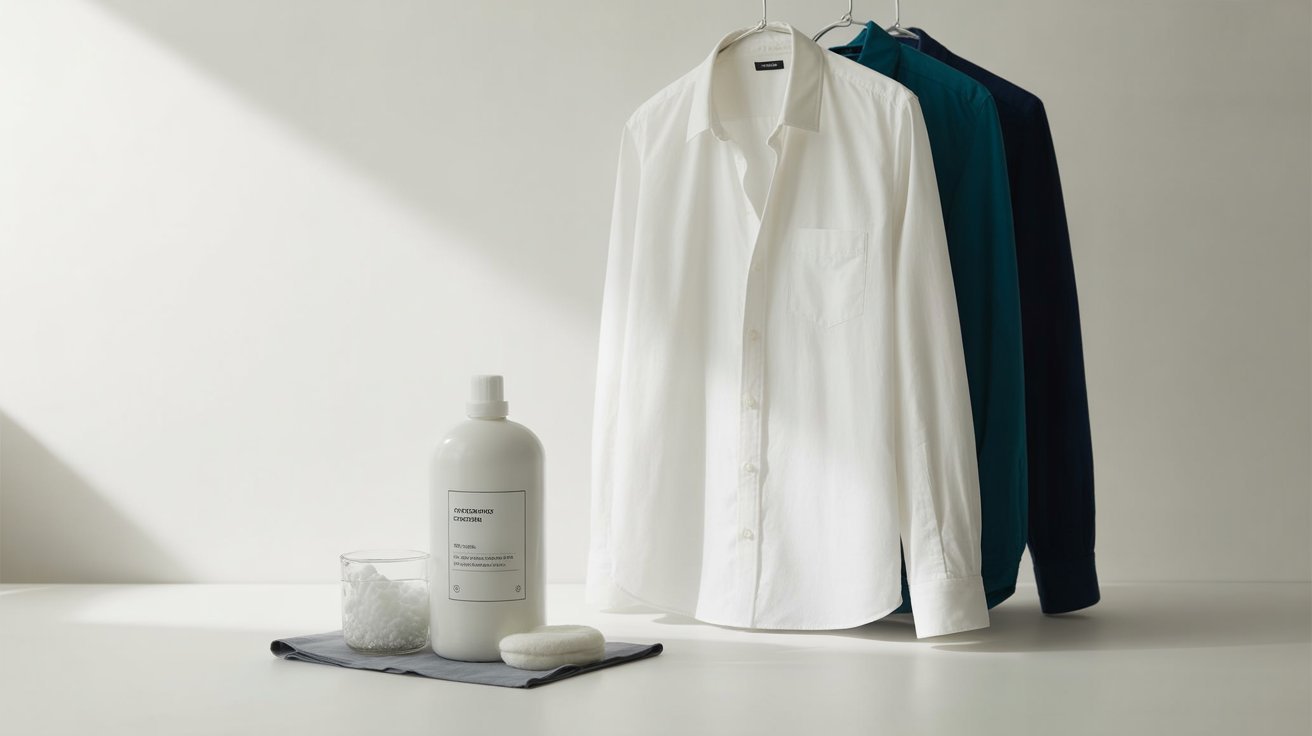
Blood is a protein-based stain, so the best laundry detergent for blood stains is usually an enzyme-based detergent, especially for dried or stubborn marks. This guide focuses on choosing the right detergent, not turning into a full stain-removal manual. You’ll learn which detergent type works best, what ingredients matter, when regular detergent may be enough, and when it makes sense to add a pretreater or oxygen booster.
Quick answer: For most washable fabrics, an enzyme-based liquid detergent is the most practical starting point for blood stains because it can be used for both pretreating and washing. For colors, delicates, or skin-contact items, choose a formula that also matches the fabric care label and sensitivity needs.
Before you wash: Always check the fabric care label first. Product directions and stain aids vary, and stronger formulas are not automatically safe for delicate or dyed fabrics. If you’re unsure, it helps to understand how to wash different fabrics. Do not machine-dry an item until the stain is fully gone.
What Laundry Detergent Works Best on Blood Stains?
For most washable fabrics, enzyme detergent is the best place to start because blood contains proteins, and enzyme detergents are designed to improve stain removal, especially at lower wash temperatures.
If you want one format that handles both spot treatment and regular washing, choose liquid detergent. Liquid formulas are easier to apply directly to the stained area before the wash, while powders are less convenient for direct pretreating and pods are less flexible when you need targeted treatment.
What to look for on the label
Look for these features:
- Enzymes or a stain-fighting formula
- Cold-water performance
- Liquid format if you want pretreating flexibility
- Color-safe wording for dyed fabrics
- Fragrance-free or sensitive-skin options for underwear, bedding, or close-contact fabrics
You do not need the bottle that looks like it bench-presses washing machines. You need the one that fits the stain and the fabric.
Why Blood Stains Need a Different Kind of Detergent
Blood stains behave differently because blood contains protein, and protein stains respond better to enzyme-supported cleaning than many ordinary wash soils do.
That matters because heat can make blood harder to remove. That is why cold water comes first and why drying too soon can make the stain more stubborn.
Why enzyme detergents help
Enzyme detergents improve stain-removal performance. For blood stains, that generally makes an enzyme detergent a better starting point than a plain general-use detergent, especially if the stain has already dried.
Why heat makes things worse
If you wash or dry the item with heat too soon, the stain can become harder to lift. That is why cold water and inspection before drying are such useful laundry rules.
Best Detergent Type by Situation
The best detergent depends on stain age, fabric type, and whether you need pretreatment. Use this table as your fast decision guide.
| Situation | Best detergent | Format | Add support? | Avoid |
|---|---|---|---|---|
| Fresh blood | Enzyme | Liquid | If stain remains | Hot water |
| Dried blood | Enzyme | Liquid / powder | Soak first | Dryer heat |
| Set-in stain | Enzyme | Liquid | Booster | Hard scrubbing |
| White bedding | Enzyme | Liquid / powder | Oxygen booster | Harsh bleach |
| Colored clothes | Color-safe enzyme | Liquid | Gentle pretreater | Peroxide misuse |
| Delicates | Mild detergent | Liquid | Gentle only | Rubbing |
If you want the simplest rule, pick enzyme detergent first, then adjust for the fabric and how long the stain has been sitting.
Best for fresh blood
A liquid enzyme detergent is usually the easiest choice because you can apply a small amount directly before washing.
Best for dried blood
For dried blood, enzyme detergent still makes sense, but it often needs more contact time than a quick wash gives. That is where soaking or a pretreater becomes more useful.
Best for set-in stains
For set-in stains, detergent alone is less likely to solve the whole problem in one go. An enzyme detergent is still the best foundation, but you may need added stain support if the care label allows it.
Best for whites, colors, and delicates
For whites, you may have more flexibility with boosters if the care label allows it. For colors, choose a color-safe detergent. For delicates, prioritize fabric safety over maximum stain aggression.
Liquid vs Powder vs Pods: Which Is Best for Blood Stains?
Liquid detergent is usually the most versatile option for blood stains because it works for both pretreating and washing. Powder can still help in the wash cycle, but pods are usually the least flexible when direct spot treatment is needed.
| Tool | Best For | Use With Caution On |
|---|---|---|
| Fabric shaver | Larger pilled areas on sturdy sweaters and fleece | Very delicate or loose knits |
| Cashmere comb | Softer, finer knitwear | Overworking fragile surfaces |
| Sweater stone | Some heavier textured knits | Fine or delicate fabrics |
| Lint roller | Loose fuzz and lint cleanup | Deep attached pills |
| Razor | Last-resort pill removal | Most fabrics, especially delicate garments |
Liquid detergent
Choose liquid when you want one product that can do both jobs: pretreat and wash.
Powder detergent
Choose powder when you mainly want wash-cycle support and do not expect to spot-treat often.
Pods
Choose pods for convenience, not for precision. They are fine for normal laundry, but when a stain needs direct attention, they are simply less practical.
Enzyme Detergent vs Regular Detergent
Enzyme detergent is usually the better choice for blood stains, especially when the stain is dried, darker, larger, or already partly set into the fibers.
When regular detergent may be enough
Regular detergent may be enough when:
- the stain is fresh
- the stain is small
- you can rinse and wash it quickly
- the fabric is easy to wash
When enzyme detergent is the better choice
Choose enzyme detergent when:
- the stain has dried
- the item sat for a while before washing
- the fabric is thicker, like denim or bedding
- you already washed once and the stain stayed behind
When the difference matters most
The benefit of enzyme detergent matters most when the stain is not brand new. Once time, drying, or repeated washing enters the picture, a detergent built for stronger stain removal becomes more useful.
What to Look for When Buying a Laundry Detergent for Blood Stains
The best choice is not always the strongest-looking label. It is the detergent that fits the stain type, water temperature, and fabric.
Look for
- Enzymes for protein-based stain support
- Cold-water effectiveness
- Liquid format if you want to pretreat
- Color-safe formula for dyed fabrics
- Fragrance-free options for sensitive skin or close-contact laundry
Avoid assuming
- more perfume means stronger cleaning
- more detergent means better stain removal
- pods are the best answer for every stain
- whitening claims are automatically safe for colors
That last one causes a surprising amount of laundry regret.
Do You Need a Stain Remover, Oxygen Booster, or Just Detergent?
For many fresh, washable blood stains, detergent alone may be enough. For older or more stubborn stains, a pretreater or oxygen booster can improve your odds, as long as the product instructions and care label allow it.
Liquid detergent
Choose liquid when you want one product that can do both jobs: pretreat and wash.
Powder detergent
Choose powder when you mainly want wash-cycle support and do not expect to spot-treat often.
Pods
Choose pods for convenience, not for precision. They are fine for normal laundry, but when a stain needs direct attention, they are simply less practical.
Enzyme Detergent vs Regular Detergent
Enzyme detergent is usually the better choice for blood stains, especially when the stain is dried, darker, larger, or already partly set into the fibers.
When regular detergent may be enough
Regular detergent may be enough when:
- the stain is fresh
- the stain is small
- you can rinse and wash it quickly
- the fabric is easy to wash
When enzyme detergent is the better choice
Choose enzyme detergent when:
- the stain has dried
- the item sat for a while before washing
- the fabric is thicker, like denim or bedding
- you already washed once and the stain stayed behind
When the difference matters most
The benefit of enzyme detergent matters most when the stain is not brand new. Once time, drying, or repeated washing enters the picture, a detergent built for stronger stain removal becomes more useful.
What to Look for When Buying a Laundry Detergent for Blood Stains
The best choice is not always the strongest-looking label. It is the detergent that fits the stain type, water temperature, and fabric.
Look for
- Enzymes for protein-based stain support
- Cold-water effectiveness
- Liquid format if you want to pretreat
- Color-safe formula for dyed fabrics
- Fragrance-free options for sensitive skin or close-contact laundry
Avoid assuming
- more perfume means stronger cleaning
- more detergent means better stain removal
- pods are the best answer for every stain
- whitening claims are automatically safe for colors
That last one causes a surprising amount of laundry regret.
Do You Need a Stain Remover, Oxygen Booster, or Just Detergent?
For many fresh, washable blood stains, detergent alone may be enough. For older or more stubborn stains, a pretreater or oxygen booster can improve your odds, as long as the product instructions and care label allow it.
Detergent alone
Use detergent alone when the stain is fresh and you can act quickly.
Pretreater
Add a pretreater when the stain is still visible after rinsing or has already dried.
Oxygen booster
Add an oxygen booster when the stain is stubborn and the care label allows it, especially on whites or sturdier washable fabrics.
Safety note
Always follow the product label and fabric care label before combining stain products. Stronger is not always smarter.
How to Use Detergent Correctly Before Washing
Use detergent lightly and directly. The goal is to help the stain loosen before washing, not to drown the garment in soap.
Quick method
- Rinse the stained area with cold water
- Apply a small amount of liquid detergent
- Let it sit briefly according to the label
- Wash and inspect before using heat
This article is about choosing detergent, so the how-to stays short. For the full removal process, link this page internally to your broader blood-stain guide.
What to avoid
- hot water at the start
- too much detergent
- scrubbing delicate fabric hard
- drying the item before the stain is gone
Best Detergent Features for Different Laundry Needs
Different laundry needs call for slightly different detergent features.
Best for everyday clothes
Choose a liquid enzyme detergent for flexibility and easy pretreating.
Best for sheets and bedding
Choose a detergent with cold-water performance and solid general wash support. Bedding often means larger stained areas and more wash volume.
Best for underwear and skin-contact fabrics
Choose a detergent that balances stain support with skin comfort, especially if you wash underwear, period stains, or sleepwear often.
Best for denim and thicker fabrics
Choose a detergent with stronger stain-removal support, since thicker fabrics can hold onto dried residue more stubbornly.
Best for delicate fabrics
Choose a fabric-safe detergent first. If the label is restrictive, follow it. A saved delicate item is better than a heroic cleaning experiment.
Common Detergent Mistakes on Blood Stains
Most failures come from using the right product the wrong way.
Avoid these mistakes
- Using pods when the stain really needs direct pretreating
- Using too much detergent, which can make rinsing harder
- Choosing harsh whitening formulas for colored fabrics
- Ignoring care labels on delicates
- Assuming every stain aid is fabric-safe
- Using heat too soon
A stain problem does not always need more product. Sometimes it needs a better-matched product.
What If You Only Have Regular Laundry Detergent at Home?
Yes, you can still use it. For a fresh stain, quick action with regular detergent may work better than waiting to buy something more specialized.
Use it when:
- the stain is fresh
- the item is washable
- you can rinse and wash it right away
If the stain remains after the first wash, the problem is usually not that you failed morally. It is usually that the stain needs a more suitable formula, especially an enzyme detergent or a targeted pretreater.
Quick Checklist: Choosing the Best Laundry Detergent for Blood Stains
Use this buying checklist if you want the fast version:
- Choose an enzyme detergent for protein-based stains
- Prefer liquid detergent if you want to pretreat
- Check for cold-water performance
- Use color-safe formulas for dyed fabrics
- Choose fragrance-free options for sensitive skin if needed
- Add a pretreater or oxygen booster only when detergent alone is not enough
- Do not assume pods are enough for stubborn blood stains
FAQs About Laundry Detergent for Blood Stains
What is the best laundry detergent for blood stains?
For most washable fabrics, an enzyme-based detergent is the best starting point. A liquid enzyme detergent is often the most practical choice because it can be used for both pretreating and washing.
Do enzyme detergents remove dried blood?
They can help more than regular detergent, especially on older stains. Dried blood often still needs more time or an added pretreater.
Can regular detergent remove blood stains?
Sometimes, yes—especially when the stain is fresh and you can wash it quickly. It is usually less effective on older or set-in blood than an enzyme detergent.
Are pods good for blood stains?
They can help in normal washing, but they are less useful when you need direct pretreatment on one stained area.
Is liquid detergent better than powder for blood stains?
Usually, yes, if you want to pretreat the spot directly before washing. Powder can still help in the wash cycle, but it is less convenient for targeted application.
What ingredients should I look for in a detergent for blood stains?
Look for enzymes, plus features like cold-water performance and color-safe labeling when needed. For close-contact fabrics, a fragrance-free option may be more comfortable.
Is fragrance-free detergent still effective on blood stains?
Yes. Fragrance and cleaning performance are not the same thing. A fragrance-free detergent can still clean well if it has the right stain-removal ingredients.
Is oxygen bleach the same as chlorine bleach?
No. They are different products and are not interchangeable. Always follow the product label and the fabric care label before using either one.
What type of detergent is best for blood stains on sheets?
A detergent with enzyme stain support and cold-water performance is usually a good choice for sheets, especially if the stain is more than a tiny spot. If the care label allows it, an oxygen booster may help with tougher stains.
Final Takeaway
The best laundry detergent for blood stains is usually an enzyme-based detergent, with liquid enzyme detergent being the most practical format for most washable fabrics. Choose the formula based on the stain age, fabric type, and whether you need pretreatment—not on how dramatic the packaging looks.
If you want the simplest decision rule, use this: enzyme first, cold water first, care label first. Laundry is not always glamorous, but a good detergent choice solves more than half the problem before the wash even starts.
References
- American Cleaning Institute — Enzymes fact sheet
- American Cleaning Institute — Laundry basics and stain-removal guidance
- BASF Care Chemicals — Consumer guide to detergent enzymes
