

You pick up a dress. The tag says “100% rayon fabric.”
But what does that actually mean? Is it natural? Is it safe? Will it shrink in the wash?
Most people don’t know the answers. This guide covers everything — what rayon fabric is, how it is made, all the different types, and how to care for it the right way.
Let’s start from the beginning.
What Is Rayon Fabric?
Rayon fabric is a soft, lightweight fabric made from plant cellulose. Cellulose is the structural material found inside plant cell walls. Most rayon comes from wood pulp.
Here is the key point: rayon starts as a natural material. But it goes through heavy chemical processing to become a fabric. So it is not fully natural. It is also not fully synthetic. It falls in the middle — a semi-synthetic fiber.
Scientists and the textile industry call it a regenerated cellulosic fiber. The natural cellulose is dissolved and then regenerated into new fibers.
Is rayon natural or synthetic?
Rayon is neither fully natural nor fully synthetic.
Natural fibers like cotton, wool, and silk come directly from plants or animals with minimal processing. Synthetic fibers like polyester and nylon are made entirely from petroleum-based chemicals.
Rayon sits between them. It starts from nature (wood pulp or bamboo) but needs strong chemicals to become a weavable fiber. This is why it belongs in its own category.
Rayon vs viscose — are they the same thing?
Yes, most of the time.
Viscose is the most common manufacturing process used to make rayon. So when a label says “viscose,” it almost always means rayon. However, modal and lyocell are also types of rayon but use different methods. “Viscose” and “rayon” are often used interchangeably, but technically viscose is one type within the rayon family.
A Short History of Rayon Fabric
Rayon has been around for over 150 years.
In 1855, Swiss chemist Georges Audemars first patented an artificial cellulose fiber. In the early 1900s, rayon became popular as a cheaper alternative to silk and was widely called “artificial silk.” The name “rayon” was officially adopted in the United States around 1924.
Over the decades, manufacturers improved the process. New types emerged — viscose first, then modal, then lyocell. Each version became stronger, softer, or more eco-friendly.
Today, rayon is the third most-used textile fiber in the world, after polyester and cotton.
How Is Rayon Fabric Made?
Understanding how rayon is made helps explain why it behaves the way it does. Here is the step-by-step process for the most common type — viscose rayon:
Step 1: Harvest the wood pulp. Manufacturers start with wood from beech, pine, bamboo, or eucalyptus trees. The wood breaks down into a soft pulp.
Step 2: Dissolve the pulp. The pulp mixes with sodium hydroxide (caustic soda), turning it into alkali cellulose a thick, paste-like substance.
Step 3: Form xanthate. The alkali cellulose is then treated with carbon disulfide, creating a compound called cellulose xanthate.
Step 4: Create the viscose liquid. The cellulose xanthate dissolves in a second sodium hydroxide solution. This creates the thick, syrupy liquid known as “viscose.”
Step 5: Spin the fibers. The viscose liquid is forced through tiny holes in a device called a spinneret — similar to a showerhead. The streams harden in a sulfuric acid bath and form solid fibers.
Step 6: Weave into fabric. The fibers are spun into yarn, then woven or knitted into rayon fabric.
Why the chemicals matter
The main concern in viscose production is carbon disulfide (CS₂). It is highly toxic. In traditional factories, a large portion of this chemical is released into the air and water.
Newer types of rayon — like lyocell — use safer, closed-loop processes that capture and recycle these chemicals instead of releasing them.
Types of Rayon Fabric By Fiber
Not all rayon is the same. There are several distinct fiber types, each with different properties and uses.
1. Viscose rayon
Viscose is the most common type of rayon. It is soft, smooth, and has a silk-like shine. It drapes beautifully and is affordable. However, viscose loses up to 50% of its strength when wet, making it prone to stretching, shrinking, or distorting during washing.
Best for: dresses, blouses, linings, and scarves.
2. Modal
Modal is made from beech tree pulp. It is stronger than viscose — especially when wet — and stays softer after repeated washes. It is often blended with cotton or spandex and is commonly found in underwear, pajamas, and athletic wear. Modal costs more than viscose but lasts significantly longer.
3. Lyocell (TENCEL™)
Lyocell is the most environmentally friendly type of rayon. It is made in a closed-loop process where chemicals are captured and reused — not released into the environment. TENCEL™ is the most recognized brand name. It is strong, absorbent, breathable, and very soft against the skin.
Best for: activewear, bed sheets, and premium clothing.
4. Bamboo rayon
Bamboo rayon uses bamboo plant pulp as its raw material. Bamboo grows fast and needs no pesticides, making the source sustainable. However, most bamboo fabric is still processed using the viscose method so the eco-friendly raw material does not automatically mean eco-friendly production. Look for bamboo lyocell if sustainability matters to you.
5. Cuprammonium rayon
This less common type uses copper and ammonia to dissolve cellulose, producing a very fine, sheer fabric. It is typically used for luxury garment linings.
6. High wet modulus (HWM) rayon
HWM rayon is a stronger version of viscose, developed specifically to address its low wet strength. It can be machine washed more safely than standard viscose.
Types of Rayon Fabric — By Weave and Construction
The fiber type tells you what the fabric is made of. The weave type tells you how it is constructed. Both affect how the fabric looks, feels, and behaves.
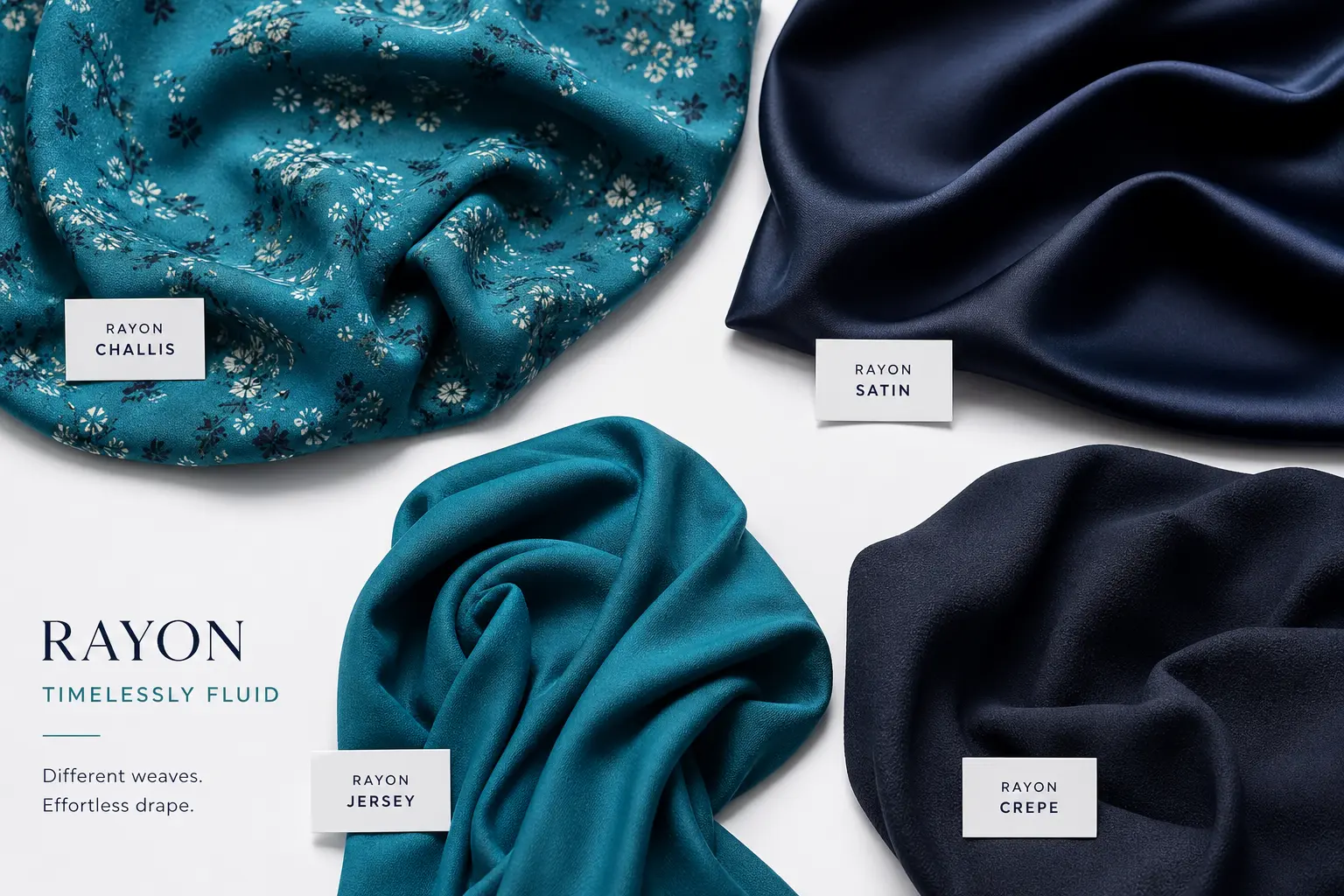
Rayon challis
Rayon challis is a plain weave fabric. It is lightweight, very soft, and has a matte finish — unlike the shinier look of regular viscose. It is one of the most popular rayon types for sewing, and many floral and printed patterns use it as a base. It shrinks easily, so always pre-wash before cutting.
Best for: flowy dresses, skirts, scarves, and baby clothing.
Rayon crepe
Rayon crepe has a crinkled or pebbly texture, created by twisting the yarn tightly during weaving. It is slightly thicker than challis and holds its shape a bit better.
Best for: blouses, trousers, and wrap dresses.
Rayon jersey
Rayon jersey is a knit fabric — not a woven one. This gives it natural stretch. It is comfortable, breathable, and moves well with the body. Because it is a knit, it can stretch out of shape if washed carelessly.
Best for: t-shirts, casual dresses, and loungewear.
Rayon velvet
Rayon velvet has a soft pile — the tiny upright fibers that give velvet its signature feel. It looks luxurious and has a rich sheen. The pile can flatten permanently with pressure or heat. Always store rayon velvet hanging, not folded. Never iron directly — use a steamer at a distance. If the pile gets crushed, hold it over steam and gently brush the fibers back with a soft brush.
Best for: evening wear, decorative pillows, and jackets.
Rayon satin
Rayon satin has a smooth, glossy surface on one side and a matte finish on the other. It drapes beautifully but can be slippery to sew. Avoid wringing or using hot water when washing it.
Best for: lingerie, evening gowns, and linings.
Crinkle rayon
Crinkle rayon has a permanent wrinkled texture built in during manufacturing. The crinkle does not wash out — in fact, washing often enhances it. This makes crinkle rayon one of the easiest rayon types to care for since it needs no ironing.
Best for: bohemian tops, beach cover-ups, and relaxed dresses.
Printed, Hawaiian, and batik rayon
These are rayon fabrics — usually challis or crepe — printed with patterns using complex, multi-color dye processes. Darker and more complex prints are more prone to color bleeding. Always wash printed rayon in cold water, separately, for the first two or three washes. Test colorfastness first by pressing a damp corner against a white cloth — if color transfers, always wash it separately.
Rayon Fabric Properties and Characteristics
Is rayon breathable?
Yes. Rayon is one of the most breathable fabrics available. It allows air to flow through easily, helping your body regulate temperature. It also wicks moisture away from the skin.
Is rayon absorbent?
Very. Rayon absorbs moisture better than cotton and much better than polyester. But high absorbency has a downside — rayon soaks up water quickly during washing, which leads to shrinkage and fiber weakness.
Does rayon drape well?
Yes — this is one of rayon’s best qualities. Its smooth, flexible fibers allow the fabric to hang and flow in a way similar to silk. This is why fashion designers use it widely for dresses and skirts.
Is rayon stretchy?
Pure rayon has very little natural stretch. However, rayon blended with spandex or lycra will stretch significantly. If a rayon garment claims to have good stretch, the label almost certainly shows spandex in the fiber content.
Rayon’s wet strength problem
When rayon gets wet, it loses up to 50% of its tensile strength. A wet rayon fiber is much weaker than a dry one — it can stretch, deform, and tear more easily. This is why agitation in hot water causes so much damage and why rayon shrinks.
How rayon handles color
Rayon absorbs dye exceptionally well. Colors stay vivid and prints look sharp. However, this same absorbency means rayon can bleed dye when washed — especially dark colors on the first wash.
Rayon GSM guide
GSM stands for grams per square meter. It measures fabric weight.
| GSM Range | Feel | Best Use |
|---|---|---|
| 90–140 gsm | Very light, sheer | Scarves, flowy dresses |
| 140–180 gsm | Medium weight | Blouses, shirts, skirts |
| 180–250 gsm | Heavier | Trousers, structured pieces |
Rayon Fabric Blends how Mixing Changes Everything
Rayon is often blended with other fibers to strengthen its weaknesses. Here is how the most common blends change the fabric:
Rayon + cotton blend
Cotton adds durability and structure. Rayon adds softness, drape, and breathability. A 50/50 cotton-rayon blend is stronger than pure rayon and easier to wash. Care: Cold water, gentle cycle, air dry.
Rayon + spandex / lycra
Spandex adds stretch and helps the garment recover its shape after washing — something pure rayon cannot do. This blend is common in activewear and form-fitting dresses. Care: Never tumble dry. Heat degrades spandex fibers over time.
Rayon + polyester
Polyester adds durability and wrinkle resistance but reduces breathability. Common in workwear and formalwear. Care: Cold or cool water still needed — the rayon in the blend remains heat-sensitive.
Rayon + linen blend
Linen adds structure and natural texture. Rayon softens linen’s stiffness and adds drape. Popular in summer clothing. Care: Hand wash or gentle cycle. Lay flat to dry.
Rayon + nylon
Nylon adds strength and abrasion resistance. The rayon keeps the fabric soft; the nylon makes it more durable. Used in activewear and cover-ups.
Rayon + silk
This blend has the drape of silk at a lower price. However, both fibers are delicate when wet. Care: Dry clean only in most cases.
Rayon vs Other Fabrics
Rayon vs cotton
Verdict: Cotton is more durable and easier to care for. Rayon is softer, drapier, and has a more luxurious look.
Rayon vs polyester
Verdict: Rayon breathes far better. Polyester is more durable and easier to maintain.
If you want a deeper breakdown of how rayon compares to other materials like cotton, polyester, and linen, check out this complete guide to different fabric types.
Rayon vs silk
Rayon was invented to mimic silk. Silk is stronger, naturally temperature-regulating, and more breathable. It also costs significantly more. Rayon delivers a similar look and hand feel at a much lower price point — but silk handles washing better and is less prone to shrinkage.
Is Rayon Good for Skin?
Most people can wear rayon without any issues. It is breathable and soft, and it does not trap heat the way polyester does.
New rayon vs washed rayon
New rayon garments may contain trace finishing chemicals from the manufacturing process. Washing before the first wear removes most of these surface residues. This is especially important for people with sensitive skin.
Rayon for eczema and sensitive skin
Some people with sensitive skin report mild irritation from rayon. This is usually caused by finishing chemicals — not the rayon fiber itself. Choose rayon with OEKO-TEX Standard 100 certification if you have sensitive skin. Within the rayon family, modal and lyocell are the gentler options.
What OEKO-TEX Standard 100 means
OEKO-TEX Standard 100 certification means a garment has been tested for over 100 harmful substances — including pesticide residues, heavy metals, and formaldehyde. Look for this label especially when buying rayon for children or items worn directly against skin.
Is Rayon Toxic?
The answer depends on who you are asking about — the wearer or the factory worker.
For the person wearing rayon
For most wearers, rayon is safe. The chemicals used in manufacturing — especially carbon disulfide — are largely removed during spinning and finishing. The finished fabric does not release these chemicals in meaningful amounts under normal conditions.
However, some concerns remain:
- Formaldehyde finishes: Some manufacturers apply formaldehyde-based finishes to make rayon wrinkle-resistant. These can irritate sensitive individuals.
- Residual chemicals on new fabric: Washing before first wear reduces this risk.
- Microfiber shedding: Rayon can shed microscopic fibers during washing that enter the water supply. Research on the health impact is still ongoing.
For factory workers
The risks are much more serious in manufacturing facilities. Carbon disulfide is neurotoxic. Prolonged exposure can cause nerve damage, heart disease, stroke, and serious neurological conditions. This is a key reason why no viscose rayon is manufactured in the United States — the process does not meet EPA safety standards.
Safer alternatives
- Lyocell / TENCEL™ — non-toxic, closed-loop solvents
- ECOVERO™ — certified low-impact viscose from Lenzing
- Certified modal — from FSC-certified beech forests
Rayon Sustainability and Environmental Impact
Is rayon eco-friendly? The honest answer: it depends on the type.
The problem with conventional viscose rayon
Traditional viscose rayon scores poorly on sustainability. It often comes from ancient and endangered forests, contributing to deforestation and biodiversity loss. The production process also uses large amounts of water and energy, and chemical waste can pollute local water systems if not managed properly.
The 2025 sustainability picture
Things are improving. According to the 2025 Canopy Hot Button Report, 70% of man-made cellulosic fiber producers now hold green or dark green ratings, meaning most major producers have eliminated ancient forest sourcing. Recycled rayon is also growing, though it still makes up only about 1.1% of total production.
Is rayon biodegradable?
Yes — under the right conditions. Rayon is made from cellulose, a natural compound that breaks down with warmth, moisture, and microbial activity. This gives it an advantage over polyester. However, if a rayon garment contains chemical finishes or synthetic dyes, those components may not break down safely. Do not compost rayon garments unless you know they are chemical-free.
Certifications to look for
How to Wash Rayon Fabric — Step-by-Step Guide
Why rayon shrinks — the fiber mechanism
Rayon is made of regenerated cellulose fibers with an open, absorbent structure. When they absorb water, they swell and weaken. When heat or agitation is added, the contracted fibers lock into a shorter, tighter position. That is shrinkage — and once it happens, it is very hard to reverse.
The higher the temperature and the more agitation, the worse the result. Cold water still causes some swelling, which is why gentle handling matters every time.
Does rayon shrink every time you wash it?
Not if you wash it correctly. Shrinkage is most dramatic on the first wash and whenever heat is involved. With cold water, gentle washing, and air drying, shrinkage is minimal over repeated washes.
Highest risk factors:
- Hot or warm water
- Normal or heavy machine cycle
- Tumble drying
- Wringing or twisting the wet fabric
Step 1 — Check the care label
Always start here. “Dry clean only” usually means untreated viscose that cannot handle water without distorting. Do not machine wash these at home. If the label says “hand wash” or “machine wash gentle,” proceed below.
Step 2 — Pre-treat stains
Apply a small amount of mild liquid detergent to the stain. Dab gently with a clean cloth — never rub. Let it sit 5–10 minutes, then rinse with cold water. Never use chlorine bleach on rayon. It weakens fibers and causes discoloration.
Step 3 — Wash correctly
Hand washing (recommended):
- Fill a basin with cold or lukewarm water.
- Add a small amount of mild detergent for delicates.
- Submerge the garment and gently swish — do not scrub or wring.
- Soak no more than 10–15 minutes.
- Rinse thoroughly in cold water until soap is gone.
- Press out excess water gently — do not wring.
Machine washing (only if the label allows):
- Turn the garment inside out.
- Place in a mesh laundry bag.
- Select the delicate or hand-wash cycle, cold water only.
- Use a mild detergent for delicates.
- Remove immediately when the cycle ends.
Step 4 — Water quality matters
Hard water (high mineral content) prevents detergent from rinsing out fully. Over time, mineral and detergent residue makes rayon feel stiff and contributes to musty odor. If you have hard water, add half a cup of white vinegar to the final rinse. Soft water requires less detergent — too much leaves residue regardless of water hardness.
Step 5 — Dry rayon correctly
Never put rayon in a tumble dryer. Even a low-heat setting causes rapid fiber contraction — permanent shrinkage.
Instead:
- Lay the garment flat on a clean dry towel.
- Reshape gently while still damp.
- Air dry away from direct sunlight — UV light fades rayon colors.
- If hanging, use a padded hanger, never wire.
Step 6 — Iron and steam safely
- Iron while still slightly damp, on low to medium heat.
- Always iron on the reverse side (inside out).
- Use a pressing cloth for extra protection.
- A garment steamer is safer than a direct iron — hold it at a small distance from the fabric.
Stain removal by stain type
Always dab, never rub. Rubbing spreads the stain and damages rayon fibers.
How to unshrink rayon
Mild shrinkage can sometimes be reversed. Here is how:
- Fill a basin with lukewarm water.
- Add 1 tablespoon of hair conditioner or baby shampoo. The conditioner relaxes the fibers.
- Submerge the garment and soak for 30 minutes.
- Do not rinse. Press out excess water gently with a towel.
- Lay flat and stretch the garment back toward its original shape by hand while damp.
- Pin the edges to hold the shape and air dry completely.
This works best on challis, jersey, and crepe. It is less effective on velvet and satin.
Rayon Odor — Why It Happens and How to Fix It
Why rayon traps body odor
Rayon is highly absorbent — one of its strengths for breathability. But it also absorbs sweat and the organic compounds bacteria produce on your skin. Because rayon fibers have an open, porous structure, odor compounds bind deep inside the fiber, not just on the surface. A quick rinse often does not fully remove the smell.
Musty smell after washing
Musty odor usually comes from one of three causes:
- Residual detergent — too much used and not fully rinsed out; trapped detergent feeds bacteria during drying.
- Slow drying — rayon that stays damp too long develops mildew.
- Hard water mineral buildup — mineral deposits create a surface for bacteria.
How to fix it: Rewash in cold water with no detergent. Add half a cup of white vinegar (a natural antimicrobial that also removes mineral buildup). Rinse thoroughly. Dry quickly in a well-ventilated spot or with a fan running.
To prevent odor in storage: Make sure rayon is completely dry before storing. Store in a cool, dry, ventilated space. Avoid plastic bags — use breathable cotton garment bags instead.
Does rayon smell more than cotton or polyester?
Rayon absorbs more odor than polyester (which repels moisture) but releases it more easily in water. Compared to cotton, rayon holds odor at a similar level. However, because rayon dries more slowly, it has a higher risk of developing musty smell if not dried promptly.
Fabric Dye for Rayon — What Works
Rayon takes dye exceptionally well because it is made from cellulose — the same base as cotton and linen. Cellulose fibers have a strong chemical affinity for dye molecules, so color bonds deeply and lasts a long time.
What type of dye to use
Fiber reactive dyes (like Procion MX) are the best choice. They form a permanent chemical bond with cellulose fibers, producing bright, colorfast results.
All-purpose dyes (like Rit All-Purpose) also work but produce slightly less vivid, less colorfast color. Easier to find and good for beginners.
Do not use acid dyes. These are designed for protein-based fibers like wool and silk — they do not bond properly with rayon.
Hot vs cold water dyeing
Cold water dyeing (with a soda ash activator) is the safer option for rayon. You get good, lasting color without shrinkage risk.
Hot water dyeing produces deeper saturation but risks shrinkage. If you use hot water, handle the wet fabric very gently and avoid agitation.
Can you dye rayon at home?
Yes. Here is a simple overview:
- Pre-wash the garment (no fabric softener) and leave it damp.
- Mix fiber reactive dye per the package directions.
- Pre-soak the fabric in dissolved soda ash for 15 minutes.
- Add the damp rayon to the dye bath.
- Stir gently every few minutes for 30–60 minutes.
- Rinse in progressively cooler water until it runs clear.
- Wash with mild detergent and air dry.
Rayon Fabric Buying Guide
What GSM tells you
Refer to the GSM table in the properties section above for weight ranges. When buying rayon by the yard, also check these quality indicators:
- Weave evenness: Hold the fabric to light. A uniform weave with no thin spots signals quality.
- Hand feel: Quality rayon is silky and smooth. Lower quality feels rough or plastic-like.
- Drape test: Drape it over your hand. It should fall in soft, flowing curves — not hang stiffly.
- Color consistency: Even color with no blotchy areas is a sign of proper dyeing.
- Certification: Ask if it is OEKO-TEX certified, what the GSM is, and whether it has been pre-shrunk.
Frequently Asked Questions
Does rayon shrink every time you wash it?
No — rayon does not shrink every time, but only if you wash it in cold water and air dry it. Shrinkage happens when heat or agitation weakens the already fragile wet fibers, causing them to contract and lock into a shorter shape. With correct cold-water, gentle washing, shrinkage after the first wash is very minimal.
Can you put rayon in the dryer?
No — never put rayon in a tumble dryer, even on a low-heat setting. Heat causes rayon’s cellulose fibers to contract rapidly and permanently — a process that cannot be undone once it happens. Always lay rayon flat or hang it to air dry away from direct sunlight.
Is rayon stretchy?
Pure rayon fabric has very little natural stretch on its own. When rayon is blended with spandex, lycra, or elastane, the blend stretches significantly — because the added elastic fiber carries the stretch, not the rayon itself. Always check the care label if stretch matters — a rayon garment with good stretch almost certainly contains at least 3–5% spandex.
Is rayon warmer than cotton?
No rayon is cooler and more breathable than most cottons. Its open fiber structure allows air to flow freely and absorbs moisture away from the skin, which helps regulate body temperature in warm weather. This is why rayon is one of the top fabric choices for summer clothing and hot climates.
Does rayon wrinkle easily?
Yes rayon wrinkles more easily than polyester and more than most cottons because its soft fibers have very low resistance to creasing. The best way to manage this is to store rayon garments hanging rather than folded, and to iron or steam them while slightly damp on a low heat setting. A garment steamer is safer than a dry iron and produces better results with less risk of damage.
Can rayon be ironed?
Yes — rayon can be ironed safely on a low to medium heat setting. Always iron on the reverse side of the fabric and use a pressing cloth between the iron and the garment to prevent shine marks or scorching. A garment steamer at a short distance is an even safer option, especially for delicate weaves like rayon velvet or satin.
Is rayon OK for eczema?
For most people with eczema, rayon is tolerable — especially modal and lyocell, which are the softest and most processed types in the rayon family. Irritation, when it does occur, is usually caused by finishing chemicals on new garments rather than the rayon fiber itself, so washing before first wear significantly reduces the risk. For the safest option, choose rayon certified to OEKO-TEX Standard 100, which confirms the fabric has been tested for over 100 potentially harmful substances.
How do I know if my fabric is rayon?
Check the fiber content on the care label — rayon can be listed as rayon, viscose, modal, or lyocell, depending on the manufacturing process used. If you need a physical test, rayon burns quickly and evenly like paper and leaves a soft gray ash with a wood-smoke smell — unlike polyester, which melts and beads, or cotton, which smolders more slowly. If the label is missing, a burn test gives you a reliable answer in seconds.
Final Thoughts
Rayon fabric is one of the most versatile materials in clothing today.
It is soft, breathable, and affordable. It drapes like silk and absorbs moisture like cotton. And it comes in a wide range of types — from silky viscose to eco-friendly lyocell.
But rayon is delicate. Cold water, gentle handling, and air drying are not optional — they are essential.
Now you know what rayon is, how it behaves, and exactly how to care for it. Whether you are shopping, sewing, or washing, you have what you need to make the right call.
