


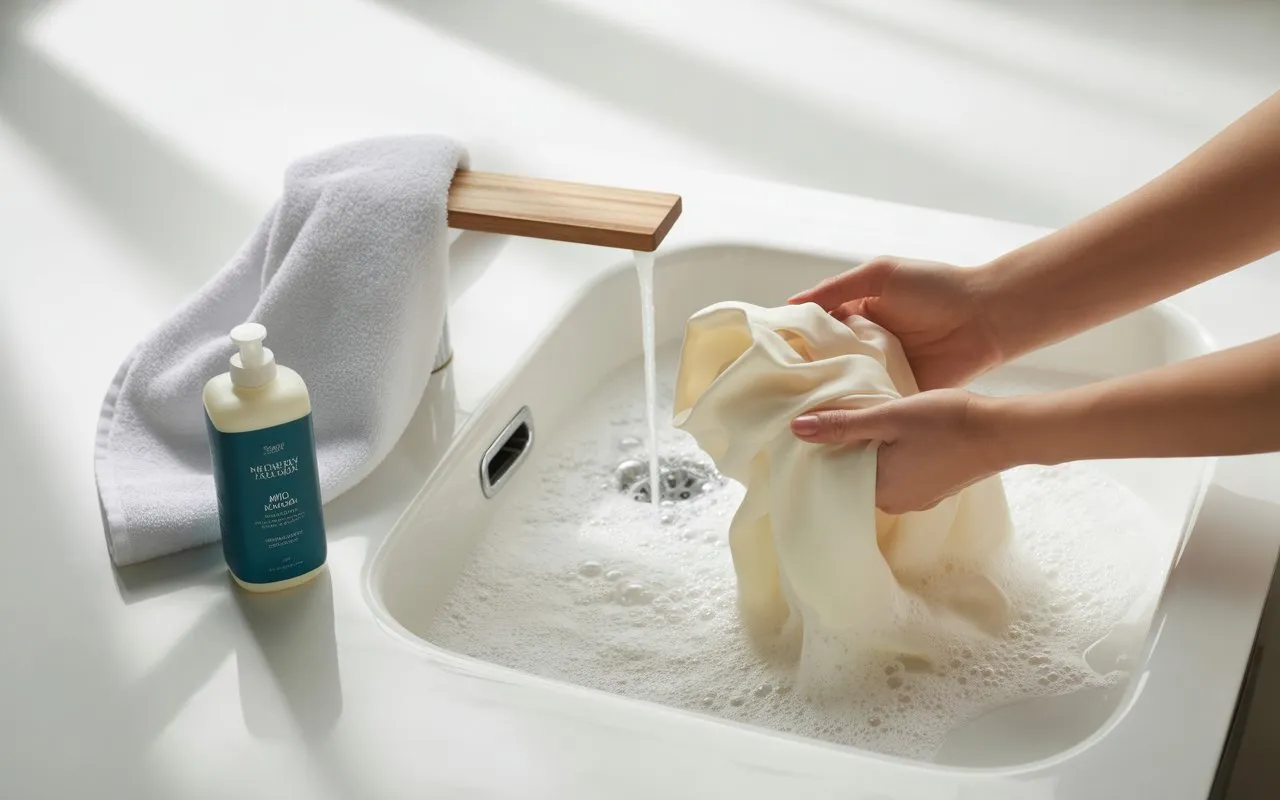
Hand washing clothes means cleaning them gently in water with a small amount of suitable detergent, then drying them in a way that protects the fabric. It is the safest option for many delicates, lightly soiled items, and clothes that may stretch, snag, or wear out faster in a machine. If the item’s material changes how you should wash it, a quick look at fabric-specific washing methods can help before you start. In this guide, you’ll learn how to hand wash clothes in a sink, what soap to use, what to avoid, and how to dry hand-washed items without ruining them.
How do you hand wash clothes properly?
To hand wash clothes properly, fill a clean sink or basin with cool to lukewarm water, add a small amount of mild liquid detergent, gently swish the garment, rinse until the water runs clear, then press out extra water and air-dry it the right way. For delicate items, drying matters just as much as washing.
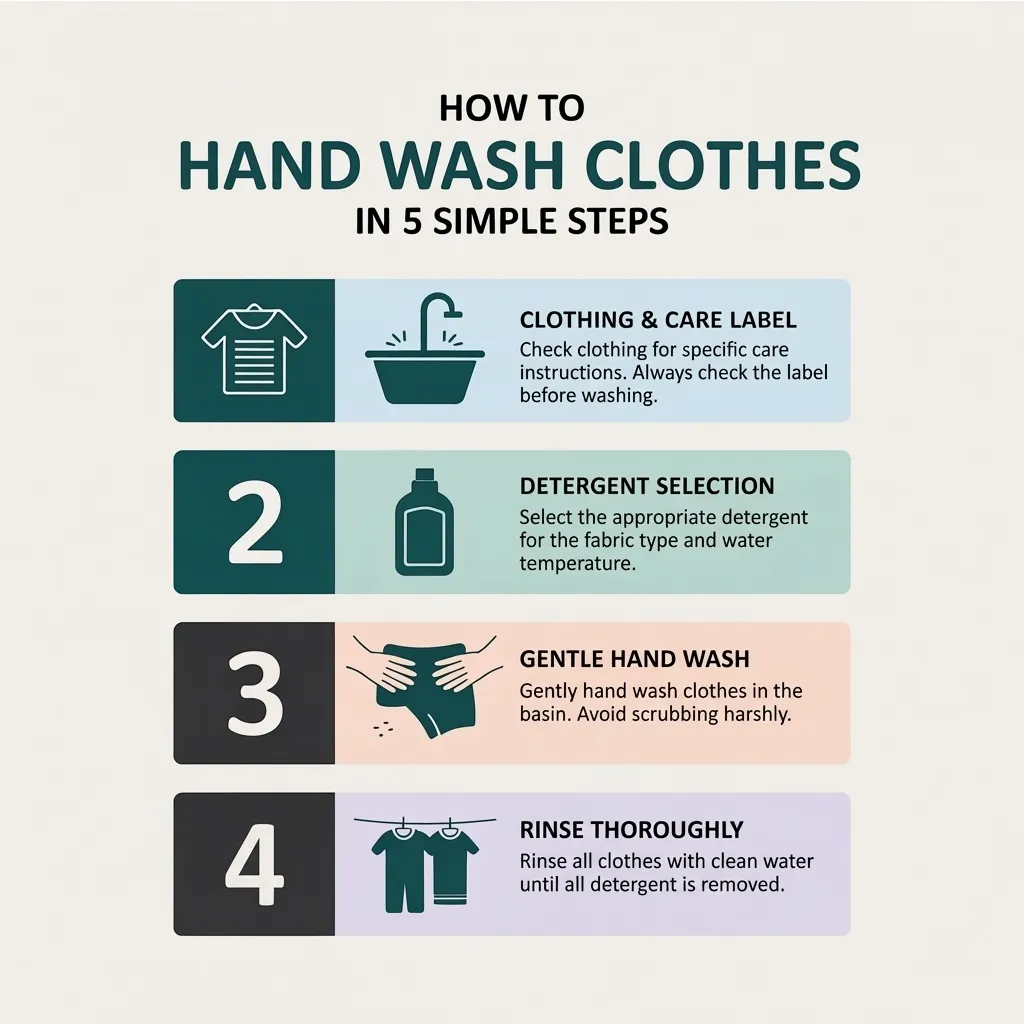
5 Steps to Wash Clothes by Hand
- Read the care label
- Fill a clean sink or basin with cool to lukewarm water
- Add a small amount of mild liquid detergent
- Gently swish and soak the garment
- Rinse well, press out water, and air-dry properly
That is the short version. The details below will help you avoid the usual mistakes, especially with delicate fabrics.
What You Need to Hand Wash Clothes
You do not need much to hand wash clothes well. A simple setup usually works better than overthinking it.
Basic supplies
- A clean sink, basin, or small tub
- Cool to lukewarm water
- Mild liquid detergent or a detergent made for delicates
- A clean towel
- A drying rack, flat surface, or hanger, depending on the item
Optional but useful
- Stain remover for spots
- Mesh bag for very delicate items
- Fabric softener for suitable fabrics only
- Washboard for sturdy fabrics only, not delicate ones
How to Hand Wash Clothes in a Sink
The best way to hand wash clothes in a sink is to use a clean sink, the right water temperature, a mild detergent, and gentle handling from start to finish. A sink works well because it helps you control the load size, rinse thoroughly, and keep delicate items from getting twisted around other clothes.
Step 1: Read the care label first
Check the label before the item touches water. If it says hand wash, you are fine. If it says dry clean only, stop and think before washing it yourself.
Some structured garments, lined pieces, and specialty fabrics do not respond well to soaking, even if they look simple enough.
Step 2: Clean the sink or basin
Wash the sink first and rinse away any cleaner, food residue, or oils. This sounds obvious, but it is the kind of step people skip right before washing a silk top next to yesterday’s coffee ring.
Step 3: Fill with cool to lukewarm water and add detergent
Use cool to lukewarm water unless the label says otherwise. Add a small amount of mild liquid detergent and mix it into the water before adding the garment.
Liquid detergent is usually the easiest choice for hand washing because it dissolves and rinses more easily than powder. If you are still deciding what type works best, it helps to understand the differences between common laundry detergent options.
Step 4: Soak and gently swish
Place the garment in the water and press it down so it gets fully wet. Gently swish it through the water and lightly rub areas that collect sweat or dirt, such as underarms, cuffs, or collars.
For most items, a short soak is enough. Do not scrub delicate fabrics hard, twist them, or treat them like they personally offended you.
Step 5: Rinse, press out water, and dry properly
Drain the soapy water and rinse the garment with clean water until the water runs clear. Press out excess water gently. Do not wring delicate items.
For many garments, especially knits and delicates, the best next step is to lay the item on a clean towel, roll it up, and press to remove moisture before air-drying. Good drying technique matters just as much as washing, especially if you want to air-dry clothes without stretching them.
What Soap to Use for Hand Washing Clothes
The best soap to use for hand washing clothes is usually a mild liquid laundry detergent or a detergent made for delicates. That gives you better cleaning with less residue and less risk of damaging the fabric.
Best choice for most fabrics
For most hand-wash items, use:
- Mild liquid laundry detergent
- Free-and-clear detergent
- Delicate-wash detergent
Better choices for delicate fabrics
For wool, silk, lingerie, or fragile knits, use a detergent designed for that fabric if possible. Fabric-specific products are usually safer than general-purpose options when the item is delicate or expensive. Wool, in particular, benefits from a gentler method that protects shape and texture, so it helps to follow wool-care basics.
What not to use
Avoid:
- Dish soap as a regular laundry substitute
- Harsh household cleaners
- Too much detergent
- Bleach unless the care label clearly allows it
- Hot water unless the label allows it
The safest routine is simple: use a mild detergent, use a small amount, and let the care label lead.
Best Detergent for Hand Washing Clothes
The best detergent for hand washing clothes is one that rinses easily, matches the fabric, and cleans without leaving buildup. In most cases, that means a mild liquid detergent rather than a heavy-duty powder.
Best detergent by fabric type
Liquid vs powder
Liquid detergent is usually the better choice for hand washing because it dissolves quickly and rinses out more easily. Powder can work, but it is more likely to leave residue if it does not dissolve fully.
How much detergent should you use?
Use a small amount. Hand washing uses less water and fewer clothes, so too much detergent only makes rinsing harder.
How to Hand Wash Clothes Without Detergent
If you do not have detergent, the safest option is to use plain water for a quick refresh of lightly worn items and wash them properly later. This is not the best method for sweaty, stained, or truly dirty clothes. It is a temporary solution, not a full replacement for real washing.
When plain water may be enough
Plain water may help refresh:
- Lightly worn delicates
- Clothes worn briefly
- Items that only need a quick rinse
Temporary alternatives
In an emergency, some people use very mild hand soap or shampoo for certain items, but that should stay a last-resort option. Proper laundry detergent is still the safer and more reliable choice for routine fabric care.
What to avoid
Do not make random substitutions with strong cleaners. If you would not want residue from the product sitting in the fabric, do not use it.
How to Hand Wash Clothes With Fabric Softener
You can hand wash clothes with fabric softener, but use it only in a later rinse step, not in the main wash. Use a small amount, and only on fabrics that benefit from it.
When to add it
Add fabric softener after the washing and rinsing steps, using fresh water and following the product directions.
When not to use it
Avoid fabric softener on:
- Moisture-wicking activewear
- Performance fabrics
- Towels if you want to keep them absorbent
- Any item whose label warns against it
How much to use
Use less than you think you need. Too much softener is harder to rinse out by hand and can leave buildup behind.
How to Hand Wash Clothes With a Washboard
A washboard is an optional tool for sturdy fabrics only. It is not part of the standard hand-washing method, and it should not be used on delicate garments.
Best fabrics for a washboard
A washboard can help with:
- Durable cotton items
- Socks
- Workwear
- Heavily soiled basics
How to use it safely
Wet the fabric, apply soapy water, and rub only the dirtiest areas with light pressure. Focus on cuffs, collars, hems, or stained spots rather than scraping the whole garment across the board.
When not to use one
Do not use a washboard on:
- Wool
- Silk
- Rayon or viscose
- Bras or lingerie
- Sweaters or stretchy knits
When Not to Hand Wash Clothes
Do not hand wash clothes when the fabric, structure, or finish is likely to be damaged by soaking or handling. Some items look washable but react badly once wet.
Use extra caution with:
- Dry clean only garments
- Structured jackets or blazers
- Lined garments
- Specialty fabrics with coatings or finishes
- Items that stretch, shrink, or lose shape easily when wet
If you are dealing with an expensive, tailored, or sentimental item, the safest move is often not to experiment.
How to Dry Hand-Washed Clothes Without Ruining Them
The best drying method depends on the fabric. In general, remove water gently, reshape the item, and air-dry it in a way that supports the garment instead of stretching it. If you get the wash right but the drying wrong, you can still end up with misshapen clothes or shrinkage, which is why it helps to know how to keep fabrics from shrinking.
Pressing out water
Press water out gently with your hands. For delicate items, lay the garment flat on a clean towel, roll it up, and press to remove extra moisture.
Flat dry vs hanger dry
Why drying matters
Good washing can still end badly if you wring the item, hang a sweater while it is dripping wet, or dry delicate fabric too aggressively. Drying is part of the method, not an afterthought.
Should You Hand Wash This Item?
Hand washing is usually a good choice for:
- Delicates
- Sweaters
- Bras and lingerie
- Lightly soiled garments
- Items labeled hand wash
Hand washing is usually a poor choice for:
- Very heavy items
- Structured garments
- Most dry clean only pieces
- Items with specialty finishes
- Clothes that may distort badly when wet
Garment-Specific Tips
Sweaters
Wash sweaters gently in cool water and always dry them flat. Hanging them while wet is the easiest way to turn a normal sweater into a strange new shape.
Bras and underwear
Use cool water and a mild detergent. Do not twist or wring. Air-dry them gently to help preserve shape and elasticity.
Delicate tops and dresses
Use minimal agitation, rinse thoroughly, and support the fabric well while drying. If the item has structure, embellishments, or a specialty finish, check the label carefully before washing.
Common Hand Washing Mistakes That Ruin Clothes
Most hand-washing problems come from being too rough, using the wrong product, or rushing the drying step.
Quick checklist
- Using hot water when the label does not allow it
- Using too much detergent
- Scrubbing delicate fabrics too hard
- Wringing the garment
- Washing too many items at once
- Skipping a full rinse
- Hanging sweaters or knits while wet
- Using the wrong cleaner for the fabric
FAQs
How do you hand wash clothes in a sink?
Clean the sink first, fill it with cool to lukewarm water, add a small amount of mild detergent, swish the garment gently, rinse it thoroughly, then press out water and air-dry it properly.
What soap should you use for hand washing clothes?
Use a mild liquid laundry detergent or a detergent made for delicates. For wool or silk, a fabric-specific detergent is the safer choice.
Can you hand wash clothes without detergent?
Yes, but only as a temporary refresh for lightly worn items. For sweaty, stained, or dirty clothes, proper laundry detergent is the better option.
Can you use fabric softener when hand washing clothes?
Yes, but add it only in a later rinse and use a small amount. Do not use it on every fabric, especially performance materials or items where absorbency matters.
What is the best detergent for hand washing clothes?
A mild liquid detergent is usually the best choice because it dissolves and rinses more easily. For delicate fabrics, use a detergent designed for that material if possible.
Can you use a washboard for hand washing clothes?
Yes, but only for sturdy fabrics. A washboard is optional and best for durable items, not delicate garments.
Final takeaway
Hand washing clothes is simple when you keep the method gentle and practical: use a clean sink, mild detergent, cool to lukewarm water, full rinsing, and the right drying method. If you match the product and technique to the fabric, you can clean delicate clothes safely without overcomplicating the process.
