


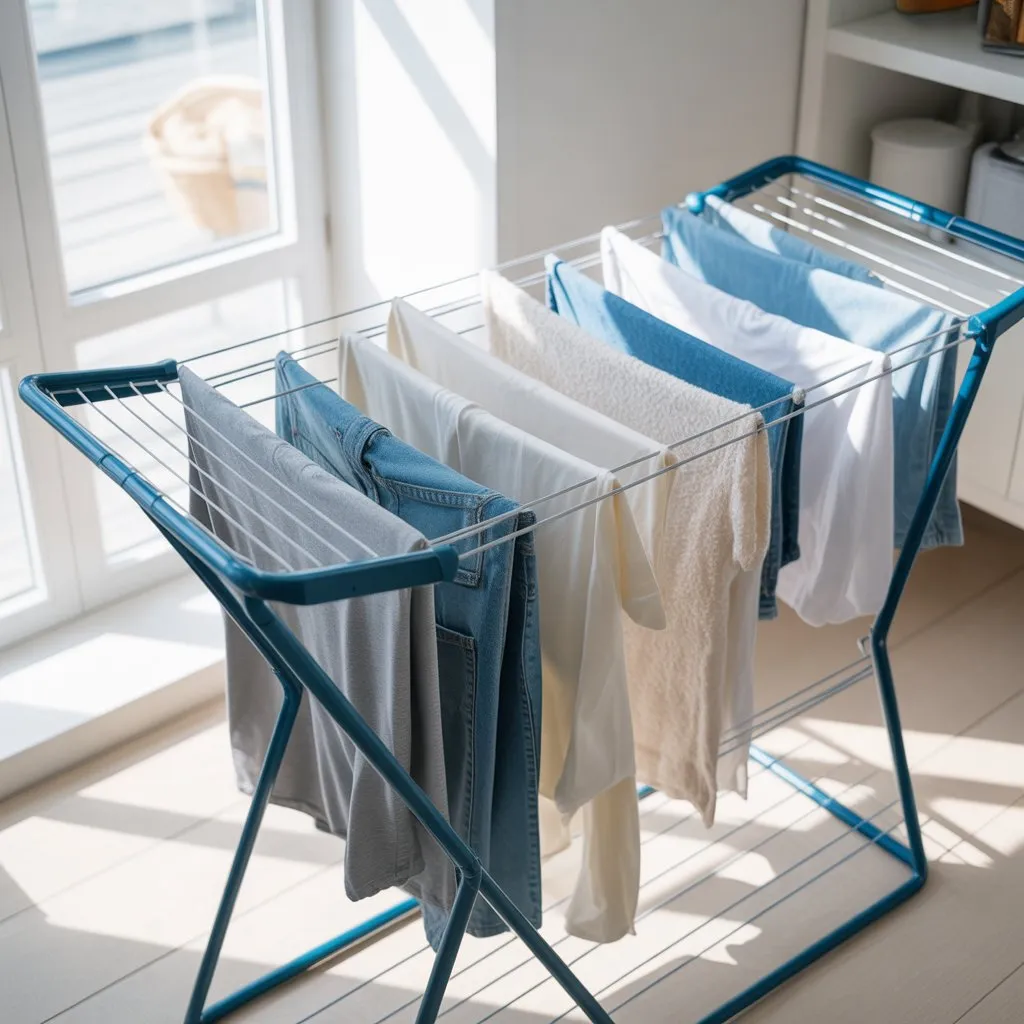
How to air dry clothes means drying laundry naturally instead of using a machine dryer. Air drying clothes is simple, low-cost, and often gentler on fabric because it avoids the high heat and tumbling that can weaken fibers, fade colors, or shrink delicate items.
Quick answer: The best way to air dry clothes is to remove extra water first, hang or lay each item the right way, leave space for airflow, and keep clothes in a well-ventilated area until they are fully dry. Indoors, airflow and trapped moisture matter most. Outside, sun, breeze, and weather matter most.
What is the best way to air dry clothes?
The best way to air dry clothes is to remove extra moisture, choose the right drying method for each item, and give each piece enough room for air to move around it. Light items often dry well on a rack or hanger. Heavy knits usually do better laid flat. Thick fabrics need more time and better airflow.
This method helps clothes dry more evenly. It also lowers the chance of musty smells, stretched fabric, and deep wrinkles.
How to air dry clothes step by step
Air drying works best when you follow a simple order. Each step makes the next one easier.
Check the care label first
Start with the care label. In the United States, garments are generally required to include care instructions with at least one safe cleaning method. That matters because not every item should be dried the same way. Some sweaters should be laid flat. Delicate items often need gentler handling. Dark fabrics may also do better away from strong direct sun.
If the label is missing, be more careful with wool, knits, delicates, and any heavy item that could stretch when wet.
Remove excess water before drying
Next, remove as much water as possible. Wetter clothes take longer to dry, so this step matters a lot.
Use an extra spin cycle if your washer allows it. For delicate items, press out water gently instead of twisting the fabric. For smaller items, you can also place the garment on a clean dry towel, roll it up, and press lightly.
This helps shorten drying time before air drying even starts.
Choose the right drying setup
Then choose the best setup for the item. You can use a drying rack, clothesline, hanger, or flat surface.
T-shirts, leggings, and many light tops usually dry well on hangers or racks. Sweaters and knits usually do better laid flat. Thick items such as towels, jeans, and hoodies need stronger support because they stay heavy while wet.
Space items for better airflow
Do not crowd clothes. This is one of the most common air-drying mistakes.
When wet fabric is packed too closely, air cannot move around it well. As a result, drying slows down. Clothes may also stay damp long enough to develop a stale smell.
Spread out sleeves, pant legs, waistbands, and thick folded areas so trapped moisture can escape.
Take clothes down as soon as they are dry
Once clothes are fully dry, take them down. Do not leave them sitting on the rack or line longer than needed.
This helps reduce wrinkles and lowers the chance of clothes pulling moisture back from humid air.
Air drying clothes indoors
Air drying clothes indoors works well when the weather is bad or when you do not have outdoor space. However, indoor drying only works well when you control airflow and moisture.
Best places to air dry clothes indoors
Choose an open spot with air movement. A laundry room, spare room, hallway, or airy part of a larger room can work well.
Avoid very small closed spaces. A tight closet or a room with poor ventilation can trap moisture and slow drying.
How to improve airflow indoors
Airflow is one of the biggest factors in indoor drying. Open a window when conditions allow. Use a fan near the drying rack. Leave space between garments. Also, avoid pushing the rack flat against a wall.
The goal is to keep air moving around the clothes, not just around the room.
Fan vs. open window vs. dehumidifier
Each one helps in a different way when you air dry clothes indoors.
A fan moves air across the fabric. An open window can help moist indoor air leave the room when outside air is drier. A dehumidifier removes extra moisture from the air, which can make indoor drying easier in damp spaces.
Indoor humidity should generally stay in a moderate range, and better ventilation can help reduce excess moisture indoors.
How to air dry clothes in an apartment
Small homes need a smarter setup. Use a foldable rack, vertical rack, or wall-mounted drying space if possible. Dry smaller loads instead of trying to dry everything at once.
Turn thick items halfway through drying. Also, avoid drying a large load in a sealed bedroom because it can raise indoor moisture and slow the whole process.
How to air dry clothes outdoors
Outdoor drying is often faster because fresh air and open space help moisture leave fabric more easily. Still, results depend on the weather.
Sun vs. shade
Sun can help air-dried clothes dry faster.It works well for many sturdy everyday items. However, too much direct sun can be rough on some dark, bright, or delicate fabrics.
A good rule is to use stronger sun for sturdy items and gentler light or partial shade for more delicate clothes.
Best time of day to air dry clothes outside
Drying earlier in the day usually gives clothes more time to dry fully. It can also help you avoid cooler evening air, which may slow the final stage of drying.
A light breeze can help even more.
Weather, pollen, and humidity considerations
Check the weather before drying clothes outside. Rain can interrupt the process. High humidity can slow drying even on warm days. Wind can help, but very strong wind may twist lighter items around.
Pollen can also be a problem for people with allergies, especially on bedding or clothes worn close to the skin.
How long does it take to air dry clothes?
How long it takes to air dry clothes depends on fabric thickness, airflow, humidity, temperature, and how much water is still in the item.
Some light clothes may dry in a few hours. Thick items can take much longer. Outdoor drying is often faster than indoor drying, but that still depends on the weather and airflow.
Average drying time indoors vs. outdoors
Outdoors, light clothes may dry in a few hours on a warm, dry, breezy day. Indoors, the same items often take longer because air movement is weaker and room moisture may be higher.
It is safest to think about drying time as a range, not a guarantee.
What affects drying time most
The biggest drying-time factors are:
- humidity
- airflow
- fabric thickness
- item size
- room temperature
- spacing between clothes
- how much water remains after washing
If clothes seem to take too long to dry, one or more of these factors is usually the reason.
Typical drying times by clothing type
Use the table below as a general guide, not a fixed rule. Real drying times can change a lot based on weather, airflow, and fabric weight.
| Clothing Type | Typical Outdoor Drying Time | Typical Indoor Drying Time |
|---|---|---|
| T-shirts and light tops | 2 to 5 hours | 4 to 8 hours |
| Jeans and heavy pants | 6 to 12 hours | 12 to 24 hours |
| Towels | 4 to 8 hours | 8 to 24 hours |
| Sweaters and knits | 6 to 12+ hours | 8 to 24+ hours |
| Activewear | 2 to 4 hours | 3 to 6 hours |
| Sheets and bedding | 3 to 6 hours | 6 to 12+ hours |
These estimates are meant to help you set expectations, not predict exact drying times.
Indoor vs. outdoor air drying at a glance
| Factor | Indoors | Outdoors |
|---|---|---|
| Drying speed | Often slower | Often faster |
| Best control | Better control over placement and fabric care | Less control because weather changes |
| Main risk | Trapped moisture and stale smells | Rain, pollen, wind, and strong sun |
| Best for delicates | Often better | Better in shade or mild conditions |
| Best for thick items | Works with strong airflow and patience | Often faster in dry, breezy weather |
Should you hang or lay flat when air drying clothes?
Some clothes should hang, while others should be laid flat.
| Item | Best Method |
|---|---|
| T-shirts and light tops | Hanger or rack |
| Jeans and heavy pants | Strong hanger, rack, or line |
| Towels | Spread wide on rack or line |
| Sweaters and knits | Lay flat |
| Delicates | Lay flat or use light support |
| Sheets | Spread wide with good airflow |
This simple choice can help prevent stretching and shape loss. Care-label guidance also supports flat drying for items that can lose shape when wet.
Best way to air dry different fabrics and garments
Different fabrics hold water in different ways. That is why one drying method does not fit every load.
Cotton and linen
Cotton and linen usually air dry well. However, cotton can feel stiff if it dries slowly or stays in one position too long. Linen often dries faster than thicker cotton, but it can wrinkle more easily.
Shake these items out before drying and again after they are dry.
Polyester and activewear
Polyester and activewear often dry faster than heavier natural fabrics. They usually do well on a hanger or rack with good airflow.
However, these fabrics can hold odor more easily if they dry too slowly in stale air.
Wool and sweaters
Wool and sweaters should usually be laid flat. Hanging them while wet can stretch the fabric because the water adds weight.
Lay them on a clean flat surface and reshape them while they are still damp.
Towels and thick items
Towels, hoodies, sweatpants, and other thick items need more time. They hold more water and need better airflow.
Spread them wide. Flip them halfway through drying if needed. Avoid folding them too thickly over a rack.
Delicates
Delicate items need gentle handling. Do not wring them hard. Press out water instead. Then dry them away from harsh direct sun unless the care label says otherwise.
How to make clothes air dry faster
If you want clothes to dry faster, focus on two things: less water in the fabric and more moving air around it.
Use an extra spin cycle
An extra spin cycle can remove more water before drying begins. This is one of the easiest ways to shorten drying time.
Try the towel-press method
For smaller or delicate items, press them in a clean dry towel first. This helps pull out extra moisture without rough handling.
Improve spacing and rotate thick items
Leave room between clothes. Do not let items overlap too much. Turn thick items or flip them halfway through drying so all sides get air.
Use airflow the right way
Place a fan so air moves across the clothes. Open a window when outside air is suitable. In damp rooms, use a dehumidifier.
This usually works much better than leaving wet clothes in a still room.
Common air-drying mistakes to avoid
Many drying problems come from a few simple mistakes.
Overcrowding the rack or line
Too many clothes in one small space slows drying and can leave clothes smelling stale.
Hanging sweaters instead of laying them flat
Wet sweaters are heavy. Hanging them can pull the fabric down and change the shape.
Drying in a closed, humid room
A room with trapped moisture slows drying and makes stale smells more likely. Higher indoor humidity can also raise the risk of mold in damp spaces.
Putting clothes away when they are still slightly damp
Thick items can feel dry outside while still holding moisture inside. Putting them away too early can lead to odor later.
Leaving dark or delicate items in harsh direct sun too long
Some colors and fabrics may fade or wear faster in strong direct sunlight.
Why clothes smell, feel stiff, or stretch after air drying
These are common problems, and they usually have simple causes.
Why clothes smell musty after indoor drying
Musty smells usually happen when clothes stay damp too long. Poor airflow, crowded racks, and humid rooms are the most common reasons.
Why towels and cotton can feel stiff
Stiffness often happens when thick fabrics dry slowly or stay in one position too long. Mineral buildup from washing can also make towels feel rough.
Why clothes stretch on hangers
Wet fabric is heavier than dry fabric. Hanging a heavy knit or sweater while wet can pull the shape down and stretch the fibers.
How to fix each problem
For odor, improve airflow, reduce moisture in the room, and make sure clothes dry fully before storage. For stiffness, shake out the fabric and look at your wash routine if mineral buildup is common. For stretching, reshape the item while damp and lay it flat next time.
What clothes should not be air dried the usual way?
Some items need extra care, and some should not be air dried in the usual hang-and-wait way.
Down-filled jackets, pillows, and comforters: These can take a long time to dry by air alone and may dry unevenly if the filling clumps.
Heavy sweaters and large knits: These can stretch badly if hung while wet.
Bulky bedding: Large dense items may dry very slowly and unevenly without enough space or airflow.
Dark, bright, or delicate items in strong direct sun: These may need partial shade or gentler placement.
This does not always mean these items can never be air dried. It means the usual method may not be the best one.
Final thoughts
Learning how to air dry clothes is mostly about using the right method for the right item: remove extra water first, choose the correct setup, improve airflow, and avoid crowding. If you are air drying clothes indoors, focus on ventilation and moisture control; if you are drying outside, pay attention to sun, shade, weather, and pollen. Most of all, make sure clothes are fully dry before you put them away, because good air-drying habits help clothes stay in better shape and last longer.
FAQs
A broad estimate is 4 to 24 hours, depending on fabric type, room airflow, humidity, and item thickness. Light clothes dry faster. Thick clothes usually need much longer.
Outside is often faster because fresh air and breeze help moisture leave the fabric. Inside is more controlled and can work better when the weather is bad.
Yes, many light clothes can dry overnight indoors. Thick items may still be damp by morning if airflow is weak or the room is humid.
Remove extra water first, leave space between items, and keep air moving. Also, make sure the room does not stay too humid.
Sweaters should usually be laid flat. Hanging them while wet can stretch the fibers and change the shape.
