

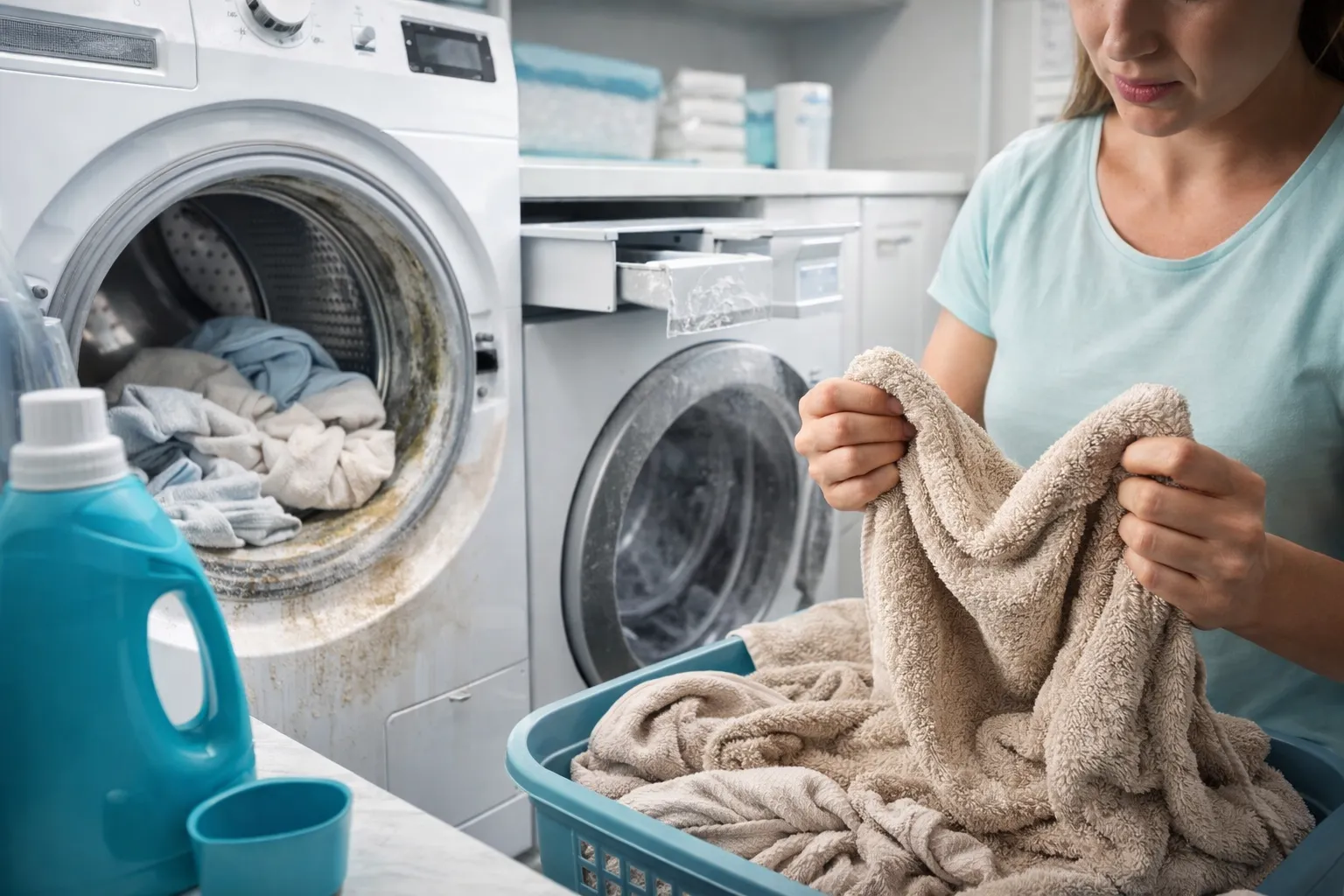
Your clothes should come out of the wash feeling clean, soft, and fresh. But when hard water gets involved, laundry can start doing the opposite. Towels feel rough, whites look dull, dark clothes show streaks, and clean laundry may still smell off. Many people blame detergent or the washer first, but in many homes, the real problem is hard water.
Hard water contains minerals that reduce detergent performance and leave residue behind in fabric and inside the washer. Over time, that buildup can make clothes feel stiff, look worn, and smell less fresh than they should. This guide explains the signs of hard water laundry problems, what causes them, and what to fix first.
Quick Answer
Hard water can make clothes stiff, dull, smelly, and harder to clean because minerals reduce detergent performance and leave residue behind. The best fix depends on the symptom. Some problems improve with better detergent choices, correct dosing, laundry boosters, and regular washer cleaning. Long-term issues may need a water softener or filter.
What Hard Water Does to Clothes and Towels
Hard water contains minerals, mainly calcium and magnesium. These minerals are safe in drinking water, but they are annoying in the laundry room.
They interfere with detergent during the wash cycle. Instead of helping lift dirt and rinse away cleanly, detergent reacts with the minerals and becomes less effective. That means more residue stays behind in fabric fibers, and your washer has to work harder to do the same job.
That buildup does not always show up immediately. It often appears slowly through rough towels, dull clothes, strange odors, and washer scale.
Signs Hard Water Is Ruining Your Laundry
Hard water problems usually build up over time. If several of these sound familiar, hard water may be the reason your laundry never feels quite right.
1. Clothes Feel Stiff After Washing or Drying
One of the most common signs is fabric that feels rough instead of soft. Towels often show this first. Mineral residue builds up inside the fibers and changes how the fabric feels.
2. Towels Stop Feeling Soft and Absorbent
Hard water can leave residue inside cotton fibers, which makes towels feel scratchy and less absorbent. Instead of fluffy towels, you get fabric that feels tired and slightly grumpy.
3. Whites Turn Gray or Dull
If white clothes, towels, or sheets lose brightness faster than expected, hard water may be leaving a mineral film behind after each wash.
4. Dark Clothes Show White Streaks or Residue
Dark laundry often makes hard water problems easier to spot. If black or navy clothes come out with cloudy marks, detergent and minerals may not be rinsing out properly.
5. Clothes Smell Bad After Washing
This one catches people off guard. Hard water can make laundry smell less fresh because detergent does not clean as effectively, and residue stays trapped in the fabric.
6. Colors Fade Faster Than Expected
Mineral buildup and repeated residue can make clothes look worn and dull sooner than they should.
7. Your Washer Shows Buildup or Performs Worse Over Time
Hard water does not just affect clothes. It can also leave scale inside the washing machine, which may reduce cleaning performance and increase maintenance needs.
Can Hard Water Make Clothes Smell Bad?
Yes, it can.
Hard water can make clothes smell bad after washing because minerals reduce detergent performance and leave residue trapped inside the fibers. That residue can hold onto sweat, oils, and odor-causing particles instead of letting them rinse away properly.
The problem gets worse when the washer also has buildup inside it. In that case, clothes may smell clean at first, then start smelling off again soon after drying or wearing.
If this sounds familiar, the issue may not be bad detergent. It may be hard water plus leftover residue.
How to Tell If It’s Hard Water and Not Detergent Buildup or Washer Odor
Laundry problems often overlap, so this part matters.
It May Be Hard Water If:
- towels feel rough
- whites look dull
- dark clothes show light residue
- detergent seems weak
- you notice low foam or repeated stiffness
It May Be Too Much Detergent If:
- clothes feel slightly sticky
- residue shows up often
- fabric traps smell even after washing
- rinse performance seems poor
It May Be Washer Buildup If:
- all loads smell off
- clean laundry smells bad quickly
- the drum, drawer, or seal has visible residue
- odor keeps returning no matter what detergent you use
In many homes, the issue is not just one thing. Hard water, detergent buildup, and washer residue often work together.
Why More Detergent Can Make Hard Water Laundry Worse
This is one of the biggest mistakes people make.
When clothes feel stiff or smell bad, the first reaction is often to add more detergent. In hard water, that can make the problem worse.
Extra detergent does not always mean cleaner clothes. If the minerals in the water are already reducing detergent performance, adding more can leave even more residue behind. That buildup sticks to fibers, makes fabrics feel rough, and can make odor problems worse over time.
Instead of automatically using more detergent, focus on:
- using the correct amount
- choosing a detergent that works well in hard water
- adding a booster when needed
- keeping the washer clean
Hard Water Laundry Problems and the Best Fix for Each One
Use this table to match the symptom you see most often with the most likely cause and the best first fix to try.
| Problem | Likely Cause | Best First Fix |
|---|---|---|
| Stiff clothes and rough towels | Mineral residue trapped in fabric fibers | Use the correct detergent dose and add a laundry booster |
| Clothes smell bad after washing | Weak cleaning plus trapped residue | Clean the washer and improve rinse performance |
| Dingy whites and dull fabrics | Mineral film left behind after washing | Use a better hard-water routine and wash problem loads more effectively |
| White residue on dark clothes | Detergent and mineral buildup | Reduce overdosing and make sure loads rinse fully |
| Washer buildup and lower performance | Scale deposits from hard water | Clean the washer regularly and monitor buildup |
How to Wash Clothes in Hard Water
You do not need to panic or replace your washer. Most people can improve laundry results by changing a few habits.
Use the Right Detergent
Choose a detergent that performs well in hard water. Some formulas handle minerals better than others, and that alone can improve cleaning performance.
Use the Correct Amount
Do not guess. Too little detergent can leave clothes dirty, but too much can add to the residue problem. Hard water needs the right dose, not a random squeeze-and-hope system.
Add a Laundry Booster if Needed
A laundry booster such as washing soda or borax can help detergent work better in mineral-heavy water. This can be especially helpful for stiff towels, dull whites, and repeated residue.
Clean the Washer Regularly
If hard water is part of your daily routine, washer cleaning is not optional. Monthly cleaning helps reduce mineral and detergent buildup before it affects performance.
Avoid Overloading the Washer
Clothes need enough space to move and rinse properly. If the washer is packed too tightly, residue becomes harder to remove.
What to Try First Before You Buy a Water Softener
A lot of people jump too fast to expensive solutions. Start here first.
1. Improve Detergent Choice and Dosing
Make sure you are using a detergent that performs well in hard water and that you are not overusing it.
2. Add a Booster
If residue, stiffness, or dullness keep showing up, a booster may help improve results without changing your whole plumbing setup.
3. Clean the Washing Machine
A dirty washer can make hard water laundry worse. If the machine already has buildup, fix that before judging your detergent.
4. Test One Problem Load
Try your updated routine on towels, whites, or the load that usually shows the issue most clearly. This gives you a better read on whether your changes are working.
5. Consider Long-Term Water Treatment Only if Needed
If problems keep returning even after routine changes, then it may be time to look at a filter or water softener.
Best Laundry Habits in Hard Water Areas
These habits make a real difference over time:
- use the correct detergent amount
- avoid overloading the washer
- clean the washer monthly
- pay attention to residue on dark clothes
- wash problem fabrics with a more intentional routine
- do not ignore stiffness, dullness, or recurring odor
Hard water problems often start small. Good habits keep them from becoming expensive ones.
Fabrics Most Affected by Hard Water
Some fabrics show hard water damage faster than others.
Towels and Cotton
These often become rough, stiff, and less absorbent when mineral residue builds up.
Whites and Light Colors
Mineral film shows up more clearly here, so dullness and graying tend to appear sooner.
Dark Clothes
Dark fabrics make detergent and mineral residue easier to spot, especially after rinsing issues.
Sportswear and Odor-Prone Fabrics
These fabrics already tend to trap odor. When hard water reduces cleaning performance, the smell problem gets worse.
Delicate Fabrics
Repeated buildup and rougher washing results can shorten the life of more delicate items over time.
Can Hard Water Damage a Washing Machine?
Yes, over time it can.
Hard water can leave scale inside the washing machine, especially in areas where water flows, heats, or sits regularly. That buildup can reduce cleaning performance and make the washer less efficient.
It can also increase the chance of maintenance problems if the buildup keeps returning and never gets cleaned out.
That does not mean hard water destroys every washer overnight. It means regular cleaning matters more in hard water homes than many people realize.
When to Use a Booster vs a Water Softener
Not every home needs the same solution.
Use a Booster When:
- clothes feel stiff
- detergent seems weak
- towels lose softness
- dark clothes show residue
- you want a lower-cost fix first
Consider a Water Softener When:
- hard water problems keep returning
- washer scale builds up quickly
- laundry results stay poor despite routine changes
- hard water affects more than just laundry in your home
A booster helps inside the wash cycle. A water softener changes the water before it reaches the washer. Both can help, but they solve the problem at different levels.
Key Takeaways
- Hard water can make clothes stiff, dull, smelly, and harder to clean
- Rough towels and residue on dark clothes are common warning signs
- Using more detergent often makes the problem worse
- Better dosing, boosters, and washer cleaning fix many cases
- Some homes may need a long-term water treatment solution
Frequently Asked Questions
Does hard water affect laundry?
Yes. Hard water can reduce detergent performance, leave residue behind, and make clothes feel rougher, look duller, and smell less fresh.
Can hard water make clothes smell bad?
Yes. Minerals can stop detergent from rinsing away properly, which allows residue and odor to stay trapped in the fabric.
Why do towels feel rough after washing?
Towels often feel rough in hard water because mineral residue builds up inside the fibers and reduces softness and absorbency.
Should I use more detergent in hard water?
Not automatically. Using more detergent can sometimes make residue worse. It is better to adjust the dose carefully and use a booster if needed.
How do you wash clothes in hard water?
Use a detergent that works well in hard water, avoid overdosing, add a booster when needed, and clean the washer regularly.
Can hard water damage a washing machine?
Yes. Over time, hard water can leave scale and buildup inside the washer, which may reduce performance and increase maintenance needs.
Is liquid detergent better for hard water?
Sometimes it can help, but results depend on the formula. The bigger issue is whether the detergent works well in mineral-heavy water and whether the dose is correct.
Do I need a water softener for laundry?
Not always. Many laundry problems improve with better detergent use, boosters, and washer cleaning. A water softener makes more sense when the issue keeps returning or affects the whole home.
Conclusion
Hard water laundry problems are easy to overlook because they build up slowly. Clothes do not suddenly fail all at once. They just stop feeling as clean, soft, and fresh as they should.
If your clothes feel stiff, look dull, or smell bad after washing, hard water may be the real reason. The good news is that most problems improve with better detergent habits, the right booster, and regular washer cleaning, while more persistent issues may need a water softener. Start with the simplest fixes first, test the results, and only move to bigger solutions if the problem keeps coming back.
References
- U.S. Geological Survey — water hardness basics
- washing machine care and maintenance guidance
- laundry detergent usage and fabric care guidance
- appliance cleaning and mineral buildup prevention resources
Author Research Method
This article is based on apparel care research, laundry performance behavior, washing machine maintenance patterns, and practical home laundry troubleshooting. The goal is to help readers identify hard water laundry problems accurately and improve results with clear, realistic solutions.
